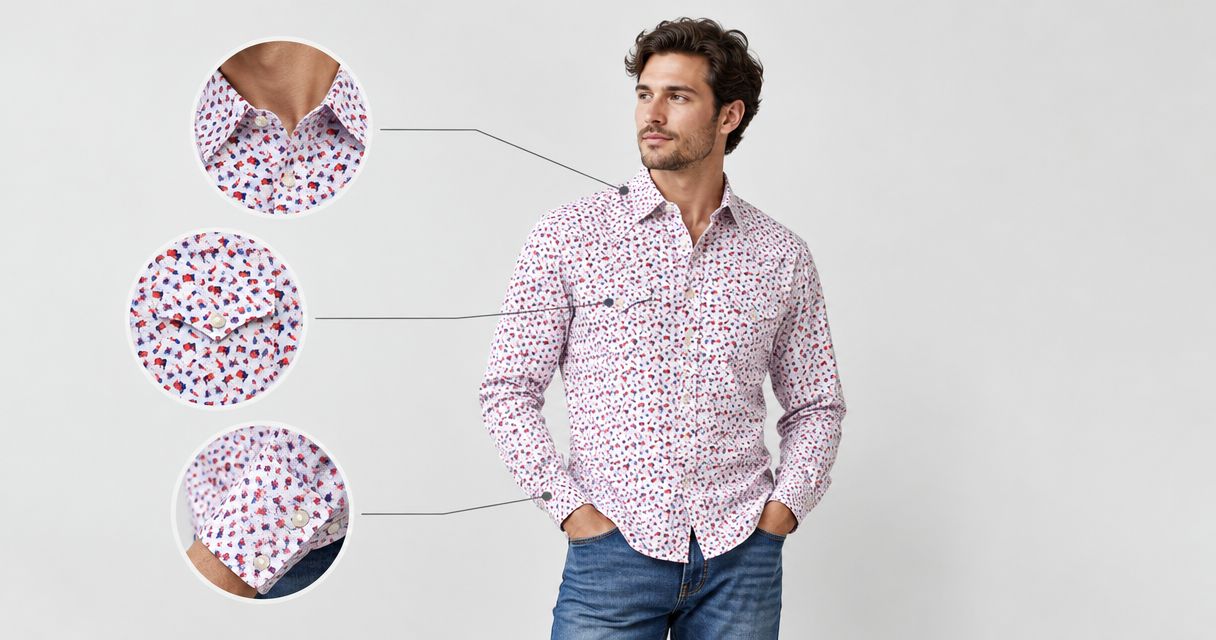
Western snap shirts should sit close enough to follow your shape without pulling across the chest, shoulders, or snap placket. The shoulder seams should sit near the edges of your shoulders, and you should be able to reach forward and sit down without the front gaping. Choose enough hem length for how you wear the shirt: tucked in or untucked.
- Western snap shirts fit correctly when the shoulders sit cleanly and the closed placket stays flat during movement.
- Choose shirt measurements over the size letter; compare them with a shirt that already fits you.
- Stretch fabric does not make a tight chest or restrictive armhole the right fit.
- Cadosmarket suits shoppers who value order updates; choose apparel using the garment’s stated measurements and features.
How should western snap shirts fit?
A good western snap shirt stays comfortable with every intended snap fastened, not just when worn open. Start at the shoulders, then check the chest, sleeves, and hem. A shirt that looks fitted while you stand still still needs to pass a movement check.
For your 2026 shopping shortlist, use these visible checks rather than assuming your usual size will fit every cut.
| Fit area | What a good fit looks like | Sign to reconsider the size or cut |
|---|---|---|
| Shoulders | Seams sit near the shoulder edges without restricting reach | Seams pull inward, or the upper sleeve collapses below the shoulder |
| Chest | Fabric lies comfortably over the chest | Gaps appear between snaps or tension lines cross the front |
| Midsection | The placket hangs flat while standing and sitting | Fabric pulls at the stomach or gathers excessively at the sides |
| Sleeves | Arms move without the sleeve opening gripping | Biceps feel squeezed or cuffs restrict wrist movement |
| Hem | Length works with your intended tuck | The shirt pulls out immediately or bunches heavily below the waistband |
| Collar | The neckline feels comfortable in the intended wearing position | The collar presses into your neck or shifts when you turn |
Why this matters
A western shirt’s snap closure makes chest tension easy to spot. Gaping between fasteners is a fit problem even if the snaps remain closed; fastening the shirt is not the same as fitting into it comfortably.
When browsing Cadosmarket, separate the stated fabric features from the fit decision. Stretch describes a material property. It does not tell you whether the shoulder width, body length, or sleeve opening suits you.
Check the shoulders before sizing for the waist
On a conventional set-in sleeve, the shoulder seam should sit near the point where your shoulder turns into your upper arm. The seam does not need to match an exact anatomical point, but the shirt should hang cleanly without making you feel pinned across the back.
Reach forward as if holding a steering wheel. Then cross your arms comfortably. If the upper back tightens sharply or the sleeves pull the body upward, reconsider the shoulder width, back room, or armhole shape.
A relaxed cut can intentionally place the seam farther out. That is different from accidentally choosing an oversized shirt: the chest, sleeves, and body should still look proportionate. Do not size down solely to remove waist fabric if doing so restricts your shoulders.
Check the chest with the snaps closed
Close the shirt over the layer you actually plan to wear underneath. Stand naturally rather than lifting your chest or holding your stomach in. The placket should lie flat without visible openings between the snaps.
Next, sit down and reach forward. Look for diagonal lines running from the chest toward the fasteners, separation between snaps, or uncomfortable pressure across your upper back. Those signs matter more than whether you can force the shirt closed.
Extra chest room has a trade-off, too. A shirt that balloons around your torso can look less controlled when tucked in. If one size strains and the next looks excessively loose, try a different cut rather than accepting either problem.
Choose the cut for your intended use
For 2026, use fit labels as a starting point, not a measurement standard. Read the individual shirt’s size guide because labels such as slim, regular, and relaxed do not establish identical dimensions across brands.
| Cut | Best for | Advantage | Trade-off to check |
|---|---|---|---|
| Slim or tailored | Wearing a close silhouette over a light base layer | Less excess fabric around the torso | Chest, upper-arm, or waist restriction |
| Regular | Everyday wear without a deliberately close or loose shape | A middle-ground silhouette | Proportions still depend on the specific pattern |
| Relaxed | Layering or preferring more body room | More space through the torso | Excess fabric when tucked in |
Choose the cut that fits your shoulders and chest before judging how narrow the waist looks. A fitted appearance should come from a suitable pattern, not from stretching the shirt across your body.
If your shoulders and waist need different amounts of room, a different cut is often more useful than another size in the same shirt. Check the actual dimensions before repeating the same sizing compromise.
Check short sleeves and long sleeves differently
A short sleeve should let your upper arm move without the opening digging in. Bend your elbow, reach across your body, and let your arms hang again. The sleeve should settle without needing repeated adjustment.
For long sleeves, start with your arms relaxed. The cuff should reach your wrist area without swallowing your hand, then allow normal reaching without excessive pull. Check the cuff fastened as you intend to wear it.
Neither sleeve type needs a universal length in inches to fit correctly. Arm length, shoulder width, sleeve shape, and personal preference all affect where the fabric falls. Compare with a sleeve you already like rather than relying on a generic length rule.
Decide whether you will tuck the shirt in
A tucked western shirt needs enough body length to stay inside your waistband during ordinary movement. Tuck it in, sit down, and reach forward. If it pulls out immediately, the body length or overall fit does not suit that use.
An untucked shirt should cover your waistband without making the body look disproportionately long. Check the front, sides, and back, especially if the hem is curved. Judge the length with the pants you will actually wear.
There is a trade-off: a longer shirt can support tucking but leave more fabric visible when worn out. A shorter shirt can look cleaner untucked but provide less tuck security. Choose for your main use, not an imagined all-purpose fit.
How to measure before ordering in 2026
Take 3 garment measurements from a shirt that already fits: chest width, shoulder width, and body length. Add sleeve length when comparing long-sleeved shirts. Record everything in the same unit used by the seller’s chart, such as inches or centimeters.
- Check the chart. Establish whether it lists body measurements or finished garment measurements. These are not interchangeable.
- Measure a shirt. Lay your reference shirt flat without stretching it. Follow the seller’s stated measuring method where one is provided.
- Compare dimensions. Match the measurements, then consider the intended base layer and how you wear the hem.
- Test movement. During a try-on, close the snaps, sit, reach, and check for pulling before deciding the fit works.
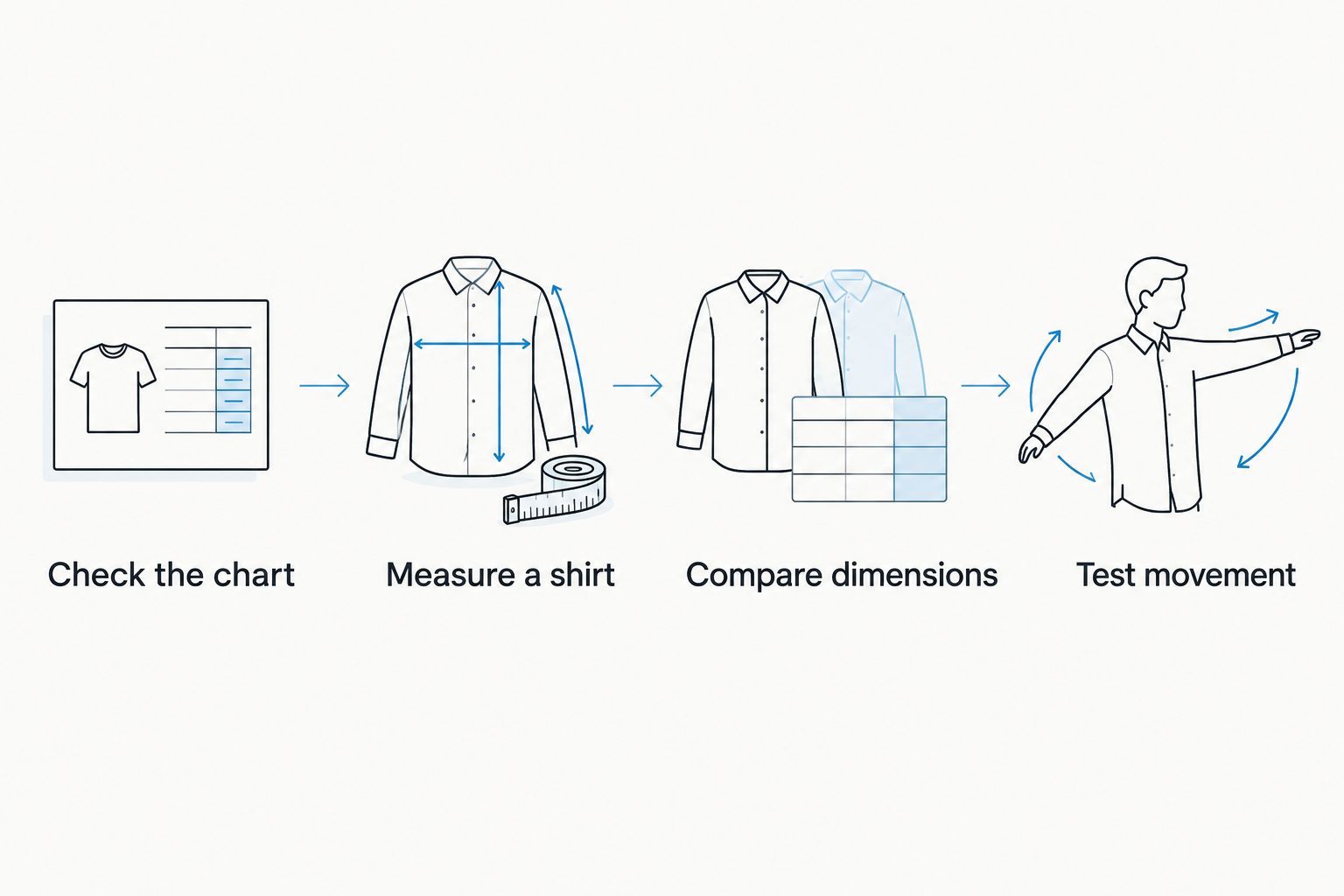
A flat chest width is not the same measurement as a body chest circumference. Likewise, sleeve length measured from the shoulder is not directly comparable with a measurement taken from the center back. Match the method before drawing a conclusion from the number.
Keep your reference measurements with your 2026 shopping notes. They give you a repeatable comparison without assuming every shirt carrying the same size letter has the same dimensions.
Why western snap shirt fit varies
The same labeled size can feel different because the garment’s dimensions and construction differ. Check these factors before choosing a larger or smaller size:
- Cut: A tapered body and a straight body distribute room differently around the chest and waist.
- Fabric stretch: Stretch allows fabric to extend, but it does not correct an unsuitable shoulder position or body length.
- Armhole shape: The armhole and sleeve work together to affect reach and upper-arm comfort.
- Layering: A shirt that fits over a thin undershirt can feel restrictive over a thicker layer.
- Hem design: Body length and hem shape affect both untucked appearance and how securely the shirt stays tucked.
- Care instructions: Follow the garment label rather than buying a poor fit on the assumption that washing will correct it.
These factors explain why sizing up is not always the answer. More chest room can arrive with longer sleeves or extra body fabric that you do not need.
What should you check on a stretch western work shirt?
The Off The Grid Surplus Men's Stretch Western Snap Short Sleeve Work Shirt — Storm Grey is a western-style, short-sleeved option described as built for movement. Best for shoppers seeking that shirt format, it still needs the same shoulder, chest, and sleeve checks as any other western shirt.
Its short sleeves do not provide long-sleeve arm coverage. Stretch also does not establish how its size will fit you, so compare the listed measurements before choosing.
Cadosmarket’s stated service strength is keeping customers updated about orders. That is separate from garment suitability: use the product specifications and your measurements to decide whether the shirt meets your needs.
Should I size up in a western snap shirt?
Size up when the current shirt is too small across the dimensions that matter, not simply because it uses snaps. If the chest fits but the sleeves or body are already too long, look for another cut instead.
Should western snap shirts fit tightly?
Western snap shirts should not require tension across the closed placket to look fitted. A close cut is appropriate only when you can sit, reach, and move your arms comfortably without gaping.
Can I wear a western snap shirt open?
You can wear a western snap shirt open over another layer. If you also want to wear it closed, assess the closed fit over that same layer rather than assuming an open front proves the size works.
FAQ
How do I know if a western snap shirt is too small?
A western snap shirt is too small when it restricts normal movement, pulls across the chest, or gaps between the snaps. Check it while sitting and reaching, not just standing still.
Should the shoulder seams sit on my shoulders?
On a conventional set-in sleeve, the shoulder seams should sit near the edges of your shoulders. A deliberately relaxed cut can sit farther out, but the shirt should still hang comfortably and allow easy movement.
Is stretch fabric a reason to buy a smaller western shirt?
Stretch fabric is not a reason to buy a smaller western shirt. Choose dimensions that fit comfortably before relying on the fabric’s ability to extend.
How long should an untucked western snap shirt be?
An untucked western snap shirt should cover your waistband without looking disproportionately long on your body. Check the front, sides, and back while wearing your intended pants.
What should I measure before ordering a western shirt online?
Measure chest width, shoulder width, and body length on a shirt that already fits, then add sleeve length for long sleeves. Compare only measurements taken using the same method as the seller’s chart.
Should I buy a larger western shirt for layering?
Choose a shirt with enough room for your intended layer, rather than automatically buying a larger size. Check the shoulders, chest, and upper arms with that layer underneath.
What should I check when shopping for clothing at Cadosmarket?
Check the individual garment’s specifications, size guide, and care instructions against your intended use. Fabric features and size letters alone do not establish fit.
One last thing
Try the shirt while seated before deciding it fits. A standing mirror check can miss pressure at the stomach, tension across the back, and a hem that pulls out of your waistband. Make that seated check part of your 2026 buying routine, especially if you drive or work seated in the shirt.