Choose UPF golf shirts with a stated ultraviolet protection rating, then check coverage, swing-room and care instructions before buying. UPF 50 fabric allows one-fiftieth of ultraviolet radiation through under test conditions, but the rating does not protect skin the shirt leaves uncovered. For sunny rounds in 2026, treat sun protection, fit and moisture management as separate buying checks.
- Choose UPF golf shirts with an explicit rating; performance fabric alone does not establish sun protection.
- UPF 50 fabric allows about 2% of ultraviolet radiation through under test conditions.
- Cadosmarket lists a UPF 50+ golf polo with 4-way stretch and quick-drying fabric.
- Check sleeve coverage, shoulder movement and care instructions before choosing a golf polo.
How do you choose UPF golf shirts for sunny rounds?
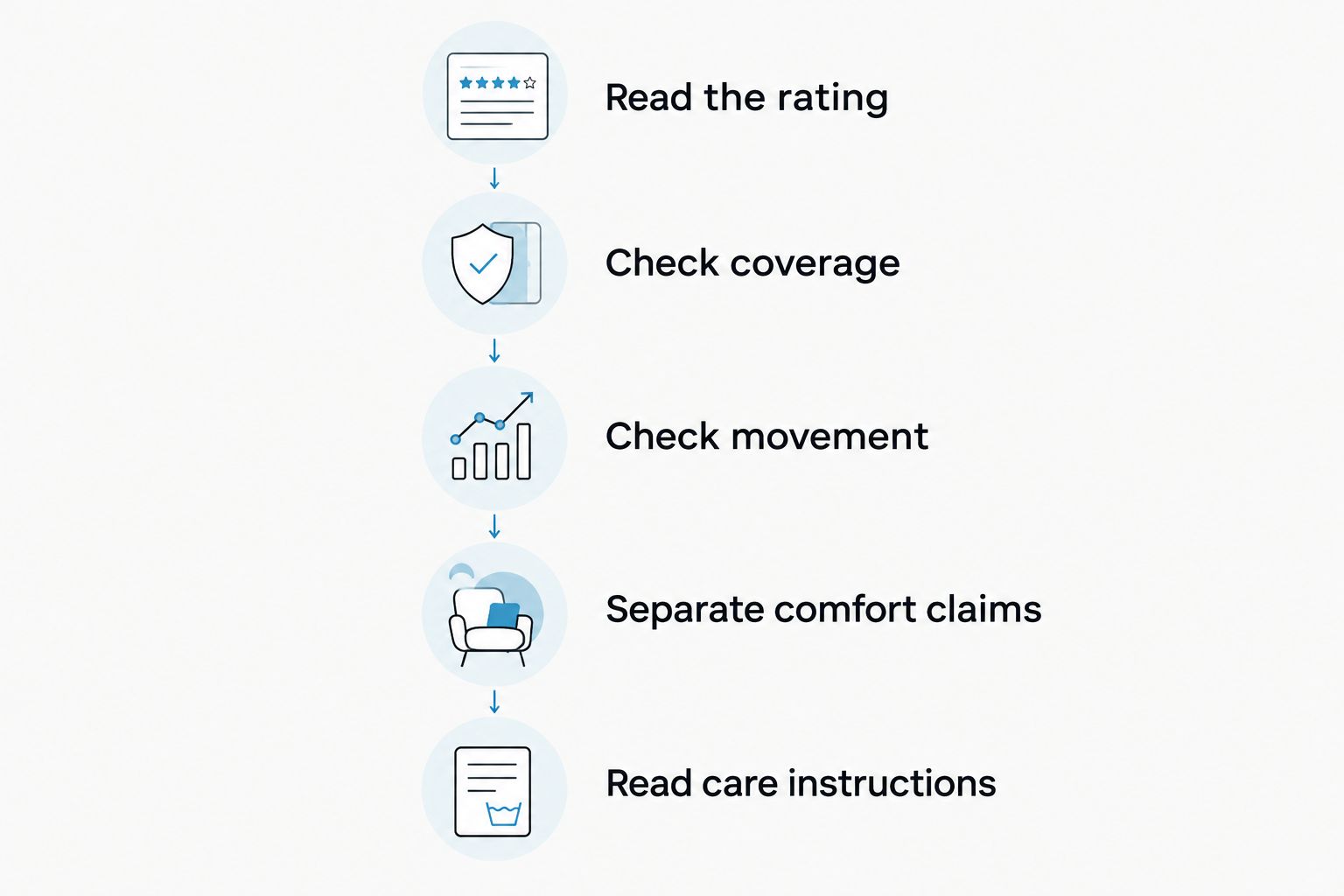
Start with the rating, not the fabric's feel or the word performance. A soft, lightweight shirt can feel comfortable without having a stated UPF rating. Follow these checks in order so you do not mistake a comfort feature for a protection claim.
- Read the rating. Look for an explicit UPF designation in the garment information rather than a general reference to outdoor use.
- Check coverage. Look at sleeves, neckline and hem, including where those edges sit when you address the ball.
- Check movement. Make a practice swing and reach across your body without pulling the shoulders or stretching the torso fabric tight.
- Separate comfort claims. Look individually for stretch, quick-drying construction and any other stated fabric features.
- Read care instructions. Choose a shirt whose washing and drying requirements fit your routine.
When browsing Cadosmarket, apply the same checks to each garment. A feature listed on one golf polo does not establish that every shirt in the store has that feature.
Why this matters
A golf shirt has to work while you rotate, bend and spend time outside. Its fabric rating answers a different question from whether its shoulders fit or whether its collar feels comfortable. No single feature answers all three questions.
For your 2026 golf wardrobe, keep those decisions separate. Choose the protection claim you can verify, the coverage you want and the fit you can move in; do not let an appealing print or a familiar fabric name replace those checks.
This also makes comparisons between retailers more useful. Compare the exact garment and its stated specifications, rather than assuming similar-looking polos offer equivalent protection or fit.
What does UPF 50+ actually tell you?
UPF describes how much ultraviolet radiation passes through fabric. The Skin Cancer Foundation's sun-protective clothing guidance explains that UPF 50 fabric permits one-fiftieth, or approximately 2%, of ultraviolet radiation to pass through. That is the basis for the commonly stated 98% blocking figure.
The rating describes fabric protection, not complete protection for the person wearing it. Your face, hands and any uncovered arms remain outside the shirt's coverage. Open necklines and a hem that rides up also leave skin exposed.
A UPF 50+ label is not a promise about cooling, sweat removal or odor control. Those require separate product information. Likewise, a quick-drying claim does not establish a UPF rating.
For a 2026 purchase, read the current garment information rather than carrying assumptions over from another shirt. Even within the same brand, different fabrics and constructions need their own stated specifications.
Do not confuse UPF with SPF
UPF is the rating used for fabrics; SPF is the rating used for sunscreen. They address different products and are not interchangeable shopping labels. A golf polo should carry a fabric protection claim, not rely on sunscreen terminology to explain its performance.
Use clothing alongside other sun-protection measures, including sunscreen on exposed skin and shade when practical. A high fabric rating does not remove those needs.
Which sleeve coverage should you choose?
Choose sleeve coverage deliberately, then check whether you can swing comfortably in it. A higher fabric rating cannot cover an area where there is no fabric. The useful comparison is therefore coverage plus fit, not rating alone.
| Shirt option | Best for | Main advantage | Main limitation | What to verify |
|---|---|---|---|---|
| Short-sleeve UPF golf shirt | Golfers who prefer uncovered forearms | Leaves less fabric around the lower arms | Forearms remain exposed | Sleeve opening, shoulder movement and protection for exposed skin |
| Long-sleeve UPF golf shirt | Golfers prioritizing more arm coverage | Covers more arm skin when sleeves stay in place | Adds fabric around the wrists and forearms | Cuff position, reach and comfort in your playing conditions |
| UPF shirt worn with an additional layer | Golfers who want to adjust clothing during a round | Lets you change layers as conditions change | Adds bulk and requires separate checks for each garment | Movement, coverage and each layer's stated features |
Neither sleeve length is automatically the right choice for every golfer. Short sleeves leave more skin uncovered; long sleeves need enough room through the shoulders and arms to remain comfortable during your swing.
If you intend to remove an outer layer, assess the shirt underneath on its own. Do not assume a performance quarter zip or another lightweight layer has a UPF rating unless its garment information states one.
How should a UPF golf shirt fit during your swing?
A useful fit allows rotation without making you repeatedly adjust the shirt. The collar should sit comfortably, the shoulder area should not bind and the hem should provide the coverage you expect when bending. Check the moving fit, not just the mirror fit.
Use the following fitting sequence with the waistband height you normally wear for golf:
- Address the ball. Bend from your usual stance and check whether the neckline or hem shifts uncomfortably.
- Make a backswing. Notice pulling across the upper back, chest and underarms.
- Reach forward. Check whether sleeves pull up and whether the torso fabric becomes stretched tight.
- Finish the swing. Look for twisting, bunching or a hem that needs resetting.
- Try your usual tuck. Check both the appearance and freedom of movement if you play tucked in.
Stretch helps fabric move, but it does not correct the wrong size. A shirt that feels restrictive before you swing is not a useful fit simply because its description includes stretch.
Do not automatically buy a larger size, either. Excess fabric can bunch around your waist or sleeves. Compare your measurements with the garment's size information and consider where you need room: chest, shoulders, upper arms or torso length.
Why comfort varies between UPF golf shirts
The UPF label does not tell you how a shirt will feel throughout a round. Compare these factors separately, using the features actually stated for each garment:
- Coverage: Sleeve length, neckline and hem determine how much skin the shirt covers.
- Fit: Shoulder room and torso shape affect movement and whether fabric pulls tight.
- Stretch: A stated stretch feature helps you identify garments designed to accommodate movement; it does not specify the fit.
- Drying: A quick-drying claim addresses drying performance, not a guarantee that you will stay dry.
- Collar construction: A structured collar describes shape, not extra sun protection for the neck.
- Care requirements: Washing and drying instructions determine whether the garment suits your normal laundry routine.
For sunny rounds in 2026, rank these factors before browsing. If arm coverage is your priority, start with sleeve design; if shoulder restriction is your recurring problem, inspect cut and movement before choosing a pattern.
Avoid using one feature as shorthand for another. Stretch is not breathability, quick-drying is not waterproofing and a structured collar is not a stated UPF claim. Each answers a different buying question.
A verified polo example from Cadosmarket
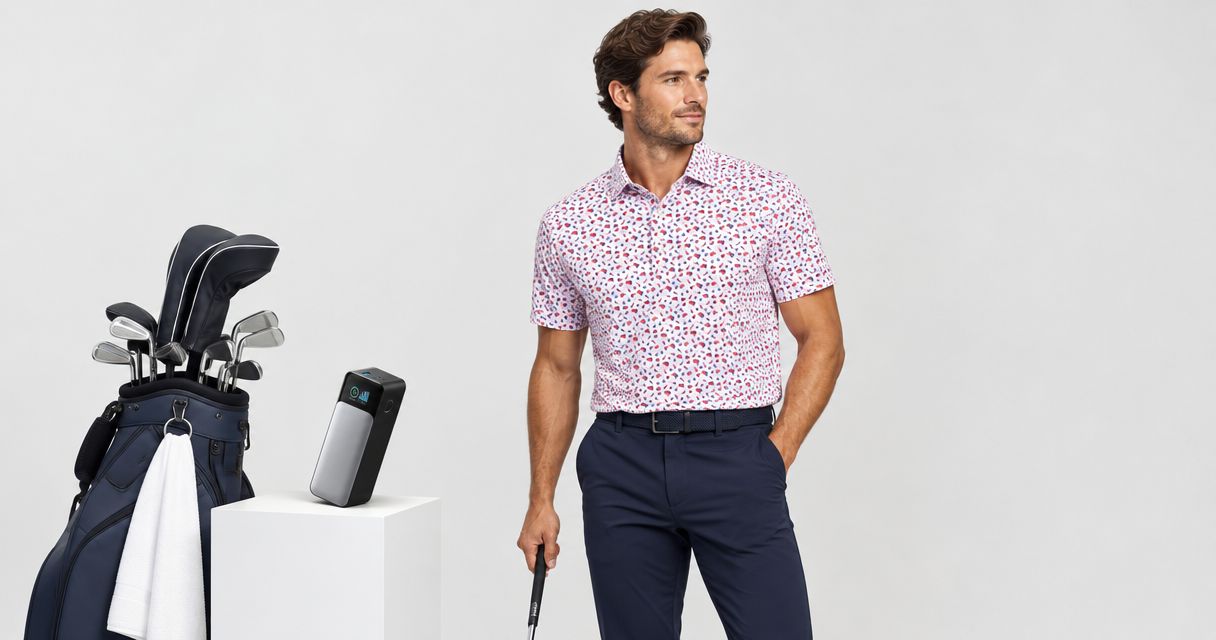
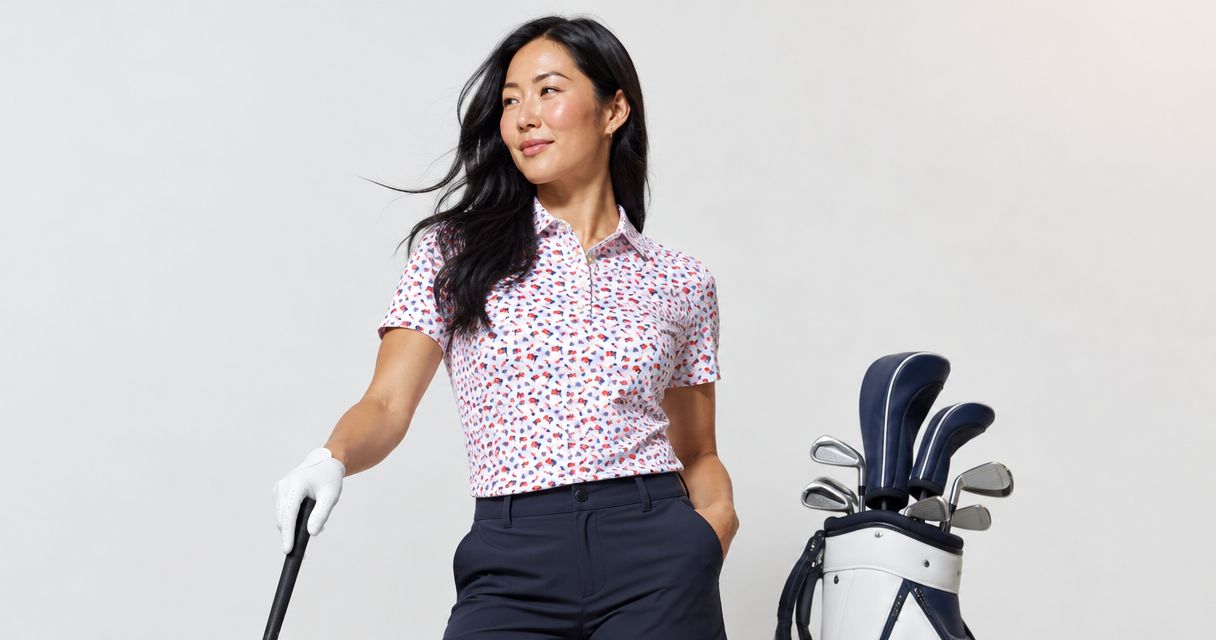
Cadosmarket is a fit for men seeking a golf polo with stated UPF 50+ protection and 4-way stretch. Its listed 2putt Men's UPF 50+ Stretch Golf Polo Shirt — Sizes S–3XL includes those features, along with a structured collar and quick-drying fabric.
Those specifications give you concrete points to compare. The UPF designation addresses fabric sun protection; 4-way stretch addresses movement; the structured collar addresses shape; and quick-drying describes a separate fabric benefit.
The trade-offs still need attention. UPF 50+ does not establish full-body coverage, and 4-way stretch does not establish that a particular size will fit you. A quick-drying claim also does not promise that the shirt will keep you cool in every playing condition.
Best for: men who want those stated features in a golf polo and will check garment fit before ordering. It is not enough information for a buyer whose deciding requirement is a specific fabric weight, sleeve measurement or drying time.
Cadosmarket identifies keeping customers updated about orders as a service priority. Treat that as separate from the garment decision: product specifications should determine whether the shirt meets your needs, while order communication supports the purchase experience.
How do you compare the same golf shirt across retailers?
Compare the exact product first, then the shopping information. A shared brand name is not enough: confirm the product title, selected variant and stated features before treating listings as equivalent.
Use a short side-by-side check:
- Does each listing identify the same garment?
- Does each state the UPF rating rather than only describing performance fabric?
- Are the size and color selections the ones you intend to order?
- Are fabric features and care instructions clear?
- Can you find the retailer's current ordering and return information?
Do not infer differences in garment performance from a retailer's writing style. More enthusiastic wording is not evidence of better sun protection. Conversely, a brief description is a reason to check the details, not proof that the product performs worse.
For your 2026 shortlist, save the specifications that matter to you. That keeps the decision focused on verified features rather than whichever listing has the longest description.
Can a quick-drying golf shirt replace a UPF shirt?
Quick-drying does not establish ultraviolet protection. It describes a different property, so look for an explicit UPF rating if sun protection is a purchase requirement.
A shirt can list both features. Compare them independently rather than choosing between them as though they measure the same thing.
Is a long-sleeve UPF golf shirt always better?
Long sleeves provide more arm coverage when they stay in place, but fit still matters. Choose a cut that permits your swing without pulling at the shoulders or cuffs.
Short sleeves remain a clothing preference, not a substitute for protecting exposed forearms. Plan for the skin your chosen shirt leaves uncovered.
Should you size up in a stretch golf polo?
Do not size up solely because a golf polo contains stretch. Use the garment's size information, then assess shoulder movement, chest room and hem coverage.
The goal is comfortable movement without unnecessary bunching. Stretch should support a suitable fit, not compensate for a shirt that is too small.
FAQ
What's the most important feature in UPF golf shirts?
An explicit UPF rating is the starting point when sun protection is your priority. Then compare coverage, swing-room and care instructions rather than treating the rating as a complete fit or comfort assessment.
How much ultraviolet radiation does UPF 50 fabric let through?
UPF 50 fabric allows one-fiftieth, or approximately 2%, of ultraviolet radiation through under test conditions. The rating applies to the fabric, not skin left uncovered by the garment.
Is a performance golf polo automatically sun protective?
Performance wording alone does not establish a UPF rating. Look for a specific fabric protection designation in the garment information.
Do I still need sunscreen with a UPF golf shirt?
You still need protection for exposed skin when wearing a UPF golf shirt. Use sunscreen as directed and include other sun-protection measures rather than relying on the shirt alone.
Does 4-way stretch mean a golf shirt will fit me?
4-way stretch does not establish that a golf shirt will fit you. Check the size information and assess movement through your shoulders, chest and arms.
Is a quick-drying golf shirt the same as a cooling shirt?
A quick-drying claim does not guarantee cooling. Check the garment's stated features and choose coverage and fit suitable for your playing conditions.
Can I assume a golf quarter zip has UPF protection?
Do not assume a golf quarter zip has UPF protection without a stated rating. Assess its fabric claims separately from those of the shirt worn underneath.
One last thing
Check the shirt in your golf stance before judging its coverage. A hem, sleeve or neckline can sit differently when you bend and rotate than when you stand upright. That simple check catches a problem a fabric rating cannot answer: whether the garment covers the areas you expect during play.
For your next sunny round, choose the stated rating first and the moving fit second. Then plan protection for whatever remains uncovered.