Choose a heavyweight hoodie by checking fabric weight, fiber content, interior construction, and fit over the layers you actually wear. For cold weather in 2026, treat a hoodie as an insulating layer—not a substitute for verified wind or rain protection—and check care instructions before buying.
- Choose a heavyweight hoodie by fabric construction and layering fit, not the heavyweight label alone.
- GSM describes fabric mass per area; it does not provide a temperature rating.
- A pullover limits ventilation; a full zip makes temperature adjustments easier.
- Cados Market shoppers should check composition, measurements, and care instructions before choosing a cold-weather hoodie.
How do you choose a heavyweight hoodie for cold weather?
Start with your exposure, then compare the garment's construction and measurements. The right hoodie fits your cold-weather layers without restricting movement or crowding your outer jacket. Extra fabric weight does not correct a poor fit or provide weather protection by itself.
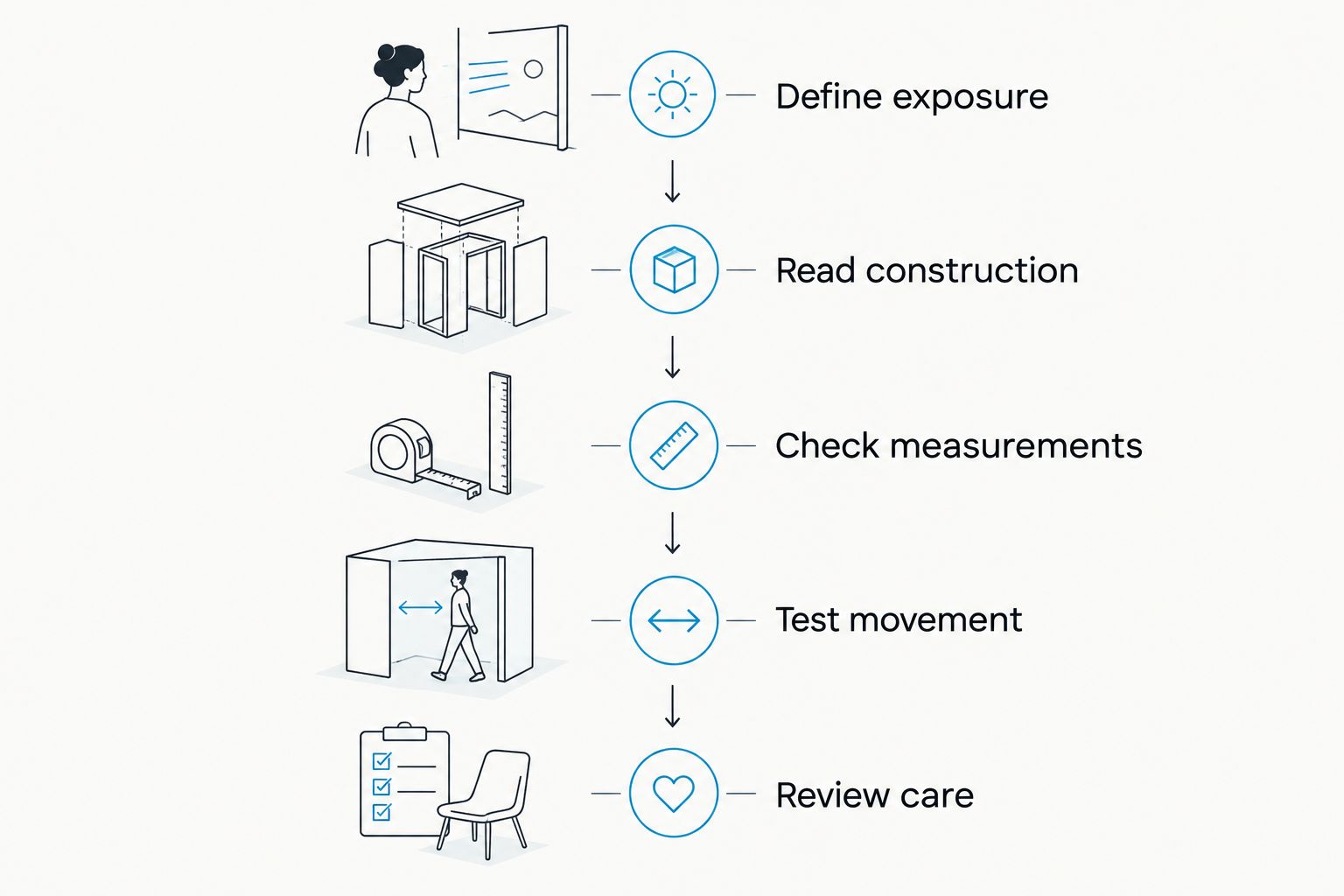
Use this sequence when reviewing a listing:
- Define exposure. Decide whether you need warmth indoors, during short outdoor trips, or beneath an outer layer.
- Read construction. Check fiber composition, fabric weight when stated, and whether the inside is brushed or looped.
- Check measurements. Compare the garment with a hoodie that already fits over your intended base layer.
- Test movement. Check reach, shoulder movement, and room beneath your jacket.
- Review care. Confirm that the washing and drying instructions suit your routine.
When browsing Cados Market, apply those checks to the individual listing rather than treating a product name as a complete specification.
Why this matters
A heavy sweatshirt can feel substantial in your hands yet still leave your neck exposed or fit too tightly under a coat. Warmth depends on the clothing system you wear, not just the weight of one garment.
For your 2026 cold-weather wardrobe, separate insulation from weather protection. A hoodie supplies a layer of clothing; wind resistance and water resistance need their own stated specifications. Do not read heavyweight as windproof, waterproof, or suitable for a particular temperature.
What fabric weight tells you—and what it does not
GSM means grams per square meter: the mass of a fabric sample covering 1 square meter. A higher GSM indicates more mass per area, not a guaranteed increase in warmth across different fabrics and constructions.
Total garment weight is a different measurement. A larger hoodie contains more fabric, so its overall weight cannot tell you whether its material is denser than a smaller garment's material.
Compare like with like
When fabric weights are listed, compare garments with similar fiber content and construction. A brushed interior, an unbrushed looped interior, and an added lining change the garment beyond its headline fabric weight.
If a listing uses only the word heavyweight, keep checking. Look for composition, construction, measurements, and care information rather than assigning the hoodie an assumed GSM range.
Read the fiber composition
Cotton absorbs moisture, which matters when you sweat or get wet. Polyester absorbs less moisture into the fiber than cotton, but the finished garment's drying behavior also depends on its construction and thickness.
A blend name alone does not settle the choice. Check the actual composition and any stated performance features; do not assume a cotton-polyester hoodie has moisture-management treatment, stretch, or odor control.
Inspect the inside
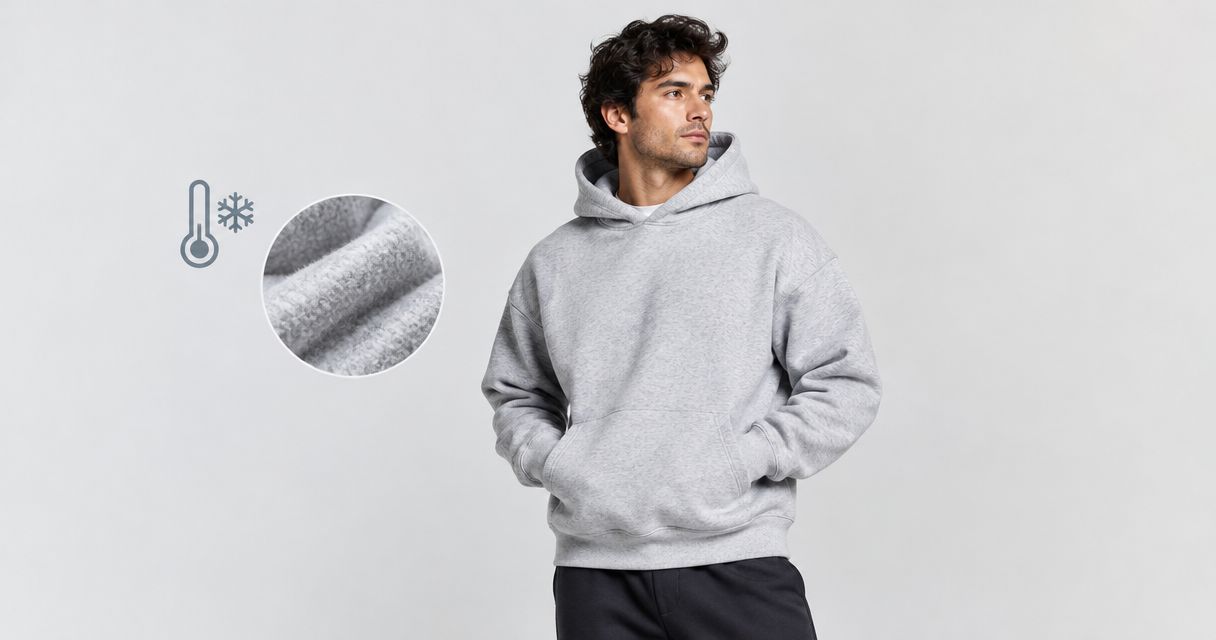
A brushed interior has raised fibers; an unbrushed looped interior has visible loops. Interior photographs help you distinguish them, but photographs cannot establish a temperature rating or long-term durability.
Choose the interior you prefer against your base layer. If texture bothers your skin, inspect the neckline and cuffs as well as the main body fabric.
Pullover hoodie: best for a simple closed front
A pullover is best for shoppers who prefer a closed front and do not need frequent front-opening ventilation. There is no zipper to open when you warm up, so temperature adjustments depend on removing the garment or changing your other layers.
Check the neck opening before choosing a pullover. It needs to pass comfortably over your head and sit without pulling across your throat when the hood is down.
A pullover also requires enough room to put it on over your intended clothing. A fit that looks neat over a thin tee can become restrictive over a thicker base layer.
Full-zip hoodie: best for frequent temperature changes
A full-zip hoodie is best for shoppers who regularly move between heated spaces and outdoor conditions. Opening the front provides a direct way to release heat without removing the whole garment.
The trade-off is a front closure that needs inspection. Check whether the zipper lies comfortably when you sit, whether the top touches your chin, and whether the front opening works beneath your jacket.
A zipper does not establish wind resistance. Look for a stated construction feature or weather-resistance claim rather than assuming the closure blocks drafts.
| Hoodie style | Best for | Practical advantage | Main limitation | What to check |
|---|---|---|---|---|
| Pullover | A closed-front everyday layer | No front zipper to adjust | Requires removal for substantial ventilation | Neck opening and room over base layers |
| Full zip | Frequent indoor-outdoor transitions | Front opening allows ventilation | Zipper comfort becomes part of the fit | Closure, chin contact, and seated comfort |
Why heavyweight hoodie warmth varies
These factors explain why garments with similar descriptions can feel different. Use them as a comparison checklist, not as a way to calculate a temperature rating.
- Fabric construction: Brushing, loops, and lining change the interior structure. Compare the actual construction rather than the product category alone.
- Fiber composition: Cotton, polyester, and blends handle moisture differently. Read the composition instead of assigning properties from appearance.
- Layering fit: Tight clothing can compress underlying layers; excess bulk can make an outer jacket uncomfortable. Test the complete outfit.
- Openings and coverage: The hood, neckline, cuffs, and hem affect where the garment covers you and where openings remain.
- Exposure: Still air, wind, rain, and physical activity place different demands on your clothing. Weight alone does not address them all.
- Care and condition: Washing and drying must follow the garment label. Do not assume every heavyweight sweatshirt accepts the same treatment.
How should a heavyweight hoodie fit over layers?
A heavyweight hoodie should fit over your intended base layer without pulling across your shoulders, chest, or upper arms. Check movement before choosing a closer fit for appearance.
Start with a familiar garment laid flat. Measure its chest width, body length, and sleeve length using the same method shown in the retailer's size guide. Do not compare a flat garment width directly with a body-circumference measurement.
For example, a flat chest width of 60 cm corresponds to 120 cm around the garment when doubled. That arithmetic does not tell you which size to order: garment circumference and body circumference are different measurements, and the desired room depends on your layers.
Check shoulders and sleeves
Reach forward as though holding a steering wheel, then raise your arms. Watch for pulling across the upper back, sleeves that bind, or a neckline that shifts uncomfortably.
A dropped shoulder can be intentional. Judge it against the stated cut and your movement needs rather than assuming every shoulder seam must sit at the same point.
Check the hem and cuffs
Sit down and bend forward. The hem should provide the coverage you want without bunching excessively beneath your jacket.
Cuffs should feel secure without uncomfortable pressure. Check them over your wrists and any watch you normally wear; a photograph cannot establish that fit.
Check the hood beneath your coat
Try the hood both up and down with your outer layer. A bulky folded hood can crowd the back of a coat collar, while an uncomfortable hood opening can restrict your preferred coverage.
Turn your head in both directions. Check visibility and comfort rather than treating a larger hood as automatically better for cold weather.
Can you wear a heavyweight hoodie instead of a winter coat?
A heavyweight hoodie is not a substitute for a winter coat simply because it feels thick. Choose your outer layer around the actual wind, precipitation, exposure, and activity you expect.
For a 2026 commute involving heated transport and brief outdoor walks, easy layering and ventilation deserve attention. For extended outdoor exposure, evaluate the full clothing system and any verified protection claims instead of relying on a sweatshirt label.
If you expect rain, check the outer garment's stated water protection. An ordinary hoodie should not be treated as rainwear without an explicit, relevant specification.
Should you size up a heavyweight hoodie for winter?
Size up only when the garment measurements show that your intended layers need more room. Buying a larger size without checking measurements can add sleeve length and body bulk without solving the fit problem.
First compare your existing hoodie with the listing's size chart. Then consider the outer jacket: a roomier sweatshirt still needs to fit comfortably beneath it.
Use the same checks for men's and women's clothing. Category labels do not replace the garment's cut, measurements, or your preferred coverage.
What should you check before ordering in 2026?
Keep the final decision tied to information you can verify. A useful product listing answers questions about construction and fit rather than relying on comfort language alone.
- Composition: What fibers are listed, and in what proportions?
- Construction: Is the interior brushed, looped, or lined?
- Measurements: Does the size guide describe the body or the garment?
- Care: What washing and drying instructions apply?
- Intended use: Does the garment suit your layering plan without assuming unstated weather protection?
Cados Market's Heavyweight Hoodie P2016 is described as a pullover. Check its current product details against this list before deciding whether it belongs in your cold-weather outfit.
Cados Market is best for shoppers who want a heavyweight hoodie purchase guided by product details rather than the label alone. Its stated service focus is keeping customers updated about orders; that does not replace checking garment specifications before purchase.
FAQ
What makes a hoodie heavyweight?
Heavyweight describes a hoodie's substantial fabric, but the label alone does not establish a universal fabric weight or warmth rating. Check the stated GSM, composition, and construction when comparing garments.
Is a higher-GSM hoodie always warmer?
A higher-GSM hoodie is not automatically warmer across different materials and constructions. GSM measures fabric mass per area, while interior structure, fit, layers, and exposure also matter.
Is a pullover or zip-up hoodie better for cold weather?
A pullover suits shoppers who prefer a closed front; a zip-up suits shoppers who need frequent ventilation. Neither style establishes wind or rain protection without an explicit specification.
Should a winter hoodie fit loose or tight?
A winter hoodie should leave room for your intended layers without restricting movement or crowding your outer jacket. Check chest, shoulders, sleeves, and hem while wearing the complete outfit.
Can I use a heavyweight hoodie as a rain jacket?
Do not use a heavyweight hoodie as a rain jacket unless its stated specifications support that use. Fabric thickness does not establish water resistance or waterproofing.
Will a heavyweight hoodie shrink in the wash?
Shrinkage depends on the fabric, finishing, and care conditions, so follow the individual garment's label. Do not assume a hoodie is preshrunk or suitable for tumble drying unless that information is stated.
What should I check when buying a heavyweight hoodie online in 2026?
Check composition, interior construction, garment measurements, and care instructions before buying a heavyweight hoodie online in 2026. Match those details to your base layer, outer jacket, and expected exposure.
One last thing
Try your hoodie while seated, not just standing in front of a mirror. A garment that feels comfortable upright can bunch at the waist, pull across the shoulders, or crowd your neck once you sit and reach forward.
Make that part of your 2026 fit check. Use the base layer and jacket you intend to wear, because the complete outfit—not the hoodie alone—is what needs to work.