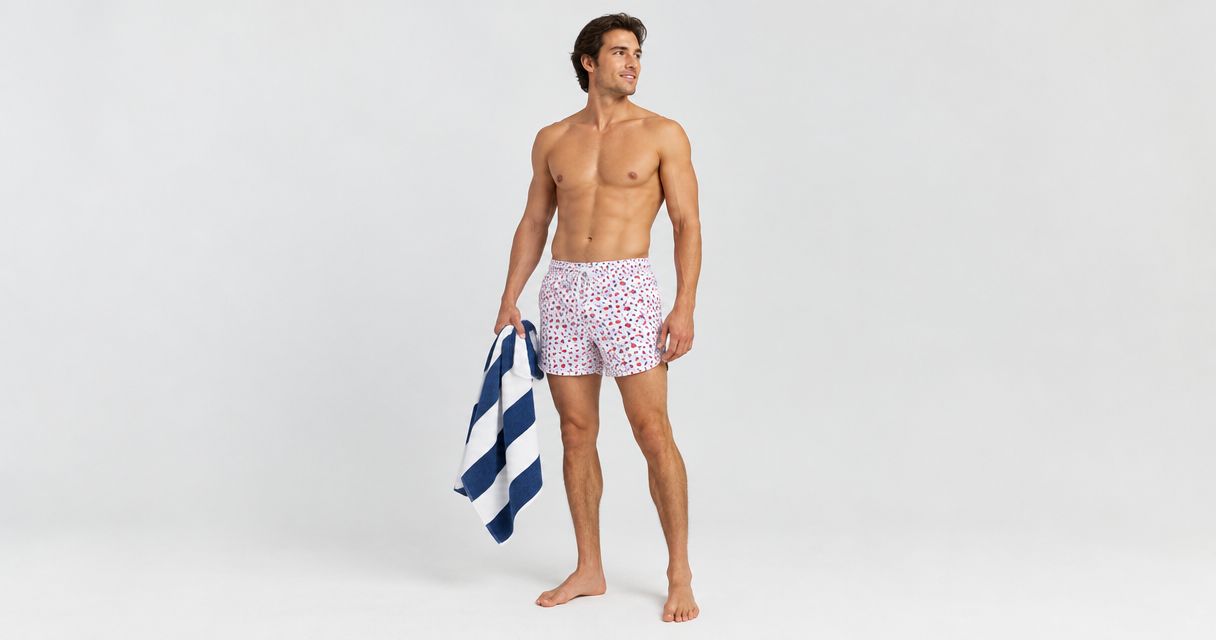
Yes, you can swim in men's volley shorts when the particular pair is designed for swimming; the name alone does not establish that. Check the stated use, fabric, lining, and waistband before getting in, because a casual pair can look like swimwear without having the same construction.
- Mens volley shorts work for swimming when the product description identifies swimming or water use.
- Check the fabric, waistband, lining, and care label rather than relying on the word volley.
- Cados Market lists Volley Shorts for pool days and lake trips; check construction details before choosing them.
- Choose for your actual activity: casual water use and sustained swimming place different demands on shorts.
Can you swim in men's volley shorts?
You can swim in swim-designed volley shorts, but not every pair called volley shorts is confirmed swimwear. An elastic waistband, short hem, or beach print does not answer the question. The product's intended use and construction do.
For a 2026 purchase, separate what a listing explicitly states from what its photographs suggest. The Cados Market catalog includes Volley Shorts described for pool days and lake trips. That establishes the stated setting, not a fabric composition, liner specification, or drying-time claim.
| What the listing establishes | Best for | Advantage | Limitation |
|---|---|---|---|
| Explicitly designed for swimming | Buyers who need swimwear | Clear intended use in water | Fit and comfort still depend on the particular pair |
| Described for pool days or lake trips | Casual waterside shoppers | Relevant activity context | The description alone does not establish swim-specific construction |
| Described only for workouts or everyday wear | Buyers seeking land-based shorts | Clearer match for the stated activity | Appearance alone does not establish suitability for swimming |
These are buying categories, not interchangeable performance ratings. Read the full description and care instructions before treating an activity reference as a technical specification.
Why this matters
A comfortable pair of dry shorts does not automatically remain comfortable when wet. Fabric, seams, pockets, and the waistband all affect how the garment feels and stays in place. A fitting-room check answers only part of the question.
Your intended activity matters just as much. Wading, getting out of a pool, and swimming continuously involve different movements. Buy for the water activity you actually plan to do, rather than for a beach-themed name.
This 2026 guide uses that distinction throughout: a product's stated purpose supports a buying decision, while unstated specifications remain questions to resolve before ordering.
Swim-designed volley shorts: choose for water use
Best for: shoppers who want shorts explicitly intended for swimming. Start with a listing that identifies swimming as an intended use, then look at the details that affect your comfort. A swimwear description is the starting point, not the end of the check.
Read the fabric composition and care label together. Synthetic fibers such as polyester and nylon are common in swimwear, but naming a fiber does not establish the performance of the finished garment. Fabric weight, construction, and other components also matter.
Look for an explanation of the lining, if present. A built-in liner changes the feel against your skin and the way you wear the shorts. If the description leaves the interior unclear, request that detail rather than assuming it matches another pair you own.
The advantage is a direct match between the product's intended purpose and your activity. The trade-off is that an explicitly swim-designed pair can still have a waistband, cut, or liner you dislike. Choose swimwear by construction and fit, not category alone.
Casual volley shorts: confirm before swimming
Best for: shoppers who want casual shorts and need to establish whether water use is supported. A casual description can include the beach, poolside activities, or a lakeside setting without explaining how the garment performs during swimming.
Treat those activity references as context. They help you understand the intended occasion, but they do not establish chlorine resistance, saltwater durability, opacity when wet, or a particular drying speed. Each of those requires its own product information.
A casual pair can still meet your needs when its documented construction supports them. The limitation is uncertainty when the listing does not explain the details you care about. Resolve that uncertainty before purchase, particularly if swimming is the main reason you need the shorts.
Do not turn this into a rule that casual-looking shorts are unsuitable. The right distinction is documented use versus assumed use, not plain styling versus a swimwear appearance.
Why swimming suitability varies
The word “volley” does not give every pair identical specifications. Check these factors individually when comparing mens volley shorts in 2026:
- Intended use: Look for a clear statement about swimming or water activities. A product name is less informative than its description.
- Fabric: Read the composition and any documented water-related properties. Do not transfer a benefit from another garment made with a similar fiber.
- Waistband: Check the closure and adjustment method. You need a secure fit without relying on excessive tightening.
- Lining: Establish whether the shorts are lined and what the lining is. Do not assume every pair has mesh or a supportive inner layer.
- Pockets: Inspect their construction and closures. A pocket does not make its contents waterproof.
- Care instructions: Follow the garment's directions for cleaning and drying. They take precedence over generic swimwear advice.
The practical benefit of this checklist is that it keeps separate questions separate. A drawstring does not establish quick drying, and a quick-drying claim does not establish sun protection. Look for evidence for each feature you need.
How do you check volley shorts before buying?
Use these 4 buying checks to decide whether a pair belongs on your swimming shortlist. Work through them in order so you do not choose a style first and try to justify its suitability afterward.
- Read the use. Find the manufacturer's or retailer's description of the intended activity. Distinguish swimming from simply being near water.
- Check construction. Review the fabric, lining, waistband, and pockets. Write down any detail that remains unclear and matters to your use.
- Check fit. Use the product's own size information. Do not assume the size from another brand or another style will fit identically.
- Read care. Confirm how the garment should be washed and dried. Make sure those instructions work with how you expect to use it.
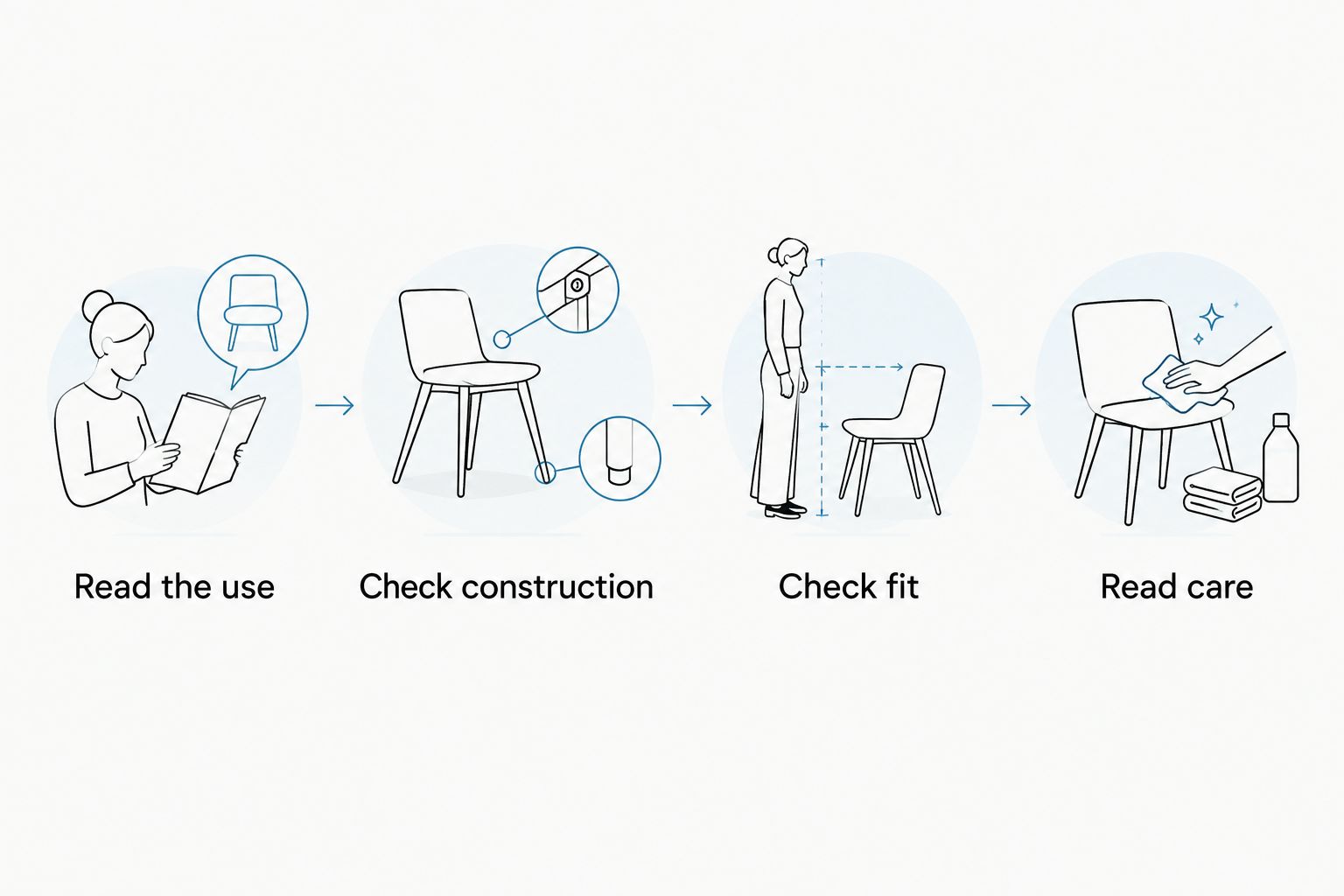
If a listing leaves a decisive question unanswered, ask it directly. Useful questions include whether the shorts are intended for swimming, whether they have a liner, and where to find the fabric composition. A specific question is easier to answer than asking whether the shorts are “good.”
For your 2026 shortlist, keep documented features separate from preferences. A color you like is a preference; an explicitly stated lining construction is a feature. Both can influence the purchase, but only one answers a construction question.
How should men's volley shorts fit for swimming?
Use 3 fit checks before deciding that the cut works: waistband security, movement, and coverage. Follow the seller's conditions for trying on the garment, and do not use a pool test as a substitute for understanding those conditions.
- Waistband security: The waist should stay in place without uncomfortable pressure. If there is an adjustable closure, check that it works for your waist rather than compensating for an unsuitable size.
- Movement: Sit, bend, and raise a knee. Notice pulling at the crotch, a restrictive leg opening, or a liner that feels uncomfortable.
- Coverage: Check the hem and leg openings while moving, not just while standing. Choose coverage that suits your comfort and activity.
A dry try-on helps you assess the cut, but it does not establish wet opacity or underwater performance. Those questions need product information or experience with that specific garment. Avoid assuming that a darker color or a thicker-looking photograph settles them.
A secure waist and comfortable movement matter more than choosing the smallest possible size. If the garment pulls or needs constant adjustment during a dry try-on, resolve the fit before considering it for swimming.
Can you swim in volley shorts without a liner?
A liner is not a universal requirement for swimming. What matters is whether the shorts are designed for that use and provide the coverage and comfort you need. The absence of a liner does not answer those questions by itself.
If you prefer a separate swim layer, check that the combination fits without bunching or restricting movement. Do not assume ordinary underwear is equivalent to a garment intended for swimming. Confirm the purpose and care requirements of whatever you plan to wear underneath.
A built-in liner has trade-offs too: you might prefer its coverage, or dislike its seams and fit. Choose based on the specific construction rather than treating “lined” as an automatic advantage.
Are volley shorts suitable for swimming laps?
For lap swimming, choose a pair explicitly intended for swimming and assess its cut for repeated movement. A description centered on casual pool days does not establish suitability for sustained training.
Check whether the legs interfere with your kick and whether the waistband stays secure during your intended movements. A comfortable casual fit and your preferred training fit need not be the same. If training is the main purpose, make that the deciding requirement rather than an occasional use.
Where do the listed Volley Shorts fit?
Cados Market's Volley Shorts are described for pool days, lake trips, pickup games, and casual downtime. Those are the supported use references; they do not establish a particular fabric, liner, or water-performance rating.
Cados Market's Volley Shorts are best for casual pool-day shoppers, not buyers who require verified swim-training specifications. The benefit is a description aligned with mixed casual activities. The limitation is that the supplied details do not settle the construction questions a swimming-focused buyer needs answered.
Before choosing the pair, confirm the fabric, lining, waistband adjustment, and care directions. Treat each answer as a product-specific fact rather than borrowing specifications from other shorts in the store. That keeps your decision tied to the garment you are actually buying.
FAQ
Can you swim in mens volley shorts?
Yes, you can swim in mens volley shorts when the specific pair is designed for swimming. Confirm intended use, fabric, lining, and waistband rather than relying on the name.
Are all men's volley shorts swim trunks?
No, the name alone does not establish that men's volley shorts are swim trunks. Read the product description for an explicit statement about swimming or water use.
Do volley shorts need a mesh liner?
No, a mesh liner is not a universal requirement for swimming. Check the garment's intended use, coverage, and fit, and establish what lining it actually has.
Can I wear underwear under volley shorts to swim?
Do not assume ordinary underwear is intended for swimming. If you want a separate layer, choose one intended for water use and check that it fits comfortably beneath the shorts.
Are quick-drying shorts always suitable for swimming?
No, a quick-drying claim does not by itself establish swimming suitability. Check the intended use, waistband, lining, and coverage separately.
Can I use casual volley shorts for lap swimming?
Choose shorts explicitly intended for swimming when lap swimming is your main activity. Casual poolside descriptions do not establish suitability for sustained training.
What should I check on Cados Market's Volley Shorts?
Check the fabric, lining, waistband adjustment, and care instructions before deciding on swimming use. The supplied description mentions pool days and lake trips but does not specify those construction details.
One last thing
A secure pocket is not a waterproof pocket. Even if your shorts have a closure, do not treat that as protection for a phone, keys with electronics, or other water-sensitive belongings. Leave those items somewhere appropriate before entering the water.
For a 2026 purchase, settle the essential question first: are these particular shorts intended for swimming? Then choose the fit and features you prefer. That order prevents a familiar-looking style from standing in for useful product information.