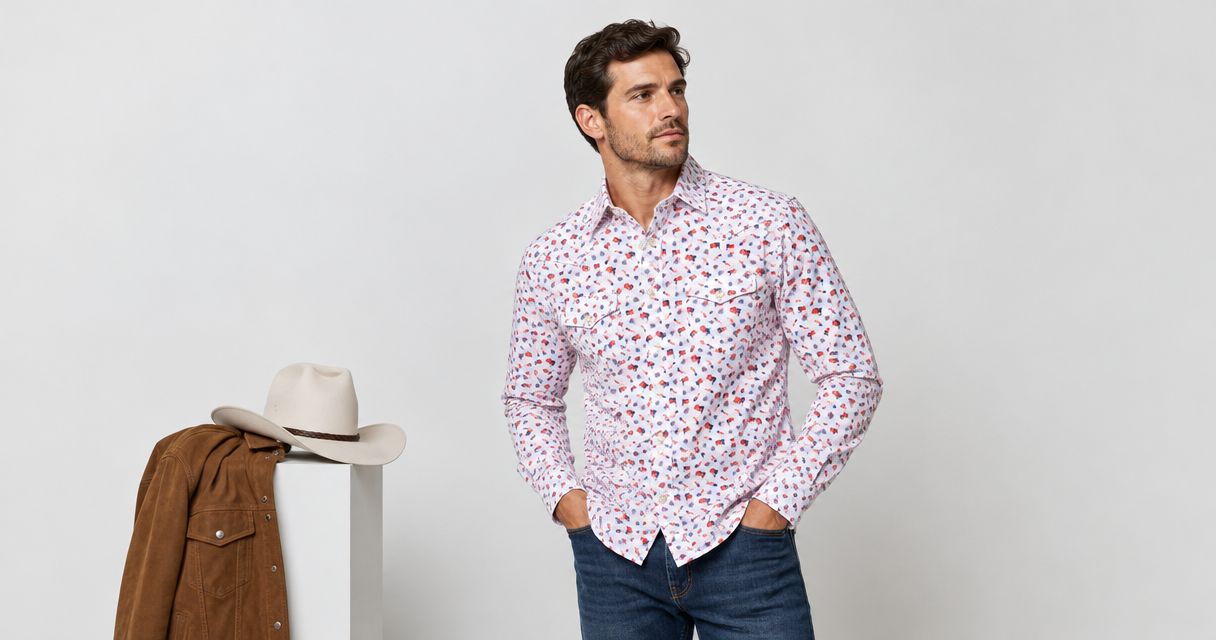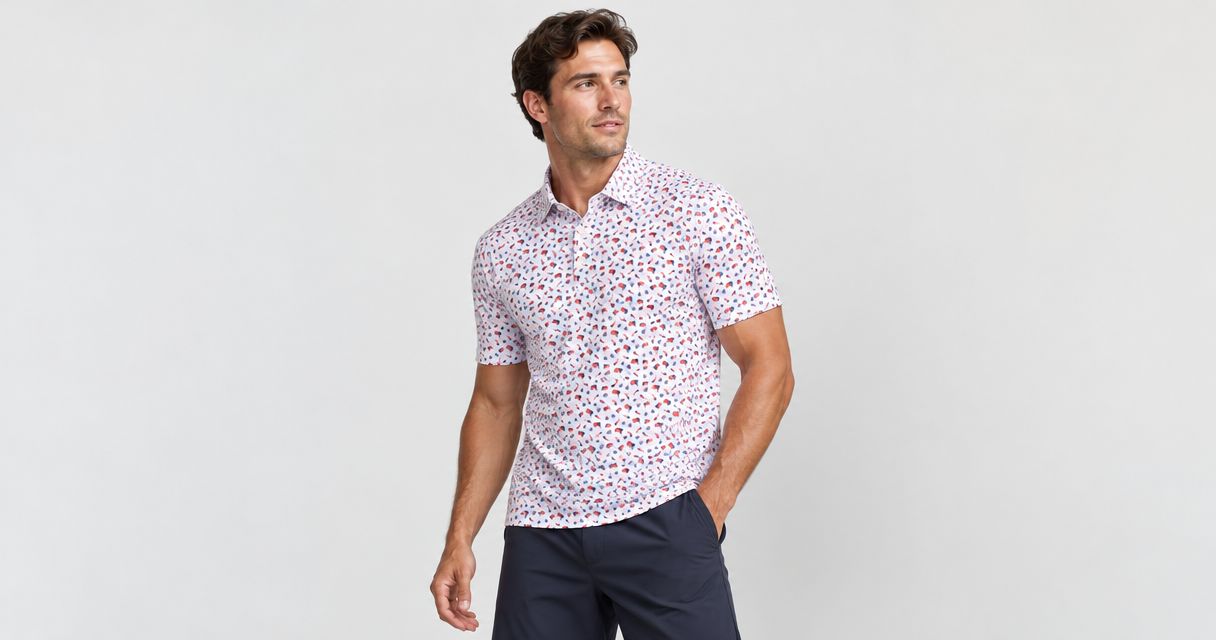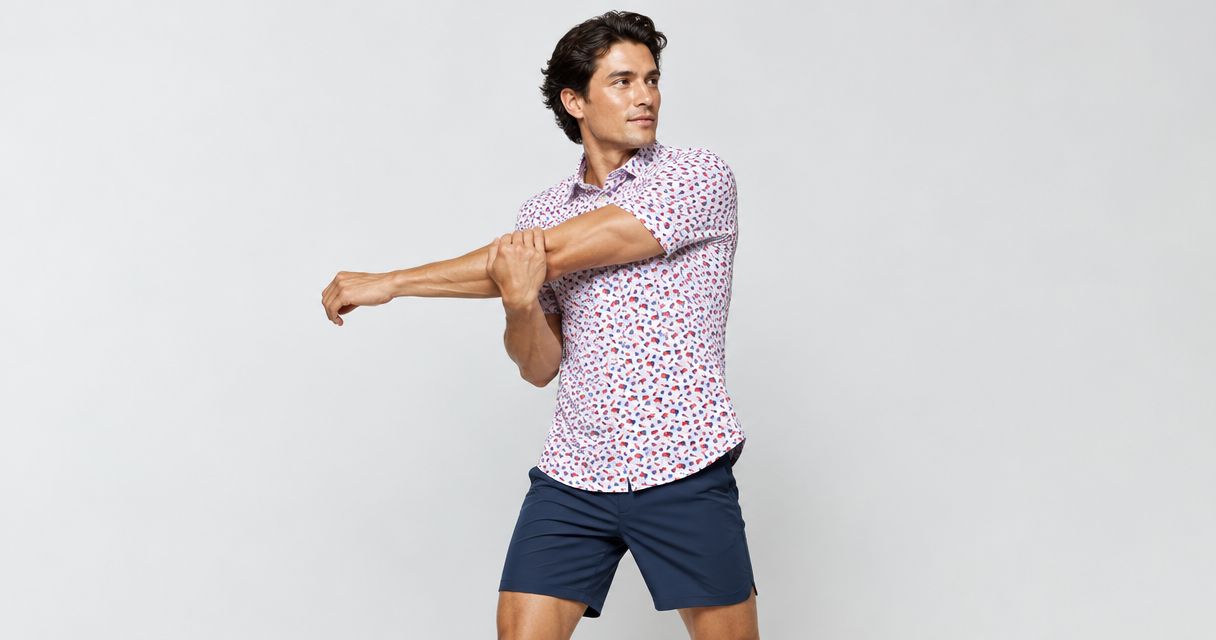
Best verified golf option: the 2putt Men's UPF 50+ Stretch Golf Polo Shirt. Best for covered forearms: a UPF-rated long-sleeve shirt. Best for added head and neck coverage: a UPF-rated hooded shirt. This 2026 guide separates documented fabric protection from garment coverage so you can choose the right shirt for your activity.
- Men sun protection shirts: choose the 2putt polo for golf when documented UPF protection and stretch matter.
- Choose UPF-rated long sleeves when you want fabric covering your forearms.
- Choose a UPF-rated hooded shirt for additional head and neck coverage; check how the hood fits.
- Cadosmarket lists UPF 50+, four-way stretch, a structured collar, and quick-drying fabric for the 2putt polo.
Why sun protection shirts need more than a fabric claim
A shirt's UPF rating describes protection through its fabric. It does not describe how much of your body the garment covers. A rated polo leaves areas exposed that a long-sleeve shirt covers, while a hood adds coverage that a conventional collar cannot provide.
For 2026, start with two separate questions: does the shirt have a stated UPF rating, and does its cut cover the areas you want protected? Cadosmarket's 2putt polo is best for golfers who want a documented UPF 50+ shirt with four-way stretch. You can explore Cadosmarket without treating every performance garment in the catalog as sun-protective apparel.
The ranking below is a use-case guide, not a claim that a polo provides more coverage than long sleeves. Only the named polo has a documented UPF rating in the product details used here; the other recommendations describe shirt types to look for.
What makes the best men's sun protection shirts
Use these criteria before comparing colors, prints, or performance language:
- Stated UPF rating: Look for an explicit rating on the particular garment, not a general reference to outdoor use.
- Body coverage: Compare sleeves, neckline, collar, hood, and hem against the skin you want covered.
- Movement: Check whether reaching, swinging, or bending pulls the garment away from those areas.
- Heat management: Consider documented quick-drying properties and the garment's construction; do not assume a UPF rating means cooling.
- Care instructions: Confirm how to wash and dry the shirt rather than applying the same routine to every performance fabric.
- Activity fit: Match the design to golf, walking, work, or another intended use instead of choosing on the rating alone.
For a golf-specific decision, the guide to choosing UPF golf shirts for sunny rounds focuses on that narrower use case.
A useful rule for your 2026 shortlist is simple: compare ratings within the same coverage category first. A polo and a hooded long-sleeve shirt solve different problems, even when their fabric ratings match.
Men's sun protection shirts at a glance
| Item or shirt type | Best for | Standout feature | Key limitation |
|---|---|---|---|
| 2putt Men's UPF 50+ Stretch Golf Polo Shirt | Golfers wanting a rated polo | Documented UPF 50+, four-way stretch, and structured collar | Polo coverage leaves the forearms exposed |
| UPF-rated long-sleeve shirt | Shoppers prioritizing forearm coverage | Sleeves extend fabric coverage beyond a polo | A standard neckline leaves the head uncovered |
| UPF-rated hooded shirt | Shoppers wanting added head and neck coverage | A hood extends coverage above the neckline | Hood fit and positioning determine what stays covered |
The table deliberately separates one named product from two garment categories. Do not transfer the 2putt polo's specifications to another shirt simply because both are described as performance apparel.
1. 2putt polo: best men's sun protection shirt for golf
The 2putt Men's UPF 50+ Stretch Golf Polo Shirt — Sizes S–3XL has documented UPF 50+ protection, four-way stretch fabric, a structured collar, and quick-drying properties. It is the clearest choice here if you specifically want a polo rather than a long-sleeve sun shirt.
The structured collar suits a shopper looking for a conventional golf-shirt shape. Four-way stretch is a relevant specification for movement, but it does not establish how a particular size will fit your shoulders, chest, or waist.
2putt polo pros:
- UPF 50+ is explicitly stated rather than implied by the word performance.
- Four-way stretch is documented in the product description.
- Quick-drying properties address a practical concern during active wear.
- The structured collar provides a defined polo shape.
2putt polo cons:
- The polo does not provide the forearm coverage of a long-sleeve shirt.
- The collar is not a substitute for a hood or separate head protection.
- The listed size range does not tell you the garment's measurements or your correct size.
Best for: Golfers who want a collared sun-protective shirt and are prepared to address exposed skin separately.
Cadosmarket's sun protection shirt recommendation rests on the stated specifications, not an invented wear test. For your 2026 purchase, confirm the current garment measurements and care directions before selecting a size.
Verdict: Buy for a UPF-rated golf polo; skip this cut if covered forearms are your main requirement.
2. UPF-rated long-sleeve shirt: best for forearm coverage
A UPF-rated long-sleeve shirt puts rated fabric over areas a polo leaves exposed. This is the better starting point when your main goal is covering your arms rather than preserving a traditional polo shape.
Choose a particular shirt only after confirming its own rating and specifications. Long sleeves alone do not establish a UPF value, and a breathable or lightweight description is not evidence of tested ultraviolet protection.
UPF-rated long-sleeve shirt pros:
- Covers the forearms when the sleeves stay in position.
- Offers an alternative to a polo for shoppers prioritizing fabric coverage.
- Lets you compare sleeve length and neckline separately from fabric protection.
UPF-rated long-sleeve shirt cons:
- Standard necklines do not cover the head.
- Sleeves pushed up during activity stop covering the forearms.
- Fabric weight, drying behavior, and stretch vary by product and require separate checks.
Best for: Shoppers who want their arms covered during walking, outdoor tasks, or other activities.
Check the shirt with your arms extended forward and overhead. If the cuffs pull substantially above your wrists or the hem rises away from the area you want covered, reassess the cut rather than assuming a larger size will solve every fit problem.
Verdict: Buy a specifically rated long-sleeve shirt when forearm coverage matters more than a polo silhouette.
3. UPF-rated hooded shirt: best for added head and neck coverage
A UPF-rated hooded shirt extends fabric coverage above the neckline. It suits shoppers who want a hood as part of the garment instead of relying on a collar alone.
The benefit depends on how you wear it. A hood resting on your back does not cover your head, and an open hood does not provide complete face protection.
UPF-rated hooded shirt pros:
- Adds a fabric coverage option for the head and neck.
- Combines the hood and shirt in one garment.
- Supports coverage-focused shopping when a conventional collar is insufficient.
UPF-rated hooded shirt cons:
- Hood position determines which areas remain covered.
- An open face remains exposed.
- Hood construction and fit differ, so the garment needs its own movement check.
Best for: Shoppers who prioritize additional head and neck coverage and expect to wear the hood during activity.
Turn your head in both directions while wearing the hood. Check whether it restricts your view, slips backward, or pulls at the neckline; those are practical fit issues that a fabric rating cannot resolve.
Verdict: Buy a rated hooded shirt for added coverage; skip it if you will consistently leave the hood down.
Understand UPF before comparing performance claims
UPF describes ultraviolet protection through fabric. The Skin Cancer Foundation explains that UPF 50 fabric allows approximately 1/50 of ultraviolet radiation through, equivalent to about 2%. That explanation concerns the fabric, not exposed skin around it.
UPF and SPF are different measures. UPF applies to fabrics; SPF appears on sunscreen. Do not read UPF 50+ as permission to ignore uncovered forearms, hands, ears, or the face.
For your 2026 comparison, keep these checks separate:
- Fabric rating: Does this exact shirt state a UPF value?
- Body coverage: Which areas does the garment cover when worn normally?
- Movement: Do sleeves, hem, and hood stay where you need them?
- Care instructions: Can you follow the garment's stated washing and drying directions?
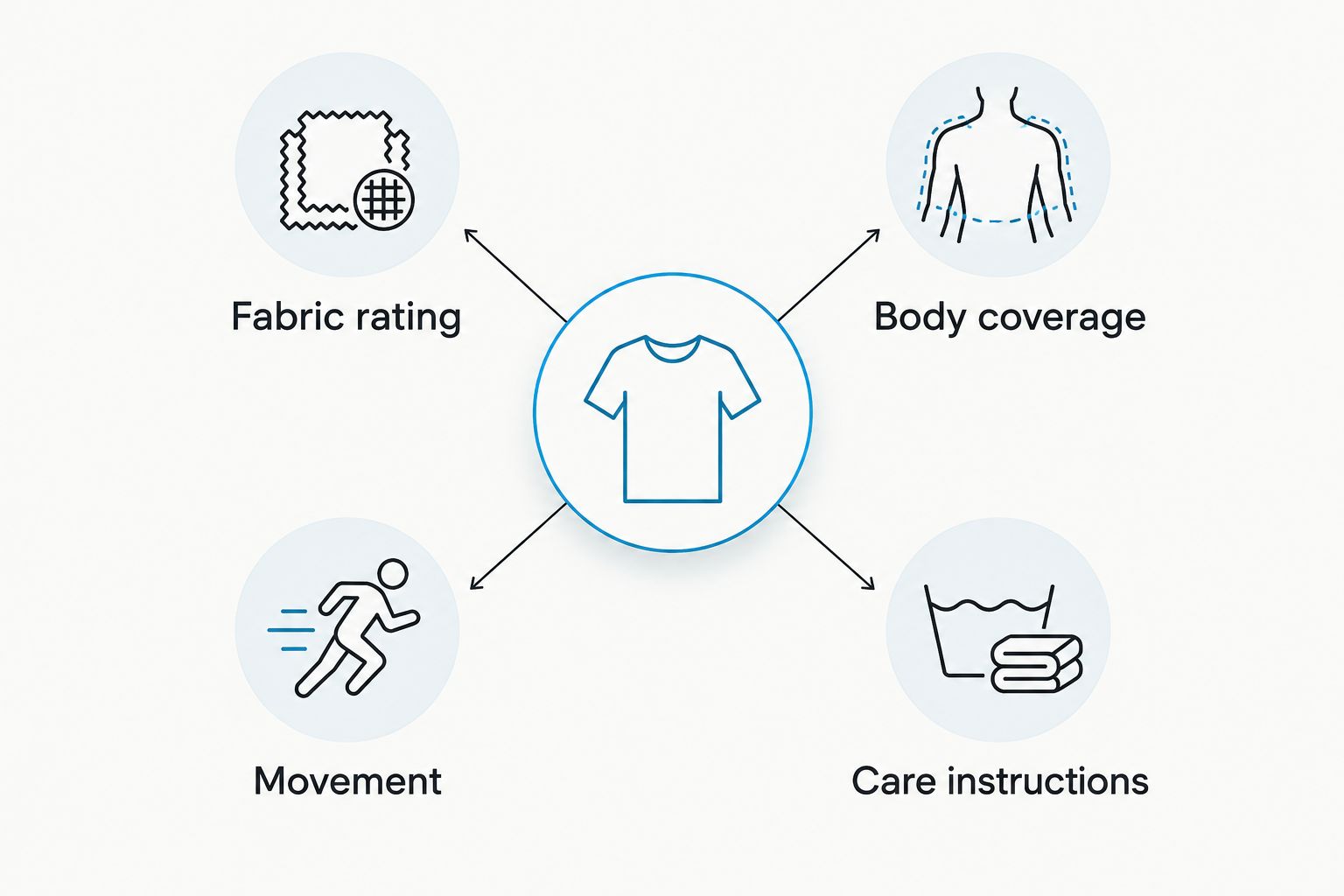
A shirt can meet one criterion and fail your personal needs on another. For example, a rated polo remains the wrong cut if your specific requirement is keeping your forearms under fabric.
Check fit before choosing a size
Start with the garment's measurements, not the size you usually buy from another brand. The 2putt polo's listed S–3XL range identifies size labels; it does not establish identical dimensions across different shirts.
Use this short sequence when assessing any sun protection shirt:
- Check the shoulders. Make sure the shirt allows your intended arm movement without pulling sharply across the upper body.
- Reach forward. Look for sleeve or cuff movement that exposes areas you wanted covered.
- Raise your arms. Check whether the hem lifts beyond the coverage you need.
- Turn your head. For hooded shirts, confirm that the hood works with normal head movement.
- Return to rest. Make sure the garment settles back into position without repeated adjustment.
Stretch does not replace this check. A stretch fabric can accommodate movement while the garment's overall cut still feels wrong for your proportions.
If you need clarification, ask about the specific measurement or care detail that affects your choice. Cadosmarket identifies keeping customers updated about orders as a service strength; that does not replace checking garment details before ordering.
How these recommendations were ranked
The ranking uses stated UPF protection, garment coverage, movement-related specifications, care requirements, and intended activity. It does not claim laboratory testing, comparative cooling results, or measured durability.
The named polo leads because its documented specifications support a clear golf recommendation. Long-sleeve and hooded shirts occupy separate slots because their coverage differs, not because an unnamed product has outperformed the polo.
No budget winner is assigned. A useful 2026 recommendation needs both a suitable garment and enough verified information to support the comparison.
Which men's sun protection shirt should you choose?
Choose the 2putt polo if you want a documented UPF 50+ golf shirt with four-way stretch and a structured collar. Choose a rated long-sleeve shirt instead if covering your forearms is non-negotiable.
Choose a rated hooded shirt when you also want fabric coverage above the neckline. Do not buy extra garment features you will not use, and do not sacrifice required coverage for a preferred shirt shape.
For an undecided shopper, the default decision is coverage first, cut second, and additional fabric features third. That order prevents a compelling stretch or drying claim from distracting you from the skin the garment leaves exposed.
FAQ
What's the best men's sun protection shirt for golf?
The 2putt Men's UPF 50+ Stretch Golf Polo Shirt is the named golf recommendation here because it lists UPF 50+, four-way stretch, a structured collar, and quick-drying properties. Choose a rated long-sleeve shirt instead if you require forearm coverage.
Is UPF 50+ the same as SPF 50?
No. UPF describes ultraviolet protection through fabric, while SPF is a sunscreen measure. A shirt's UPF rating does not describe protection for skin outside the garment.
Are long-sleeve sun shirts better than polos?
UPF-rated long-sleeve shirts provide more arm coverage than polos when their sleeves stay down. A polo remains suitable when you prefer that cut and address exposed skin separately.
Does every performance shirt provide UPF protection?
No stated UPF rating should be assumed from the word performance. Check the exact product's details rather than transferring a rating from another garment or brand.
Can a hooded sun shirt replace all other sun protection?
No. A hood adds coverage only where it stays positioned, and an open face remains exposed. Assess the whole garment and the areas it leaves uncovered.
Should I size up in a men's sun protection shirt?
Choose using the garment's measurements and your movement needs rather than automatically sizing up. Check the shoulders, sleeves, hem, and any hood before deciding whether the cut works.
How should I wash a UPF golf shirt?
Follow the exact garment's care label. Do not assume that every UPF shirt has the same instructions for washing, drying, bleach, or fabric treatments.
One last thing
A collar is not a hood, and a UPF rating is not a coverage map. Before buying, identify the area you most want covered and check the garment against that requirement. This single decision is more useful than choosing between two shirts solely because both say performance.