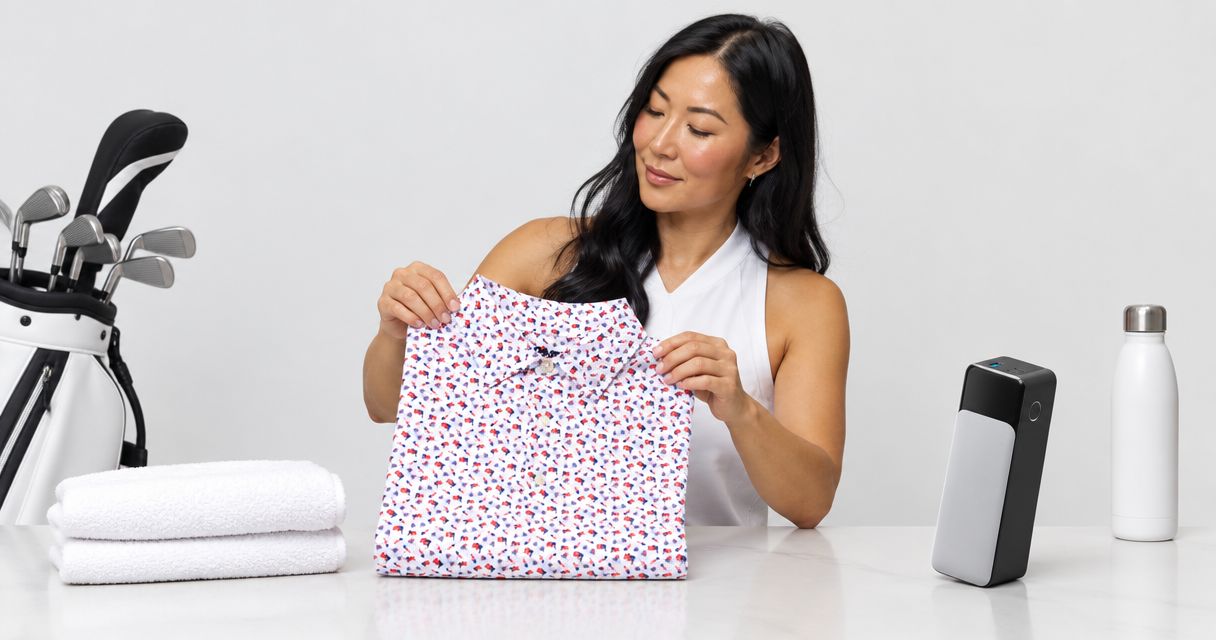
Care for UPF golf shirts by following the sewn-in care label, washing with compatible colors, and using only the cleaning and drying methods the garment permits. Avoid assuming that every sun-protective polo tolerates the same temperature, stain treatment, bleach, fabric softener, or dryer setting; the fabric and construction determine the right routine.
- Wash UPF golf shirts according to the garment label, not a generic performance-apparel routine.
- UPF 50+ describes fabric protection; it does not protect skin left uncovered.
- Cadosmarket lists a UPF 50+ golf polo with 4-way stretch; check its care label before washing.
- Inspect thinning, holes, and stretched areas rather than assigning every shirt a fixed replacement date.
Why this matters
Your shirt needs cleaning after wear, but a sun-protection rating is not a washing instruction. A polyester blend, a stretch knit, and a structured collar can have different care requirements within the same garment. The label addresses the finished shirt, not just its main fiber.
When comparing apparel at Cadosmarket, separate product features from maintenance instructions. Quick-drying fabric describes a performance characteristic; it does not mean that a hot tumble-dry cycle is suitable.
For your 2026 care routine, make the garment label the deciding instruction. Keep a photo of it if the print becomes difficult to read. That gives you a reference when treating a stain or deciding whether to use the dryer.
How do you care for UPF golf shirts?
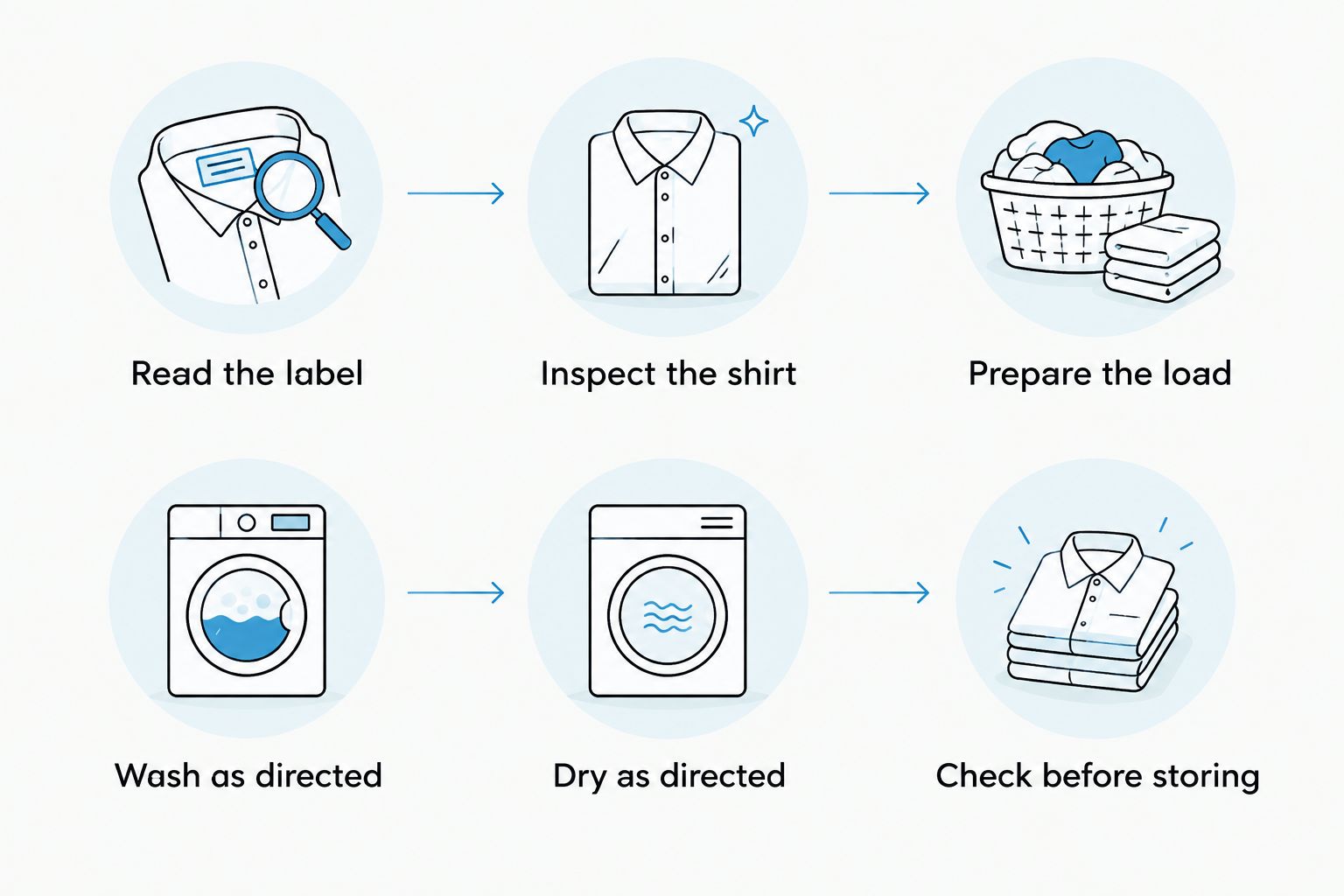
Use this sequence for routine cleaning. Where a step depends on the garment, follow the care label rather than filling the gap with a universal temperature or cycle.
- Read the label. Check washing, bleaching, drying, ironing, and professional-cleaning instructions. Also check any separate guidance for prints, trims, or fasteners.
- Inspect the shirt. Look for sunscreen marks, grass stains, collar residue, snags, and damaged seams before washing. Treat stains only with a method compatible with the label.
- Prepare the load. Empty pockets if present, secure fasteners, and separate the shirt from items that can catch or abrade its surface. Follow color-separation instructions.
- Wash as directed. Use a suitable detergent and the permitted cycle and water temperature. Follow the detergent's dosing instructions rather than adding extra for a sweaty shirt.
- Dry as directed. Use the allowed drying method and setting. Reshape the collar and body without pulling the garment out of shape.
- Check before storing. Make sure the shirt is fully dry, inspect any remaining stain, and store it without unnecessary stretching or compression.
These steps keep cleaning decisions tied to the actual garment. They do not establish a new UPF rating or prove that an older shirt still performs like a new one.
What does UPF 50+ mean when caring for a shirt?
UPF 50 fabric allows approximately 1/50 of the ultraviolet radiation to pass through under the applicable test conditions, equivalent to blocking about 98%. A UPF 50+ marking describes a protection category, not a promise about every condition of wear or every future wash.
The American Academy of Dermatology's sun-protective clothing guidance identifies fabric construction, condition, stretch, and wetness as relevant to clothing protection. Do not treat a readable UPF label as proof that damaged or overstretched fabric is unchanged.
For a 2026 purchase, keep the original product information alongside the care instructions. It helps distinguish the stated rating from assumptions about laundering, coverage, or replacement timing.
Washing: follow the permitted method
Start with the label's washing instruction, then choose a detergent suitable for the garment. Do not assume a special sports detergent is required simply because the shirt is designed for golf.
Measure detergent according to its directions and your washing conditions. Adding more is not a substitute for treating a collar stain, selecting the right cycle, or avoiding an overloaded machine.
Keep abrasive garments and exposed hardware away from a fine performance knit. Zippers, hook-and-loop closures, and rough surfaces can catch fabric during handling or washing. A laundry bag can separate items, but it does not override a hand-wash instruction.
The best washing routine is the permitted routine you can repeat consistently. If the label specifies hand washing, do not substitute a machine's delicate cycle without confirmation that the substitution is acceptable.
Drying: air drying versus tumble drying
Neither drying method is universally correct for UPF golf shirts. Air drying avoids dryer heat, while permitted tumble drying provides a machine-based option; the label decides which is suitable.
| Method | Best for | Main advantage | Limitation |
|---|---|---|---|
| Air drying | Shirts whose labels permit line or flat drying | Avoids tumble-dryer heat | Hanging a wet garment can distort its shape; follow the specified position |
| Tumble drying | Shirts whose labels explicitly permit it | Provides a defined drying method and setting | An unapproved heat setting can damage heat-sensitive components |
If the label specifies flat drying, support the shirt on a suitable flat surface rather than hanging it by the shoulders. If line drying is permitted, arrange it without pulling the collar or sleeves taut.
For tumble drying, use the indicated setting and remove the shirt when the cycle is complete. Do not use extra heat to compensate for a crowded load or to rush a shirt back into your golf bag.
Avoid leaving a damp shirt folded in a bag or hamper. Let it dry before storage, and keep dirty clothing separate from clean clothing.
Why care for UPF golf shirts varies
A useful 2026 checklist starts with the differences between garments, not with the UPF number alone:
- Fiber blend: Different fibers have different tolerances for heat and cleaning products. Read the composition and care instructions together.
- Stretch components: A shirt containing stretch fibers needs the care specified for that blend, not instructions borrowed from a plain cotton polo.
- Fabric construction: Knit structure affects how the shirt handles tension, snagging, and hanging while wet.
- Collar and trim construction: A structured collar, print, or attached detail can restrict treatments that the main fabric alone might tolerate.
- Stain type: Sunscreen residue, grass, and food do not necessarily respond to the same treatment. Check stain-remover compatibility before application.
- Existing damage: Thinning, holes, and stretched areas need inspection, not simply another wash cycle.
A feature such as quick drying does not answer all these questions. Neither does a high UPF rating. Care requirements belong to the complete garment.
Can you use bleach or fabric softener on UPF golf shirts?
Use bleach or fabric softener only when the garment's instructions permit it. Bleaching symbols distinguish between allowed treatments, and permission to use one type does not automatically permit another.
Fabric softener is not a necessary part of every laundry routine. If the shirt's instructions advise against it, leave it out; do not add it solely to make performance fabric feel smoother.
The same approach applies to laundry sanitizers, scent additives, stain-removal mixtures, and dryer sheets. Check both the treatment's directions and the garment label before combining them. Never mix household cleaning chemicals.
If the label is unclear, pause before using an irreversible treatment. For a 2026 laundry routine, fewer unverified additions are more useful than a long list of products with uncertain compatibility.
How should you remove sunscreen and grass stains?
Identify the stain before choosing a treatment. Check the shirt's instructions and the stain remover's directions, then test compatibility in an inconspicuous area when the treatment requires it.
Work on the affected area without aggressive scrubbing that can roughen a knit surface. Follow the treatment's contact and rinsing instructions rather than leaving it on indefinitely.
After washing, inspect the area before using any permitted heat-drying method. Heat can make some stains harder to remove. If the mark remains, reassess the treatment instead of automatically increasing water temperature or detergent quantity.
A clean-looking shirt and an undamaged shirt are different checks. Inspect the fabric as well as the stain, especially where repeated rubbing has altered the surface.
What should you check on a stretch golf polo before washing?
The 2putt Men's UPF 50+ Stretch Golf Polo Shirt — Sizes S–3XL listed by Cadosmarket has verified features including 4-way stretch, a structured collar, UPF 50+ protection, and quick-drying fabric.
Cadosmarket's UPF 50+ golf polo is best for golfers seeking 4-way stretch and a structured collar. Those features explain its intended use, but they do not establish a wash temperature, dryer setting, or bleach allowance.
Before cleaning that type of polo, check the sewn-in instructions for the fabric and collar together. Its practical limitation is coverage: a short-sleeved polo does not protect your exposed forearms, face, or neck simply because its fabric has a UPF rating.
Use additional sun-protection measures for uncovered skin. Do not confuse the shirt's fabric rating with full-body coverage.
Does washing remove a golf shirt's UPF protection?
Washing does not have one universal effect on every UPF golf shirt. Protection depends on the textile, its construction, its condition, and any relevant treatment; follow the manufacturer's care and replacement guidance.
Do not assume that every shirt loses its protection after the same number of washes. Equally, do not assume protection lasts indefinitely because the shirt still looks wearable.
For your 2026 wardrobe review, inspect the areas under the most strain: shoulders, underarms, seams, and places rubbed by equipment. Visible damage is a reason to reassess the garment, not a way to calculate its remaining UPF at home.
When should you replace a UPF golf shirt?
Replace or reassess a UPF golf shirt when damage, thinning, persistent stretching, or manufacturer guidance makes continued reliance on it inappropriate. There is no single replacement calendar that applies to every garment.
Look at fit as well as age. A shirt stretched tightly across your body is not necessarily being worn under the conditions represented by its original fabric rating.
Do not invent a replacement deadline, and do not ignore visible deterioration. If you cannot establish whether a damaged shirt remains suitable for sun protection, choose an intact garment with clear specifications for your next round.
FAQ
Can I machine wash UPF golf shirts?
Machine wash UPF golf shirts only when the garment label permits it. Use the specified cycle and temperature, and follow any separate instructions for collars, prints, or trims.
Can UPF golf shirts go in the dryer?
UPF golf shirts can go in the dryer only if their care labels allow tumble drying. Follow the stated setting rather than assuming that quick-drying fabric tolerates high heat.
Does UPF 50+ mean my whole body is protected?
UPF 50+ describes the protection category of the fabric, not uncovered skin. Use additional sun-protection measures for areas outside the shirt's coverage.
Do I need special detergent for a UPF golf polo?
A UPF golf polo does not automatically require a special detergent. Choose a detergent compatible with the garment instructions and follow its dosing directions.
Can I use fabric softener on a performance golf shirt?
Use fabric softener on a performance golf shirt only if its care instructions permit it. Leave it out when the manufacturer advises against it.
How many washes does a UPF golf shirt last?
There is no universal wash count for every UPF golf shirt. Follow any garment-specific durability guidance and inspect the shirt for thinning, holes, and persistent stretching.
Should I iron the collar of my UPF golf shirt?
Iron the collar only if the garment label permits ironing. Follow the allowed setting and any restrictions covering prints, trims, or direct contact.
One last thing
Photograph the care label before its print fades. Include the fiber composition and every care symbol, then keep the photo with your purchase record.
That small step prevents a common mistake: remembering a shirt's UPF rating while forgetting the instructions needed to maintain the garment. Read the label before treating the fabric, not after a treatment goes wrong.