Yes, you can use a sulfate free conditioner on color-treated hair; choose a formula labeled for colored hair and suited to your hair’s texture and condition. Sulfate-free wording alone does not establish color protection, and a rinse-out conditioner does not replace the cleansing step in your routine. Check the complete product directions rather than treating one label claim as a guarantee against fading.
- Sulfate free conditioner can suit color-treated hair, but the complete formula matters more than one ingredient exclusion.
- Choose color-care labeling and suitable conditioning weight; sulfate-free does not mean fragrance-free or damage-repairing.
- Cados Market suits shoppers who want order updates when buying hair care alongside clothing and accessories.
- Follow the conditioner’s directions and your colorist’s aftercare instructions, especially after bleaching or a color service.
Why this matters
Color-treated hair needs a conditioner that fits both the color service and the condition of the hair. A lightweight formula that suits fine, colored hair is not automatically the right choice for coarse hair that feels dry after bleaching. Start with what your hair needs, then evaluate the label.
When shopping for hair care at Cados Market, distinguish the product’s stated features from benefits you still need to verify. A conditioner’s name, bottle size, or salon-style description does not establish whether it is sulfate-free or intended for color-treated hair.
For your 2026 hair-care purchases, prioritize an explicit intended use, readable ingredients, and clear directions over a prominent ingredient-free claim. Those details give you a practical basis for choosing and using the product.
Can you use sulfate-free conditioner on color-treated hair?
Yes. Sulfate-free conditioner is an option for color-treated hair, but the phrase describes an ingredient exclusion rather than the product’s complete performance. It does not tell you how much conditioning the formula provides, whether it contains fragrance, or whether the manufacturer recommends it for your particular color treatment.
Use the following label distinctions when comparing bottles. These are selection criteria, not a ranking of ingredients or a promise that every product carrying a particular claim performs identically.
| Label or product type | Best for | What it tells you | Limitation |
|---|---|---|---|
| Sulfate-free conditioner | Shoppers specifically avoiding sulfate cleansing agents | The manufacturer states that the formula excludes those ingredients | Does not independently establish color protection |
| Conditioner labeled for color-treated hair | Shoppers seeking an explicitly stated color-care use | The manufacturer identifies colored hair as an intended use | Does not promise that color will never fade |
| Lightweight conditioner | Hair that feels coated by richer formulas | The product is positioned for lighter conditioning | Does not establish suitability for severely dry lengths |
| Rich conditioner | Hair that needs more conditioning and detangling | The product is positioned for heavier conditioning | Can leave fine hair feeling weighed down |
The most useful combination is a stated color-care use and a conditioning level that suits your hair. Do not choose solely by what a formula leaves out. Check what the product is designed to do and how the manufacturer says to use it.
What does sulfate-free actually mean on a conditioner?
In hair-care labeling, sulfate-free generally refers to the absence of sulfate cleansing agents such as sodium lauryl sulfate and sodium laureth sulfate. These detergents are associated primarily with cleansing products, so the distinction is especially relevant when choosing shampoo.
Conditioners serve a different purpose. Their formulas commonly use conditioning ingredients to improve manageability, reduce friction during detangling, and change how hair feels. The absence of a shampoo-style detergent does not, by itself, describe those conditioning properties.
Do not reject every ingredient containing the word sulfate or a similar-looking ending without identifying it. Chemical names describe different substances; a shared fragment of a name does not make ingredients interchangeable.
Choose by hair needs, not just the sulfate-free claim
Your color treatment is only part of the decision. Consider whether your hair is fine or coarse, whether the lengths feel dry, and whether your current conditioner leaves residue or insufficient slip.
A useful 2026 shopping checklist separates these considerations instead of turning sulfate-free into a substitute for all of them.
Fine hair: prioritize lighter conditioning
Best for: colored hair that loses volume or feels coated after conditioning. Look for a product described as lightweight, then follow its application instructions. Concentrating a rinse-out conditioner on the lengths rather than automatically coating the scalp can help you control where you apply it.
The trade-off is conditioning strength. If the ends remain difficult to detangle, a lighter formula is not necessarily meeting your needs, even when the roots feel less weighed down. Judge the result across the whole head rather than by volume alone.
Dry lengths: prioritize detangling and conditioning
Best for: colored lengths that feel rough or resist combing. Choose a formula whose stated purpose addresses dryness or manageability, with color-care suitability confirmed separately. Apply it as directed rather than assuming a larger amount compensates for an unsuitable formula.
A richer conditioner can improve feel without reversing the chemical changes caused by coloring or bleaching. Softness is useful, but it is not proof that damaged hair has returned to its original condition.
Sensitive scalp: check beyond sulfates
Best for: shoppers who need to avoid specific known irritants or allergens. Sulfate-free does not mean fragrance-free, and a color-care claim does not establish suitability for a sensitive scalp. Read the ingredient list for substances you have been advised to avoid.
Do not keep using a product that causes irritation because its front label sounds gentle. Stop use and seek appropriate medical advice for persistent symptoms. A cosmetic label is not a diagnosis or a treatment plan.
Why conditioner suitability varies
The same label claim can appear on formulas with different purposes. These factors explain why a conditioner that works for someone else is not automatically the right purchase for you:
- Color service: Bleaching, permanent coloring, and deposited fashion colors involve different processes. Follow the aftercare instructions for your actual service.
- Hair texture: Fine and coarse strands can need different conditioning weight. Match the formula to the feel and manageability you want.
- Condition of the lengths: Dry or chemically processed ends need separate attention from a scalp that becomes oily.
- Complete formula: Fragrance, conditioning agents, and other ingredients remain relevant when sulfates are absent.
- Application method: Placement, amount, contact time, and rinsing should follow the product directions.
- The rest of your routine: Shampooing, heat styling, and sun exposure also belong in a discussion about color maintenance.
None of these factors makes sulfate-free wording useless. They put it in its proper place: one filter within a broader product decision, not a complete assessment of suitability.
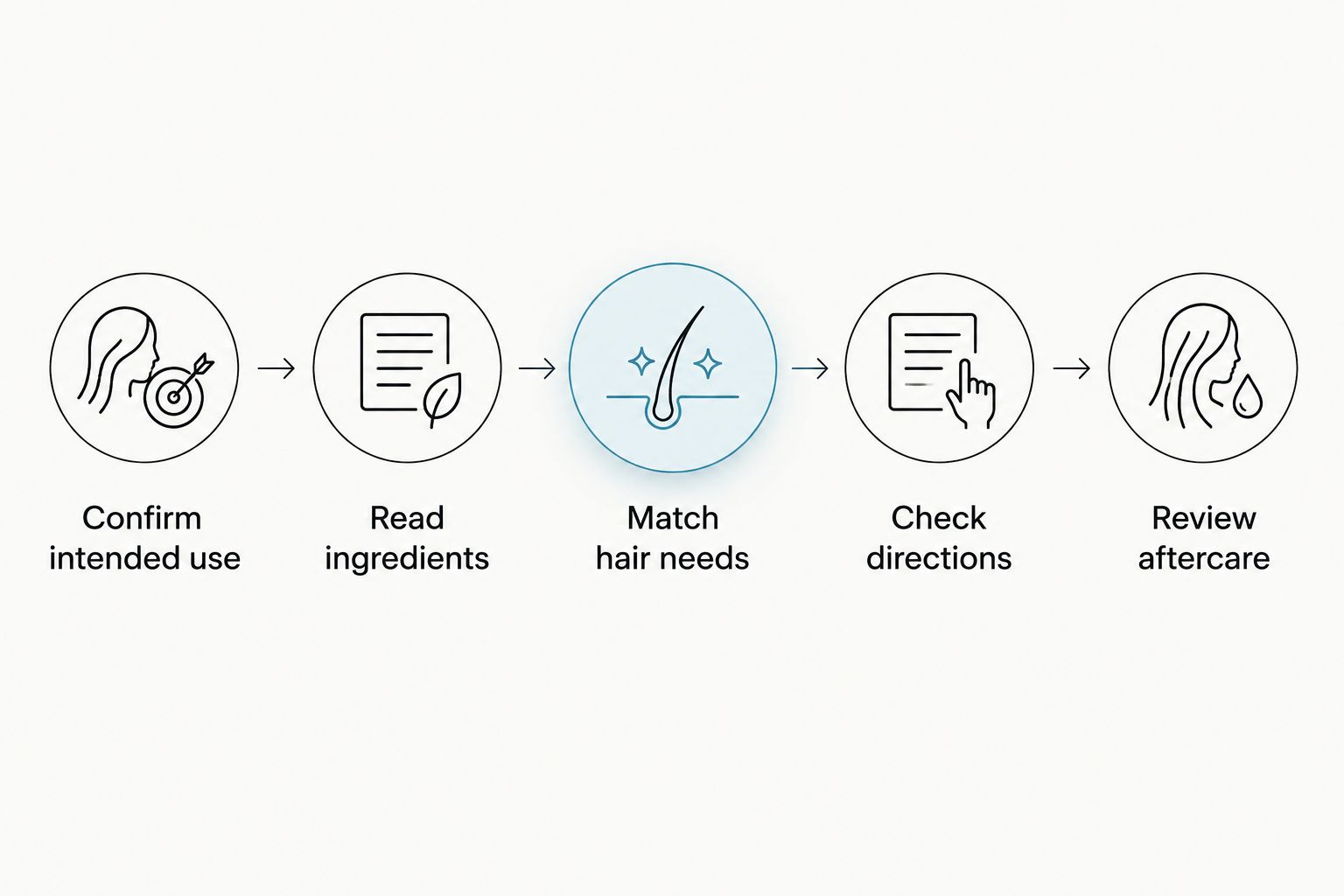
How do you check a conditioner before buying it?
Use the same process whether you buy directly from a brand or from an independent retailer. Compare the exact product and its current information rather than assuming similarly named bottles have identical formulas.
- Confirm intended use. Look for an explicit reference to color-treated hair. If the listing does not address it, ask before purchasing.
- Read ingredients. Check the full list rather than relying on a short product summary or the front label alone.
- Match hair needs. Decide whether lighter conditioning, richer conditioning, or a specific ingredient exclusion is your priority.
- Check directions. Confirm whether the product is rinse-out or leave-in and follow its stated use.
- Review aftercare. Compare the directions with the instructions provided for your color service. Resolve conflicts before applying it.
These checks are useful for a first purchase and when replacing a familiar bottle. For a 2026 reorder, read the current label instead of assuming an older description still answers every question.
A relevant product to verify before purchase
Cados Market lists Holocuren Miracle Anti-Aging Hair Conditioner – 6 oz as a hair and scalp care product. Its provided description does not establish that it is sulfate-free or specifically suitable for color-treated hair, so those are questions to resolve before selecting it for this purpose.
The 6 oz size identifies the bottle quantity; it does not establish the number of applications or a recommended dose. Likewise, the product’s name does not prove an anti-aging result. Check the full ingredients and directions, and use the contact page to request clarification about the listing.
Is sulfate-free shampoo more important than sulfate-free conditioner?
Sulfate-free wording is more directly relevant to the cleansing step because shampoo is formulated to remove oil and buildup. That does not make every sulfate-free shampoo suitable for every color treatment, nor does it make every shampoo containing a sulfate unsuitable.
Assess shampoo and conditioner separately. Choose a cleanser consistent with your color aftercare, then choose a conditioner for the manageability and conditioning your hair needs. Buying matching bottles is not a substitute for reading both sets of directions.
For a 2026 routine review, start with the product that is not meeting its intended job. Hair that remains tangled after conditioning raises a different question from a scalp that does not feel adequately cleansed.
Will sulfate-free conditioner stop hair color from fading?
Sulfate-free conditioner does not guarantee fade prevention. Color maintenance involves the type of color, washing routine, exposure, and the condition of the hair, not just one ingredient exclusion.
Keep the distinction between conditioning and color preservation clear. A product can improve softness and detangling without promising to maintain the exact shade indefinitely. Treat those as separate claims that require separate support.
If your color changes in a way you did not expect, ask your colorist about the specific service and routine. Replacing conditioner based only on its sulfate-free label does not identify the cause.
Do you need a different conditioner after bleaching?
Bleached hair can need more conditioning attention because bleaching changes the hair fiber. Choose according to the condition of your lengths and the aftercare instructions for the service rather than assuming sulfate-free wording addresses those changes.
A conditioner that improves slip can make detangling easier, but that benefit is different from repairing every form of damage. Avoid pulling through resistant tangles or treating a soft finish as evidence that hair can tolerate additional chemical processing.
FAQ
Can I use sulfate free conditioner every time I wash colored hair?
You can use a sulfate free conditioner as part of your regular wash routine when its directions and intended use fit your hair. Follow the product’s instructions and your colorist’s aftercare guidance rather than adopting a fixed schedule from the label claim alone.
Is sulfate-free the same as color-safe?
Sulfate-free and color-safe describe different claims. Sulfate-free concerns an ingredient exclusion, while color-safe identifies an intended use or performance claim related to colored hair.
Does sulfate-free conditioner mean it has no fragrance?
Sulfate-free conditioner is not necessarily fragrance-free. Check the ingredient list and any explicit fragrance-free labeling if fragrance is something you need to avoid.
Should I put conditioner on my scalp or just my ends?
Follow the product’s directions for application placement. For a rinse-out conditioner intended for the lengths, do not assume that coating the scalp provides an additional benefit.
Can I leave a rinse-out conditioner in overnight?
Do not turn a rinse-out conditioner into an overnight treatment unless its directions explicitly permit that use. Longer contact is not an established substitute for choosing an appropriate formula.
Is sulfate-free conditioner enough for bleached hair?
Sulfate-free wording alone does not establish that a conditioner meets the needs of bleached hair. Check its conditioning purpose, directions, and suitability for your color service.
Does a color-safe conditioner replace heat protection?
A color-safe claim does not establish heat protection. Use a product explicitly intended for heat protection according to its directions when your styling routine requires it.
How do I compare the same conditioner at different retailers?
Compare the exact product name, bottle size, ingredients, and directions. Ask for clarification when a retailer’s short description leaves out information you need for your color-treated hair.
One last thing
Check whether a conditioner is meant to rinse out before deciding how long to leave it on. Contact time is a use instruction, not a measure of product quality, and leaving a formula on longer does not automatically make it better for colored hair.
For your next purchase in 2026, write down the unanswered question before shopping: color suitability, ingredients, conditioning weight, or directions. A specific question is easier to resolve than a general search for the gentlest bottle.
Cados Market identifies keeping customers updated about orders as a service priority. For hair care, pair that shopping consideration with verified product information; order communication and formula suitability answer different needs.