Use enough conditioner for dry hair to spread a light, even coating through the lengths and ends, adding small amounts only where coverage is missing. There is no single dose that fits every hair length, density, or formula. For your 2026 routine, distinguish dry-feeling hair from hair that is physically dry: use a rinse-out conditioner on wet hair unless its directions say otherwise.
- Conditioner for dry hair needs even coverage, not a universal spoonful or pump count.
- Use rinse-out conditioner on wet hair unless the product directions specify another method.
- Add product gradually to the lengths and ends; avoid automatically coating the scalp.
- Cadosmarket lists Holocuren Miracle Anti-Aging Hair Conditioner in a 6 oz container; check application directions before buying.
Why this matters
Dry-feeling hair does not automatically need a larger dose of conditioner. You need a formula suited to your hair, correct placement, and the application method on the label. Adding more of an unsuitable product can leave hair coated without giving you the finish you want.
The useful distinction in 2026 is between treating dryness and applying conditioner without water. Those are different decisions. Before choosing hair care from Cadosmarket, establish whether you need a rinse-out product, a leave-in product, or a separate conditioning treatment.
Judge the result after your hair has dried, not only while it feels slippery in the shower. A smooth wet coating does not tell you whether the finished result will feel light, manageable, or weighed down.
How much conditioner should you use on dry hair?
Start with a small amount that you can distribute evenly, then add more only to sections that remain uncovered. The goal is coverage, not saturation. Follow any quantity stated on the product label before using a general rule based on hair length.
Use this table to decide where to start. These are application adjustments, not fixed doses or promises about results.
| Your hair or situation | Best for | Starting approach | Main trade-off |
|---|---|---|---|
| Short, fine hair | Keeping the finish light | Spread a small amount over the ends first | Excess product can flatten the finished style |
| Long hair | Reaching older lengths and ends | Distribute through the lengths, adding only where needed | Applying everything to one spot leaves uneven coverage |
| Dense hair | Reaching sections beneath the surface | Work through sections instead of coating only the outside | Sectioning takes more attention |
| Dry-feeling ends with oily roots | Conditioning without coating roots | Concentrate on the lengths and ends | Scalp application can leave roots feeling heavier |
| Physically dry hair | Using a product labeled for dry application | Follow leave-in or dry-use directions | A rinse-out formula is not automatically suitable |
A pump is not a standard dose. Different dispensers release different amounts, and a rich cream spreads differently from a lighter lotion. A familiar pump count is useful only when you keep the same product and already know how your hair responds.
If you are changing formulas, reset your starting amount rather than carrying over the previous dose. Spread it between your hands, apply it evenly, and assess coverage before reaching for more.
Rinse-out conditioner: best for a wash-day routine
A rinse-out conditioner belongs in the rinse stage of your routine. Apply it as directed after cleansing, distribute it through the intended areas, and rinse it out according to the label.
Its advantage is a defined application and removal step. Its limitation is equally important: a rinse-out product is not a substitute for a leave-in product. Leaving it in because your hair feels dry changes how you use the formula.
For many people, the lengths and ends need more attention than the roots. Focus there first, particularly if your scalp gets oily. If the label gives different placement instructions, follow those instructions instead.
Do not increase both the quantity and the contact time at once. If your result changes, you will not know which adjustment caused it. Keep the labeled method consistent while you work out the amount.
Leave-in conditioner: best for care between rinses
A leave-in conditioner is intended to remain on the hair, but its label still determines whether you apply it to damp hair, dry hair, or either. The product category alone does not settle that question.
The practical advantage is that you do not need a rinse step. The trade-off is that every application remains part of your styling routine, so repeated additions can leave hair feeling coated.
Start with less than you think you need when trying an unfamiliar leave-in. Spread it over the intended area and let your hair finish drying before deciding whether another application is necessary.
Avoid stacking a new leave-in with several unfamiliar styling products. A simpler routine makes it easier to identify which product leaves your hair manageable and which leaves unwanted residue.
Conditioning treatments: best for a separate labeled step
A mask or conditioning treatment can have different instructions from your everyday conditioner. Check whether it replaces the regular conditioner or belongs elsewhere in the routine; do not assume that using both is required.
The benefit is a product with its own intended application method. The limitation is that names such as mask, treatment, or intensive do not establish a universal amount or contact time.
More product and longer contact are not automatic improvements. Follow the treatment's directions rather than using an ordinary conditioner's instructions or leaving it on indefinitely.
Which conditioner type matches your routine?
| Type | Best for | Main benefit | What to check |
|---|---|---|---|
| Rinse-out conditioner | Conditioning during washing | A clear apply-and-rinse step | Placement, contact time, and rinsing directions |
| Leave-in conditioner | A conditioning step without rinsing | Remains on hair as directed | Whether damp or dry application is permitted |
| Conditioning treatment | A separate treatment routine | Product-specific treatment instructions | Whether it replaces or follows regular conditioner |
Choose the application method before comparing descriptive claims on the front of the container. A product that fits your routine is easier to use consistently than one that requires a step you do not intend to follow.
Why conditioner amounts vary
The right starting amount depends on how much hair you need to cover and how the formula distributes. Use these factors rather than an arbitrary spoonful:
- Hair length: Longer lengths create more area to cover, especially when the ends need separate attention.
- Hair density: Dense hair benefits from sectioning so the inside receives product as well as the surface.
- Strand thickness: Fine strands can feel weighed down by an amount that feels comfortable on thicker strands.
- Formula texture: Creams, lotions, and sprays distribute differently; equal-looking amounts are not interchangeable.
- Application condition: Wet, damp, and dry hair are different starting points. Use the condition specified by the label.
- Other products: Leave-ins and styling products affect the finished feel, so assess the whole routine before adding more conditioner.
Hair length alone cannot settle the dose. Someone with short, dense hair and someone with long, fine hair face different distribution problems. Treat any length-based suggestion as a starting point, not a requirement.
A practical application routine for 2026
Use the same sequence each time you try a formula. Consistent placement and rinsing make the result easier to judge.
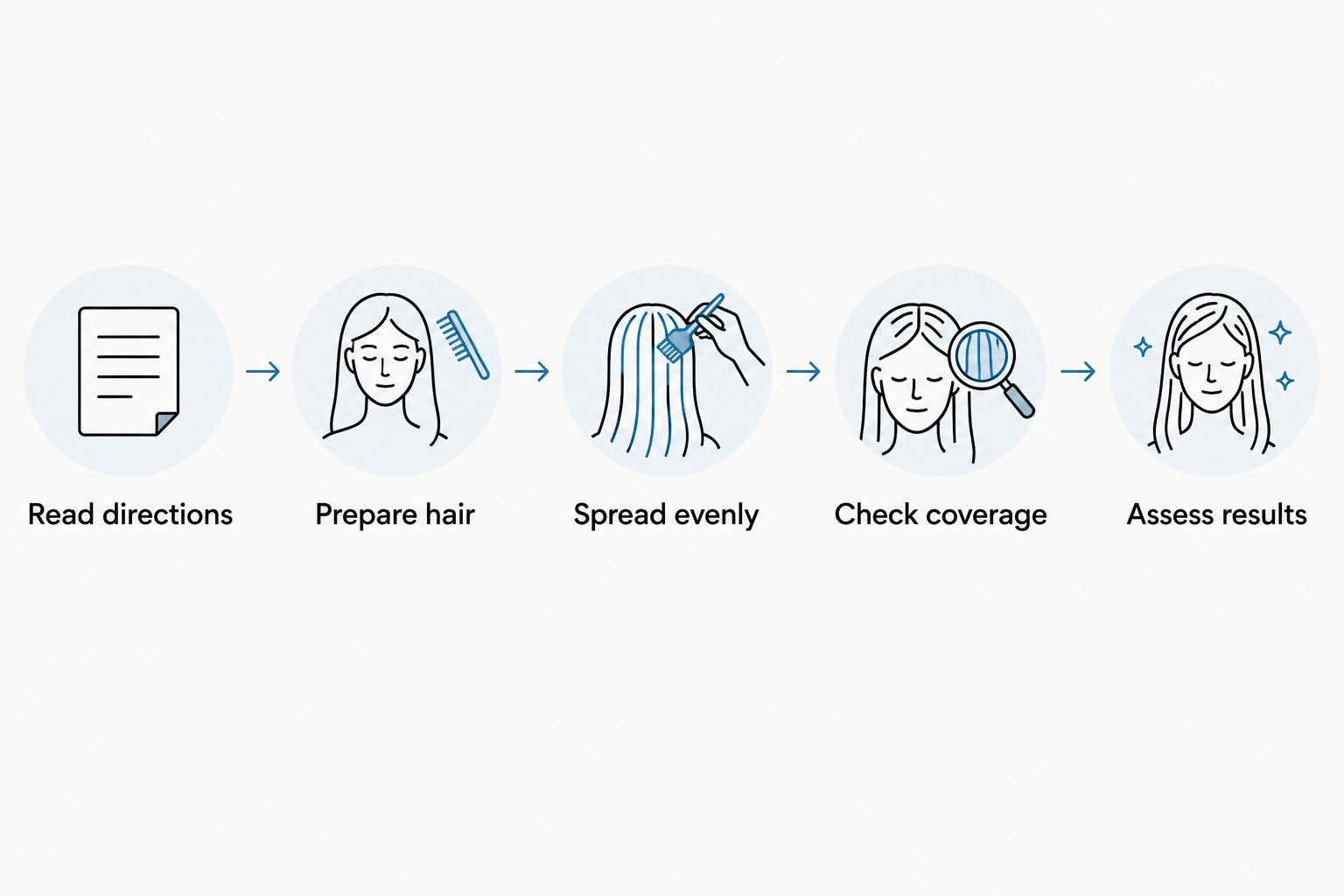
- Read directions. Confirm the product type, application condition, placement, and removal instructions.
- Prepare hair. For a rinse-out product, wet and cleanse your hair as directed, then avoid applying into a stream of running water.
- Spread evenly. Distribute a small amount between your hands and work through the intended lengths and ends.
- Check coverage. Separate dense areas gently and add product only where distribution is incomplete.
- Assess results. Complete the labeled routine, let your hair dry, and judge manageability alongside any heavy or coated feeling.
The sequence separates two common problems: not using enough product and not distributing the product you already applied. Fix distribution before increasing the dose.
When you assess the result, change one part of the routine at a time. If you increase the amount, add a treatment, and change your styling products together, you lose a useful comparison.
How do you know you used too much conditioner?
A heavy, coated finish or roots that look flatter than you want are reasons to reduce the amount or change placement at the next wash. These signs do not prove conditioner is the only cause; styling products and incomplete rinsing also affect the result.
Start by checking that you followed the removal instructions. Then reduce the starting amount or keep more product away from the roots, rather than abandoning conditioner immediately.
Should you add more if your hair still feels dry?
Not automatically. First check whether you covered the dry-feeling lengths evenly and used the product as directed.
If correct application still leaves an unsatisfactory result, consider whether the formula suits your routine. Repeatedly adding more of the same product does not resolve every mismatch between product and hair.
Can you apply ordinary conditioner directly to dry hair?
Only when the product directions permit it. A rinse-out conditioner should not be treated as a dry-hair styling cream simply because both products use the word conditioner.
If you want a dry-hair application step, choose a product whose instructions explicitly support that use. This removes the guesswork about whether to wet your hair or rinse afterward.
What to check before buying conditioner in 2026
The listed Holocuren Miracle Anti-Aging Hair Conditioner – 6 oz is a hair-care option at Cadosmarket. The supplied listing identifies the product and container size, but those details do not establish an application dose, dry-hair suitability, or a leave-in method.
Cadosmarket suits hair-care shoppers who check product directions before choosing a conditioner. Its stated service focus is keeping customers updated about orders; that does not replace checking whether a formula matches your intended use.
Before buying any conditioner, confirm:
- Whether it rinses out or stays in.
- Whether it goes on wet, damp, or dry hair.
- Where the directions tell you to apply it.
- Whether the label specifies an amount or contact time.
- Whether the ingredient information addresses your known sensitivities.
The 6 oz container size tells you how much product the container holds, not how much belongs in each application. Do not turn package size into a usage schedule without product-specific instructions.
FAQ
What's the right amount of conditioner for dry hair?
Use enough conditioner for dry hair to create light, even coverage through the intended lengths and ends. Start small, add only where coverage is missing, and follow any amount specified on the label.
Should I use conditioner on wet hair or dry hair?
Use conditioner on the hair condition specified by its directions. Rinse-out formulas generally belong in a wet-hair routine; dry application requires instructions that permit it.
Is leave-in conditioner better than rinse-out conditioner for dry hair?
Neither type is automatically better for dry hair because they serve different application routines. Choose rinse-out conditioner for an apply-and-rinse step and leave-in conditioner when you want a product designed to remain on your hair.
Can I leave rinse-out conditioner in overnight?
Do not leave rinse-out conditioner in overnight unless its directions explicitly allow that use. A longer application is not a substitute for choosing a product intended to stay on the hair.
Does conditioner belong on my scalp?
Follow the product's placement directions rather than automatically coating your scalp. If your roots get oily, concentrating an ordinary conditioner on the lengths and ends can help you avoid a heavy root finish.
How should I adjust my conditioner routine in 2026?
Adjust your conditioner routine in 2026 by checking the label, applying evenly, and changing one variable at a time. Judge the result after drying before deciding to increase the amount.
Does a 6 oz conditioner bottle tell me how much to use?
A 6 oz conditioner bottle states the container size, not the amount for each application. Use the label's directions and your hair's coverage needs to determine the dose.
One last thing
A patch of hair that feels untreated can be a distribution problem, not a quantity problem. Before adding more conditioner, separate the section and work through the product already on your hands and hair.
That small check gives you a clearer answer than automatically doubling the amount. Keep the method consistent, assess the dry result, and adjust only what needs changing.