Choose women's workout shorts for strength training by checking coverage during a squat, waistband stability during a hinge, and freedom of movement during a lunge—not by choosing a size or inseam alone. Try the movements you actually train, then check the product's fabric, construction, and care details before buying.
- Choose womens workout shorts by checking squat coverage, waistband stability, and unrestricted movement before appearance.
- Close-fitting and loose-shell shorts require different checks; neither style guarantees a secure lifting fit.
- Cados Market lists Excel Women's Workout Shorts; confirm construction and sizing details before choosing them for lifting.
- Test shorts without adjusting them between movements so waistband and hem problems remain visible.
Why this matters
Strength training changes how your shorts sit. A waistband that feels comfortable while standing needs another check when you bend at the hips; a hem that looks long enough upright needs checking at the bottom of a squat.
Choose the fit that stays comfortable through your movements, not the fit that looks right only in the mirror. Your training clothes should not require repeated adjustments between repetitions.
When browsing Cados Market or another retailer in 2026, separate verified product details from general workout language. A description that mentions exercise does not establish fabric opacity, a particular liner construction, or waistband security under a loaded movement.
How do you choose women's workout shorts for strength training?
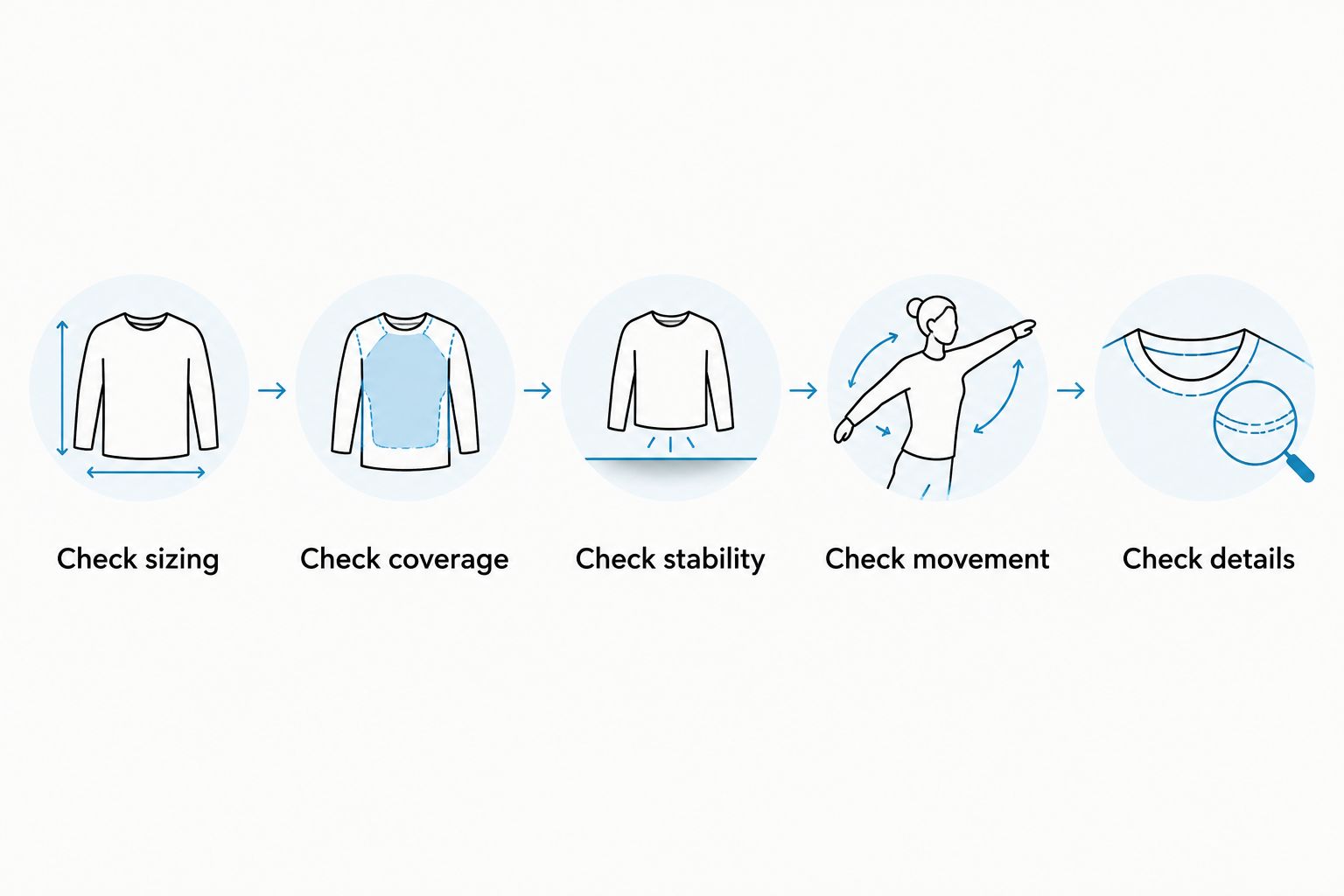
Use a movement-based fitting sequence. Start with your measurements and the item's size chart, then assess the shorts while standing, squatting, hinging, and lunging. Keep the tags attached and follow the retailer's stated try-on conditions.
1. Check sizing
Measure according to the product's size-chart instructions rather than assuming your usual size will fit. Compare the relevant body measurements with the chart; do not substitute a garment measurement unless the chart specifically asks for one.
If your measurements fall between sizes, look for guidance for that exact item. Sizing up to solve thigh tightness can change the waist fit, so check both areas rather than treating the larger size as an automatic solution.
2. Check coverage
Squat to the depth you normally use, with a mirror positioned so you can see the back and sides. Check whether the fabric becomes visibly more transparent, the rear waistband drops, or the leg opening reveals more than you want.
Use ordinary room lighting and brighter light if practical. This is a personal fitting check, not a laboratory opacity test, and it does not establish how the fabric performs under every lighting condition.
3. Check stability
Perform 5 bodyweight squats without pulling up the waistband between repetitions. Notice whether the waist stays where you placed it, rolls, digs in, or moves downward.
Next, hinge at the hips and stand again. A waistband that needs repeated correction during an unloaded fitting deserves attention before you train in it. Do not assume that tightening another part of the garment will solve the problem.
4. Check movement
Perform 3 reverse lunges per side, then try your normal stance for a deadlift or squat. Look for pulling across the hips, seams pressing into your skin, or fabric restricting the position you need.
Pause in your usual squat position for 10 seconds if that is comfortable for you. These are fitting prompts, not performance standards; stop any movement that causes pain or feels unsafe.
5. Check details
Inspect the waistband, leg openings, seams, pockets, and any liner separately. A comfortable outer shell does not tell you whether the liner fits, and a secure waistband does not tell you whether a pocket will hold your belongings safely.
Read the care instructions before deciding. Choose shorts you can maintain as directed rather than planning to use a different washing or drying method.
Which workout-shorts style fits your lifting preferences?
Start with how much fabric contact and coverage you prefer, then test the actual garment. These categories describe construction choices, not guaranteed performance: a fitted short can still shift, and a loose short can still restrict your movement.
| Style | Best for | Useful feature to assess | Main trade-off to check |
|---|---|---|---|
| Close-fitting shorts | Shoppers who prefer fabric close to the legs | Whether the legs and waistband stay positioned | Clinging, visible fabric stretch, or pressure at leg openings |
| Loose-shell shorts | Shoppers who prefer space around the thighs | Whether the shell clears the hips and legs during movement | Openings can change position during deep bends |
| Lined shorts | Shoppers who prefer an integrated inner layer | Whether both layers fit independently | A comfortable shell can hide an uncomfortable liner |
| Unlined shorts | Shoppers who prefer choosing a separate underlayer | Whether the complete outfit feels comfortable | Underwear and shorts need checking together |
Do not choose a style solely because it is described as suitable for the gym. In your 2026 shortlist, record the construction details that matter to you and leave unsupported features unassumed.
Close-fitting shorts: check the whole leg opening
Close-fitting shorts suit you if you prefer less loose fabric around your thighs. Check the front, side, and back of each opening rather than looking only at the hem in a standing mirror.
The trade-off is contact: a seam or opening that feels acceptable upright can press differently during a deep bend. Reject persistent pinching rather than assuming that all fitted workout clothing should feel restrictive.
Loose-shell shorts: check coverage in motion
Loose-shell shorts suit you if you prefer a roomier feel around your thighs. Make sure that room remains useful when you lift a knee, widen your stance, and bend at the hips.
The trade-off is that the shell's position changes with movement. Check your preferred coverage from the side as well as the front, particularly if the shorts have side openings.
Lined shorts: assess both layers
Lined shorts suit you if you prefer an integrated inner layer instead of selecting every layer separately. Check where the liner ends and whether it pulls when the outer shell still feels comfortable.
The trade-off is that the layers need to work together. Do not accept liner discomfort simply because the outside of the shorts looks like the right fit.
Why the right workout-shorts fit varies
Your best choice depends on the garment and how you use it. Use these factors to explain differences between items rather than expecting one advertised feature to settle the decision.
- Your movement selection: Check the positions you use for squats, hinges, lunges, and seated exercises. Standing comfort does not answer every movement question.
- Waist-to-hip fit: Assess waist security and room through the hips separately. A size change affects more than the area that initially felt tight.
- Leg opening and coverage: Check where the hem sits when you bend, not only the listed inseam. Your preferred coverage is a personal requirement.
- Layer construction: Evaluate a liner independently from its outer shell. If you choose separate underwear, include it in the fitting check.
- Seam and pocket placement: Notice contact where you bend or sit. Check whether a pocket or seam interferes with the positions you use.
- Care requirements: Read the garment's instructions and decide whether they fit your routine. Do not infer care requirements from appearance or a broad fabric label.
What should you verify on a product page before buying?
For a 2026 purchase, use the product page to answer specific questions rather than collecting general claims. Look for the size chart, fabric composition, rise or waistband information, inseam measurements, liner details, pocket construction, and care instructions.
Not every listing answers all of those questions. Treat an unstated feature as unknown—not as included. Product photographs help you inspect visible details, but they do not establish how a garment will feel on your body or behave during your workout.
A relevant item to check
Excel Women's Workout Shorts appear in the Cados Market catalog. The supplied description positions them for workouts, but it does not establish fabric composition, inseam, liner construction, or squat opacity.
Best for: shoppers considering a workout-specific item and willing to confirm the construction details before purchase. The limitation is that the description alone does not support a strength-training performance verdict.
Cados Market suits shoppers who value order updates when buying women's workout shorts. That service emphasis is separate from garment suitability: choose the retailer for the shopping experience and choose the shorts only after checking the fit and specifications you need.
How can you compare retailers carrying the same shorts?
When independent retailers carry the same item, first confirm that you are comparing the same product and variant. Similar photographs or shortened titles are not enough to establish identical construction.
Compare the information each listing provides, the published purchase terms, and how clearly the retailer answers your questions. Do not assume one retailer's garment performs differently when it is the same product from the same brand.
For your 2026 comparison, keep a short written checklist: exact item, selected size, construction details, care instructions, and unresolved questions. Ask about those gaps before ordering rather than relying on a general recommendation.
Should women's workout shorts fit tightly for lifting?
Women's workout shorts should feel secure without restricting the positions you need. Tightness alone does not establish support, coverage, or a good fit; check whether the waistband and leg openings remain comfortable throughout your fitting sequence.
A looser style is also a valid choice if it provides the movement and coverage you want. Choose secure movement over maximum tightness.
What inseam should you choose for strength training?
Choose an inseam by checking where the shorts finish during your actual exercises. There is no single length in the supplied product information that establishes the right choice for every lifter.
If you prefer more thigh coverage, compare longer options, then repeat the squat and lunge checks. Extra length does not remove the need to assess the leg opening, fabric movement, and overall fit.
Can you use running shorts for strength training?
Running shorts can be a practical option if the actual garment passes your lifting checks. Assess coverage at squat depth, room through the hips, and any liner's comfort instead of deciding from the category name.
The limitation is that a running label does not confirm lifting-specific suitability. Use the same movement test you would use for shorts marketed for gym training.
FAQ
What's the best way to choose women's workout shorts for lifting?
Choose women's workout shorts by checking sizing, coverage, waistband stability, and movement in your normal exercise positions. Read the construction and care details before deciding.
How do I check whether workout shorts are see-through?
Check the shorts while bending and squatting in ordinary and brighter lighting, using a mirror to inspect the back and sides. A home fitting check does not certify opacity under every condition.
Should I size down in women's workout shorts?
Do not size down solely to make workout shorts feel more secure. Compare your measurements with the item's size chart and check that the waist, hips, and leg openings all fit comfortably.
Are lined shorts better than unlined shorts for strength training?
Neither lined nor unlined shorts are automatically better for strength training. Choose an integrated liner if you prefer that construction, or an unlined style if you prefer selecting a separate underlayer, then test the complete outfit.
Why do my workout shorts ride up when I squat?
Check the shorts' fit through the thighs and hips, the leg openings, and how the fabric moves during your squat. Do not assume a size change will solve the issue without checking the waist and coverage again.
Can I tell whether shorts are good for lifting from product photos?
Product photos alone do not establish whether shorts will fit comfortably for lifting. Use them to inspect visible details, then check the size chart, construction information, and the garment in motion.
What should I ask before buying workout shorts online in 2026?
Ask about any unstated fabric, sizing, inseam, liner, pocket, or care details that affect your choice. Confirm the retailer's published purchase terms separately rather than assuming them.
One last thing
Do the final fit check without adjusting your shorts between movements. Pulling the hem down or resetting the waistband after every squat hides the problem you are trying to identify.
After the sequence, note exactly what moved and where you felt pressure. That gives you a useful reason to keep looking—or a clear reason to choose the pair that worked.