Before buying a sulfate free conditioner, check the full ingredient list, whether it is rinse-out or leave-in, and whether its conditioning level suits your hair. A sulfate-free claim does not establish that a formula is fragrance-free, silicone-free, suitable for your scalp, or effective for a medical concern. Choose by the complete formula and directions, not the front-label claim alone.
- Choose a sulfate free conditioner by its ingredients, intended use, and fit for your hair—not its headline claim.
- Sulfate-free does not mean fragrance-free or silicone-free; check those claims separately.
- Holocuren Miracle Anti-Aging Hair Conditioner – 6 oz needs ingredient verification before selection as a sulfate-free option.
- Match rinse-out or leave-in directions to your routine, and check warnings before buying.
What should you check before buying sulfate-free conditioner?
Start with the ingredient list, then check the product's intended use and your hair's conditioning needs. For your 2026 purchase, use this sequence rather than treating sulfate-free as a complete recommendation.
- Read the ingredients. Look for the exact ingredients you want to avoid, including any substances you already know cause a reaction.
- Confirm the directions. Check whether the conditioner rinses out or stays in, where to apply it, and whether the label specifies an application time.
- Match the conditioning level. Decide whether you need help with dry lengths, detangling, or a lighter finish that does not leave your hair feeling coated.
- Check separate claims. Fragrance-free, silicone-free, and suitability for color-treated hair are different questions from sulfate-free.
- Read the warnings. Follow the product's precautions, especially if your scalp is already irritated or you have a diagnosed skin condition.
- Check the package size. Compare the stated quantity and packaging with how you intend to use the conditioner.
When shopping at Cadosmarket, use the same checklist for hair care that you would use for clothing or accessories: verify the details that matter to you before ordering. A product name alone does not answer those questions.
Why this matters
A conditioner can meet a sulfate-free preference and still be the wrong match for your routine. It might contain fragrance you avoid, require rinsing when you need a leave-in, or give your hair a heavier finish than you want.
Sulfates are a broad chemical category. In hair-care shopping, sulfate-free claims generally concern sulfate cleansing agents such as sodium lauryl sulfate and sodium laureth sulfate; they do not explain everything else in the bottle.
Treat sulfate-free as a screening criterion, not a complete assessment of quality or suitability. That distinction keeps your 2026 shopping decision focused on what the product actually does and how you will use it.
Read the ingredient list beyond the sulfate-free claim
Check the complete ingredient declaration, not just a short description of selected ingredients. A highlighted oil, botanical extract, or conditioning ingredient does not tell you whether the formula contains fragrance or another ingredient you avoid.
Sodium lauryl sulfate and sodium laureth sulfate are examples of sulfate surfactants. By contrast, an unfamiliar chemical name is not automatically a sulfate, and the presence of a similar-looking word is not enough to identify an ingredient's function.
Conditioners commonly use ingredients that help hair feel smoother and easier to comb. Fatty alcohols such as cetyl alcohol and cetearyl alcohol serve different functions from ethanol; do not reject them simply because their names include alcohol.
Keep these checks separate:
- Sulfate preference: Check for the cleansing ingredients you intend to exclude.
- Fragrance preference: Read the fragrance claim and ingredient declaration independently.
- Silicone preference: Verify this separately rather than assuming sulfate-free covers it.
- Known sensitivities: Look for the exact ingredient names relevant to your history.
An ingredient list helps you screen a product, but it cannot predict every person's experience. If you have a known allergy, use the advice given by your clinician rather than a general shopping checklist.
Match the format to how you will use it
Rinse-out and leave-in conditioners have different instructions. Choose the format before comparing claims, because a formula designed to be removed is not interchangeable with one intended to remain on your hair.
| Format | Best for | Practical benefit | Limitation to check |
|---|---|---|---|
| Rinse-out conditioner | Shoppers who want conditioning during washing | Fits a wash-and-rinse routine | Requires rinsing; follow the stated application and removal directions |
| Leave-in conditioner | Shoppers who want a conditioning step after washing | Remains on the hair as directed | Adds a product that stays on the hair; the finish must suit your routine |
Neither format is automatically better because it is sulfate-free. The right choice depends on your intended use, the specific formula, and the instructions on that product.
A rinse-out conditioner is the practical starting point if you want to finish conditioning in the shower. A leave-in suits you better when you specifically want a post-wash product; do not leave a rinse-out formula in your hair unless its directions allow that use.
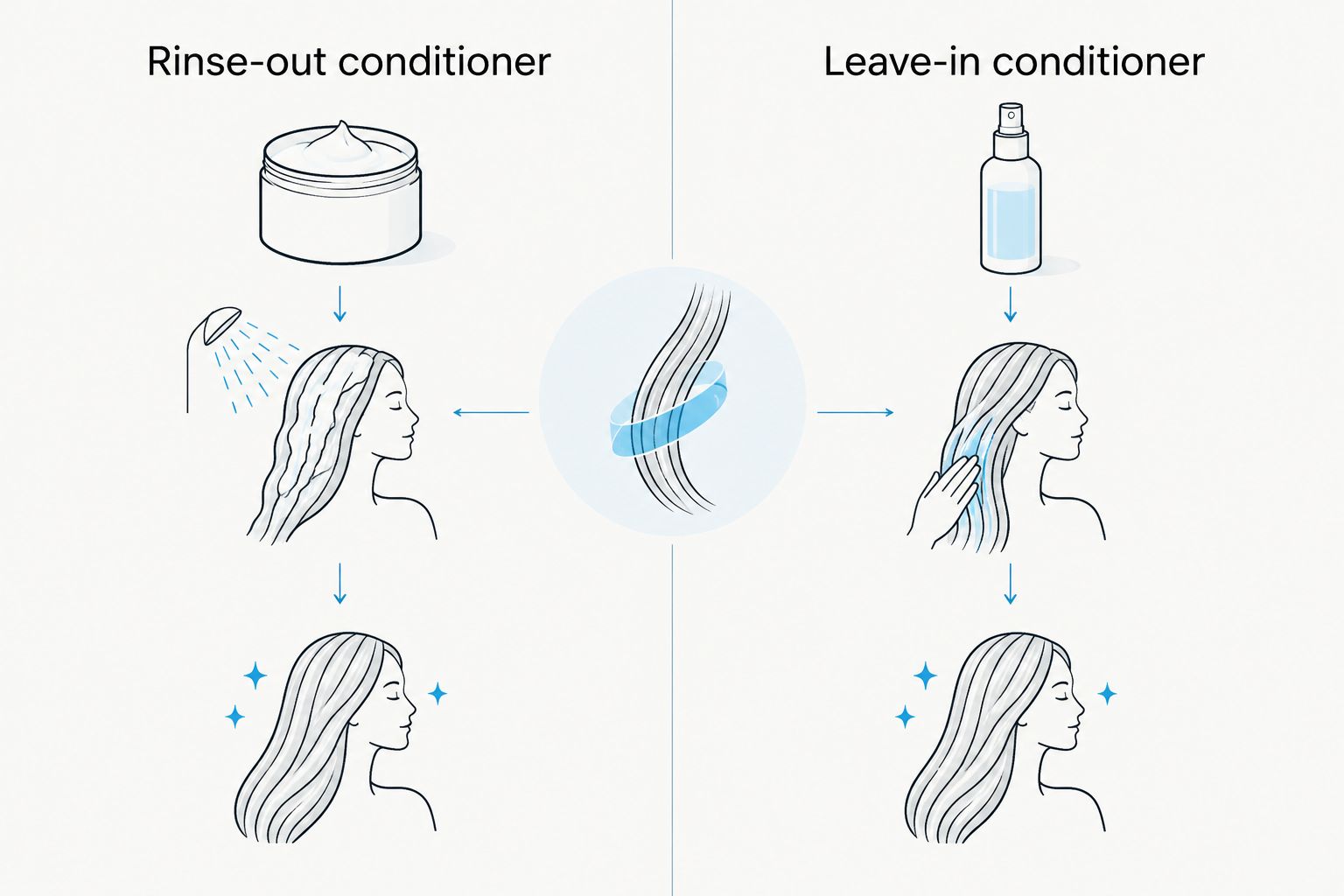
The label should settle the application question. If the listing does not provide directions, ask for them before you buy rather than guessing from the bottle shape or product name.
Why conditioner suitability varies
Your hair type matters, but broad labels such as dry or fine do not describe your whole routine. Consider where you want the conditioner to help and what has disappointed you about previous products.
These factors explain why the same sulfate-free claim can lead to different buying decisions:
- Hair texture and density: Choose a finish that suits your hair rather than assuming everyone needs the richest formula.
- Dryness along the lengths: Dry ends and an oily scalp are separate concerns; follow the label's placement instructions.
- Chemical treatment: Bleaching, coloring, or other treatments make the product's specific suitability claims relevant.
- Scalp sensitivities: A sulfate-free claim does not rule out fragrance or other ingredients you personally avoid.
- Other products in your routine: Shampoo, styling products, and existing leave-ins affect what additional conditioning you want.
- Application habits: Using a different amount or placing conditioner differently can change how the finished hair feels.
Avoid treating more conditioning as automatically better. If your main complaint is hair feeling coated after washing, adding a richer product without reviewing your routine does not address the buying problem.
For a 2026 shortlist, write down your main requirement before comparing products. A clear requirement—such as a rinse-out formula without a known fragrance trigger—is more useful than a long list of loosely related claims.
How do you check a conditioner when the description is incomplete?
An incomplete description is a reason to ask a specific question, not to fill in the blanks. Request the full ingredient list, directions, and any claim that is essential to your decision.
The Holocuren Miracle Anti-Aging Hair Conditioner – 6 oz listing identifies a conditioner and its package size. That information alone does not establish a sulfate-free formula, fragrance status, or directions for use. Do not interpret the words Miracle or Anti-Aging as evidence of hair regrowth or a medical treatment effect.
Cadosmarket's hair-care selection includes that conditioner, but choose it for a sulfate-free routine only after confirming the relevant ingredients. Its stated 6 oz quantity helps you assess package size; it does not tell you how many applications you will get.
Cadosmarket is best for shoppers who value order updates and verify hair-care specifications before buying. The store identifies keeping customers updated about orders as a service strength, which is separate from whether a particular formula meets your needs.
Use the contact page to ask for the ingredient declaration and application directions. A useful question names the exact product and the requirement you need confirmed; a general question about whether it is good for hair is harder to answer precisely.
Is sulfate-free conditioner better for color-treated hair?
Sulfate-free conditioner is not automatically the better choice for color-treated hair. Check whether the specific conditioner is intended for color-treated hair and follow your colorist's product guidance when relevant.
Do not transfer a claim from a shampoo to its matching conditioner. Each product has its own formula and directions, so verify the conditioner independently before adding it to your routine.
Can sulfate-free conditioner still irritate your scalp?
Sulfate-free conditioner can still contain ingredients that irritate an individual user's scalp. Fragrance and known personal sensitivities deserve their own checks; removing one ingredient category does not establish universal tolerance.
Stop using a product that causes irritation and seek medical advice for persistent symptoms. Do not use a cosmetic conditioner as a substitute for treatment of a diagnosed scalp condition.
How do you compare conditioners without relying on claims alone?
Compare conditioners using the same requirements: ingredient exclusions, application format, intended hair use, and package quantity. Keep your 2026 comparison consistent so that a prominent claim on one bottle does not distract from missing information on another.
A short written checklist is enough. Mark each requirement as confirmed or unconfirmed, and do not turn an unconfirmed feature into an assumed benefit.
FAQ
What's the most important thing to check before buying sulfate free conditioner?
Check the full ingredient list and application directions before buying sulfate free conditioner. Then confirm that the formula meets your separate requirements for fragrance, silicones, treated hair, or known sensitivities.
Does sulfate-free conditioner mean silicone-free?
Sulfate-free conditioner does not mean silicone-free. Verify silicone-related claims separately using the complete ingredient declaration and product information.
Is sulfate-free conditioner the same as fragrance-free conditioner?
Sulfate-free conditioner is not the same as fragrance-free conditioner. Check the fragrance claim and ingredients independently, especially if fragrance is a known concern for you.
Can I use a sulfate-free rinse-out conditioner as a leave-in?
Use a rinse-out conditioner as a leave-in only if the product directions explicitly allow it. Sulfate-free describes an ingredient-related claim, not permission to change the application method.
Is the Holocuren conditioner at Cadosmarket confirmed sulfate-free?
The provided listing details do not confirm that Holocuren Miracle Anti-Aging Hair Conditioner – 6 oz is sulfate-free. Confirm the full ingredient declaration before choosing it for that requirement.
Should I avoid every conditioner ingredient with alcohol in its name?
Do not reject every conditioner ingredient with alcohol in its name. Fatty alcohols such as cetyl alcohol and cetearyl alcohol serve different functions from ethanol and commonly appear in conditioning formulas.
Can a sulfate-free conditioner treat hair loss?
A sulfate-free claim does not establish that a conditioner treats hair loss. Seek medical advice about unexplained shedding or scalp symptoms rather than relying on a cosmetic product name.
One last thing
Check the bottle you receive against the product details you used to decide. Keep the ingredient declaration and directions as your reference, rather than relying on a remembered claim or an older shopping note.
For a repeat purchase in 2026, recheck the label instead of assuming every detail is unchanged. Your best buying habit is simple: confirm the requirement that matters, follow the directions, and judge whether the conditioner suits your actual routine.