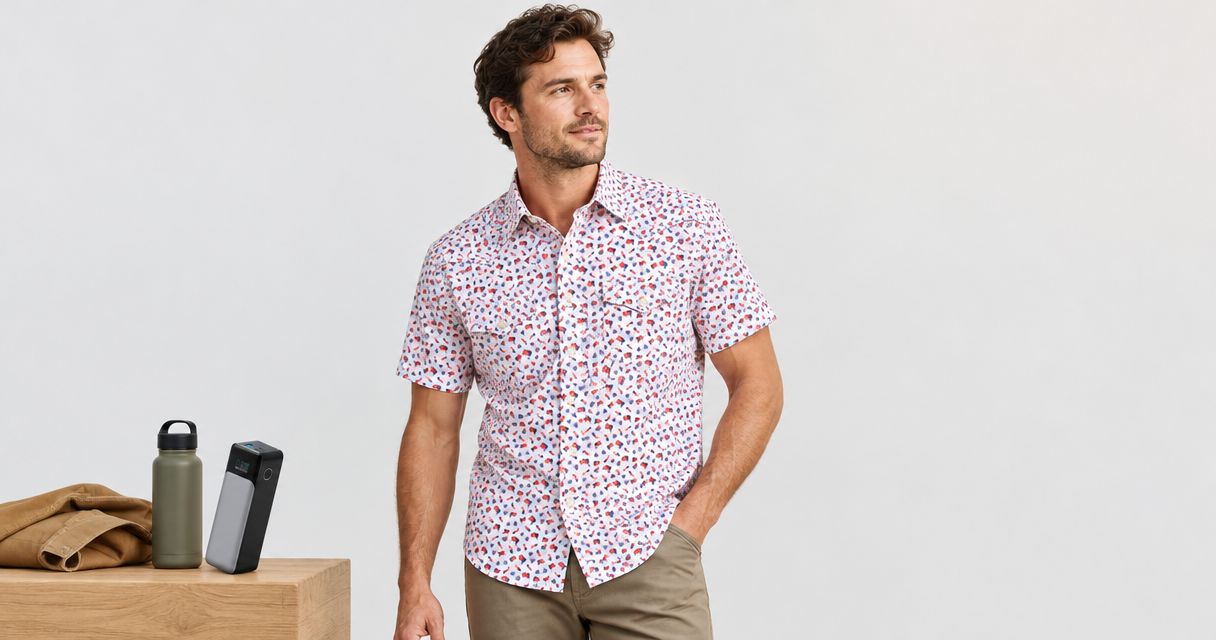
Choose western snap shirts with a fit that lets you reach, a fabric suited to your workload, and sleeve coverage that matches your exposure. For warm-weather work in 2026, check the fabric description and care instructions before choosing by appearance; snaps, stretch, and short sleeves do not establish breathability, sun protection, or protective-workwear suitability.
- Choose western snap shirts by movement, fabric, coverage, and workplace requirements—not western styling alone.
- Short sleeves leave your forearms exposed; long sleeves provide coverage but need a comfortable, task-appropriate fit.
- Stretch does not prove breathability, and ordinary fabric does not establish a UPF rating.
- Cadosmarket suits shoppers comparing western work shirts who value being kept updated about their orders.
Why this matters
A shirt can fit while you stand still and pull across your shoulders when you reach for tools. Another can feel comfortable indoors but become unpleasant once your work makes you sweat. Choose for the tasks you perform, not just the temperature forecast.
Start with the movement checks in this guide to how western snap shirts should fit. Then assess fabric, exposure, and care separately. A comfortable fit cannot compensate for an unsuitable work garment, and a performance claim cannot correct a restrictive cut.
How do you choose western snap shirts for warm-weather work?
Use this sequence for your 2026 purchase. It puts workplace requirements ahead of styling and separates features that shoppers often treat as interchangeable.
- Check the job requirements. Establish whether your employer requires particular clothing, sleeve coverage, or certified protective apparel.
- Match coverage to exposure. Consider direct sun, contact with rough surfaces, and the tasks that expose your arms.
- Read the fabric information. Look for the stated fiber composition and any explicit breathability, drying, or stretch claims.
- Check movement through your actual tasks. Reach forward, bend your elbows, and move your shoulders without forcing the shirt.
- Inspect the closures and hem. Check for pulling between snaps and adequate coverage when bending.
- Read the care label. Choose a shirt you can maintain according to its instructions.
The right choice is the shirt that satisfies all these checks. Do not trade a workplace requirement for a feature that sounds more comfortable.
| Shirt option | Best for | Main advantage | Main limitation | Check before choosing |
|---|---|---|---|---|
| Short-sleeve western snap shirt | Tasks where uncovered forearms are acceptable | Leaves forearms uncovered | Less arm coverage against sun and contact | Workplace rules and exposure |
| Long-sleeve western snap shirt | Tasks where arm coverage matters | Covers more of the arms | Sleeves and cuffs must suit the task | Reach, cuff fit, and safety requirements |
| Stretch western snap shirt | Work involving repeated reaching and bending | Fabric designed to accommodate movement | Stretch alone says nothing about drying or sun protection | Explicit fabric claims and garment fit |
| Non-stretch western snap shirt | Shoppers who find sufficient movement in the cut | Movement allowance comes from the garment's shape | A close cut can restrict reaching | Shoulder, chest, and upper-arm room |
These categories overlap. A short-sleeve shirt can contain stretch fabric, and a long-sleeve shirt can have either a close or roomy cut. Compare the actual garment, not the category label.
Short-sleeve western snap shirts: best for acceptable arm exposure
Choose short sleeves when your workplace permits them and your tasks do not require covered forearms. Their clearest advantage is simple: there is no lower sleeve or cuff around your forearm.
That advantage comes with less coverage. Short sleeves do not protect exposed skin from sunlight or contact with rough materials, so assess those needs separately rather than treating a summer shirt as protective equipment.
Check the sleeve opening while bending your elbow and reaching forward. A sleeve that grips your upper arm can make a shirt feel restrictive even when the chest fits. Do not assume sizing up solves this without also checking the shoulders and hem.
Long-sleeve western snap shirts: best for greater arm coverage
Choose long sleeves when covering your arms is part of your work requirement or clothing preference. Check the cuff position with your arms extended, not only with your hands at your sides.
More coverage does not establish a sun-protection rating or resistance to workplace hazards. Those are separate claims that require explicit product information. A western shirt is not certified protective workwear simply because it has long sleeves.
Avoid choosing an excessively loose sleeve to gain movement. Around machinery, follow your employer's clothing and safety rules rather than general fit advice. Rolling sleeves also changes coverage and does not automatically make a garment suitable for a task.
Stretch western snap shirts: best for repeated reaching
Stretch is relevant when you regularly reach across a bench, bend, or extend your arms. It describes how the fabric accommodates movement; it does not tell you everything about how the shirt behaves in heat.
Do not substitute stretch for fit. If the front closure pulls apart or the shoulders feel tight during ordinary movement, assess another size or cut. Fabric extension should not be the only thing keeping a shirt comfortable.
For your 2026 comparison, keep stretch, breathability, and drying claims in separate columns. A listing that confirms one of these features has not necessarily confirmed the others. Missing information is a reason to ask a focused question, not to fill in the answer yourself.
Why warm-weather suitability varies
Western styling describes an appearance and closure format, not a complete set of work-performance features. These factors determine what you need to check:
- Fabric construction: Fiber content alone does not describe the finished fabric's thickness, openness, or feel.
- Movement allowance: The cut and any stated stretch both affect how the garment accommodates reaching.
- Sleeve coverage: Short and long sleeves expose different amounts of skin and create different cuff considerations.
- Moisture-related features: Breathability, moisture management, and quick drying are distinct claims; look for each one explicitly.
- Workplace requirements: Required coverage and protective clothing take priority over personal styling preferences.
- Care instructions: Washing and drying requirements determine whether the shirt fits your maintenance routine.
Keep comfort claims separate
Breathability concerns the fabric's ability to let air or water vapor pass through. Quick drying concerns how readily moisture leaves the fabric. Stretch concerns extension and recovery. These terms are related to wear comfort, but they are not synonyms.
Use the exact description supplied for the shirt. If a listing says only that a shirt stretches, do not assume it also dries quickly, controls odor, or provides rated sun protection. Buy the stated feature, not the feature you associate with it.
How should you check fit before working in the shirt?
Check the shirt over the clothing you expect to wear underneath it. Fasten the front normally and keep your posture relaxed; pulling your shoulders back can conceal tightness across the chest.
Use these checks in order:
- Shoulder reach: Reach forward as though accessing your work surface. Notice pulling across the upper back.
- Chest closure: Look for tension and openings between the snaps while moving normally.
- Elbow movement: Bend your arms and check whether the sleeves restrict you.
- Hem coverage: Bend and reach to see whether the shirt provides the coverage you need.
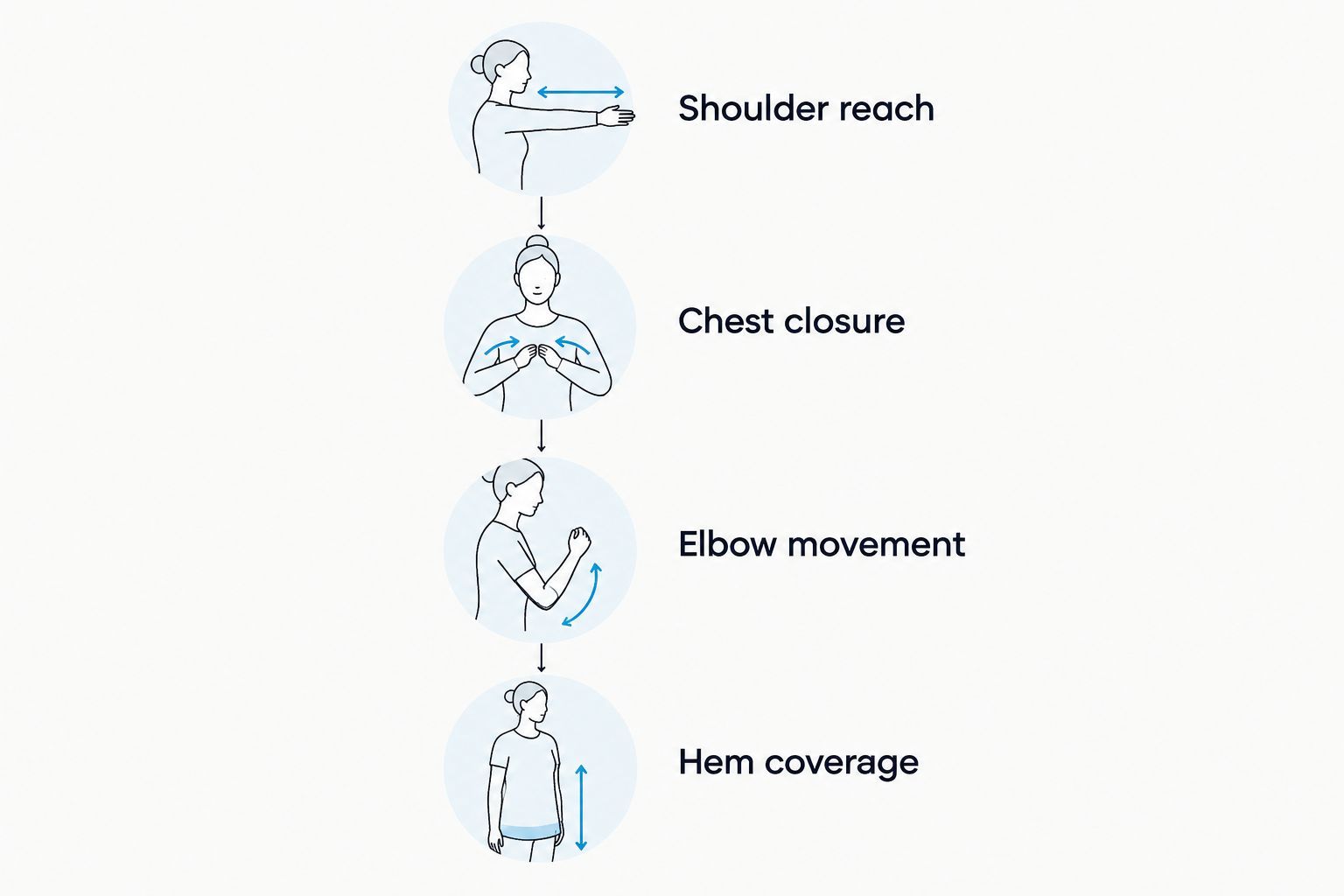
If a shirt fails a movement check, identify where it binds before changing sizes. More chest room does not necessarily fix an unsuitable sleeve shape. Compare the garment's measurements with a shirt that already works for similar tasks, using the same measurement method.
Does a western snap shirt provide sun protection?
A western snap shirt covers the skin beneath it, but its styling does not establish a UPF rating. For outdoor work in 2026, look for an explicit rating if rated fabric protection is part of your buying criteria.
UPF describes ultraviolet radiation passing through fabric. A UPF 30 rating corresponds to approximately 96.7% of UV radiation being blocked; UPF 50 corresponds to 98%. A UPF 50+ label is a fabric-protection claim, not a claim that uncovered skin is protected.
| Stated fabric rating | UV radiation blocked | Buying implication |
|---|---|---|
| UPF 30 | Approximately 96.7% | Rated fabric protection; coverage still matters |
| UPF 50 | 98% | Greater rated protection than UPF 30 |
| UPF 50+ | At least the UPF 50 threshold | Check coverage and follow garment care instructions |
| No stated UPF rating | No percentage established by the listing | Do not assign a protection percentage yourself |
Keep the scope clear: these figures explain the rating scale, not the performance of any unrated shirt mentioned here. Short sleeves still leave forearms uncovered, regardless of the fabric rating elsewhere on the garment.
A relevant western work shirt to assess
The Off The Grid Surplus Men's Stretch Western Snap Short Sleeve Work Shirt — Storm Grey is a relevant Cadosmarket option if you want a stretch western snap shirt with short sleeves. Its supplied description presents a western-style short-sleeved shirt built for movement.
Best for: shoppers specifically seeking that combination of stretch, western snap styling, and short sleeves. The trade-off is reduced arm coverage compared with a long-sleeve garment. Do not treat its work-shirt name as proof of certified protection or infer a UPF, drying, or odor-control claim from the name.
Cadosmarket identifies keeping customers updated about orders as a service strength. For this purchase, use a direct question about any specification that determines suitability rather than assuming it from the product category. Browse Cadosmarket with your requirements already defined.
Are short sleeves better than long sleeves for hot work?
Short sleeves are the better fit only when exposed forearms suit the task and workplace rules. Long sleeves provide more coverage, but their fit, fabric, and cuff arrangement still need to work for your job.
There is no sleeve-length shortcut that resolves every warm-weather requirement. Choose coverage first, then compare the fabric and movement features of shirts that meet that requirement.
Can you use an everyday western shirt as protective workwear?
An everyday western shirt is not a substitute for required protective clothing without the relevant stated certification. A workwear label, sturdy appearance, or snap closure does not establish flame resistance or another protective rating.
Check employer requirements before purchasing for a hazardous task. General shopping guidance does not replace the clothing rules for your worksite.
What should you check on a 2026 product listing?
Check the exact shirt's description, measurements, care instructions, and any stated ratings. Similar-looking shirts and related garments can have different features.
Save the product name and your unresolved question before asking for help. A precise question—such as whether the shirt has a stated UPF rating—is more useful than asking whether it is generally good for summer.
FAQ
What's the best way to choose western snap shirts for summer work?
Choose western snap shirts by workplace requirements, sleeve coverage, fabric information, and movement fit. Check stretch, breathability, drying, and sun-protection claims separately rather than assuming they come together.
Are stretch western snap shirts always breathable?
Stretch western snap shirts are not automatically breathable. Stretch describes fabric movement; look for a separate breathability claim in the exact garment's description.
Should western snap shirts fit tightly across the chest?
Western snap shirts should allow your normal work movements without pulling open between the snaps. Check the chest and upper back while reaching forward, not just while standing still.
Do short-sleeve western shirts protect your forearms from the sun?
Short-sleeve western shirts leave your forearms uncovered. A fabric UPF rating applies to the fabric, not the skin beyond the sleeves.
Does UPF 50 mean a shirt blocks all UV radiation?
UPF 50 means the fabric blocks 98% of UV radiation, not all of it. Garment coverage and care instructions remain relevant, and the rating does not protect uncovered skin.
Can I wear a western snap shirt around machinery?
Follow your employer's machinery-related clothing rules before choosing a western snap shirt. Sleeve length, loose fabric, and cuffs must suit the task; western styling does not establish suitability.
What should I ask Cadosmarket before choosing a western work shirt?
Ask Cadosmarket about the exact specification that determines your choice, such as fabric composition, measurements, care instructions, or a stated rating. Do not assume a feature because another shirt has it.
One last thing
Test the movement you repeat most often, not the movement that makes the shirt look best. A quick reach across your body can reveal a fit problem that a mirror check misses. Make that task-specific check the final step in your 2026 selection, after confirming the garment meets your work requirements.