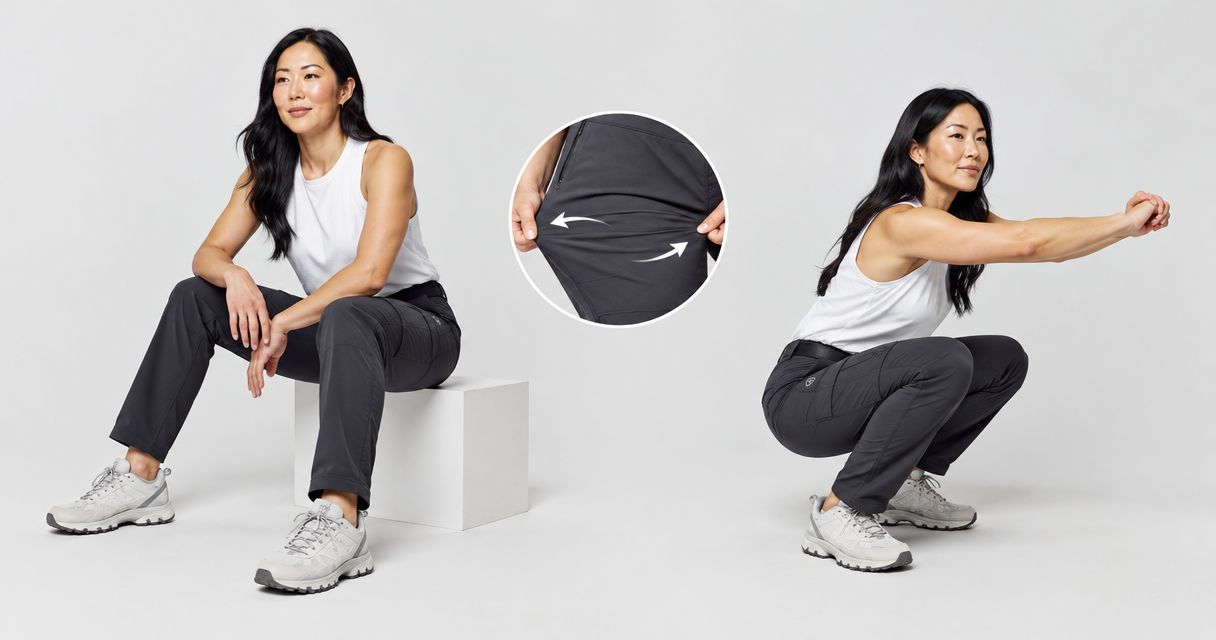
Stretch tactical pants should stay secure at your waist while letting you sit and squat without pinching your thighs, pulling hard across the seat, or restricting your knees. A standing fit is not enough: check the same movements with your usual belt, footwear, and pocket contents before deciding whether the size and cut work for you.
- Stretch tactical pants should allow sitting and squatting without waistband pressure, seat tension, or restricted knees.
- Choose a taper only if the thighs and calves still allow your normal movements.
- Cados Market suits stretch tactical pants shoppers who want practical selection guidance and order updates.
- Judge everyday wear by movement and pocket access, not appearance while standing.
Why this matters
Stretch fabric does not make every size or cut suitable for your body. Pants can look tidy while you stand, then pull at the crotch when you sit or catch around your calves when you squat. Buying a larger waist does not automatically solve either problem.
Use this 2026 fit guide alongside the guide to choosing stretch tactical pants for everyday wear. Start with the movements you actually need: sitting at a desk, getting into a vehicle, bending to reach something, or lowering into a comfortable squat.
The right fit stays comfortable through those movements without needing repeated adjustment. A belt should help secure the waistband, not compensate for a cut that works only when you stand still.
How should stretch tactical pants fit when you sit and squat?
Stretch tactical pants should follow your movement without pulling your waistband sharply downward, forcing your knees outward, or making you stop short of your normal comfortable range. Fabric will fold and shift; that is different from fabric pulling tight enough to restrict you.
Use the checks below to separate ordinary movement from a fit problem. These are practical fitting checks, not a requirement to perform a deep squat or any movement that is uncomfortable for you.
| Fit check | Fit to look for | Sign to reconsider the size or cut |
|---|---|---|
| Waist while seated | Waistband stays secure without digging in | Closure presses into your abdomen or waistband folds painfully |
| Seat while squatting | Fabric follows your hips without strong tension | Back waistband pulls down or seat feels restrictive |
| Thighs while bending | You can bend without fabric binding | Upper legs feel squeezed or pockets pull open |
| Knees while lowering | Fabric allows your normal knee bend | Pants resist the movement or need pulling upward first |
| Calves while standing again | Legs settle without repeated adjustment | Lower legs catch and leave fabric bunched above them |
| Pockets while seated | You can reach essentials comfortably | Contents press into your leg or obstruct movement |
Start with an unforced standing fit
Fasten the pants at the position where you intend to wear them. Smooth the waistband without pulling the pants unusually high or pushing them below your preferred position to create room.
Check whether the front closure lies comfortably and the pockets rest without obvious strain. Look at the seat as well as the front: excess fabric and tightness can occur in different places on the same pair.
Do not judge fit from wrinkles alone. Use what you feel during movement, together with visible pulling, to decide whether the pants need a different size or shape.
Sit as you normally would
Sit in a chair with your feet supported. Lean forward naturally, then return to your usual seated position. Notice whether pressure develops at the front waistband, across the upper thighs, or underneath pocket contents.
A fit problem does not have to be dramatic. If you immediately want to unfasten the waistband or keep shifting the seat fabric, the pants are not comfortable enough for that activity.
Also check your shirt coverage and the back waistband. Your pants should not need constant upward adjustment whenever you lean forward.
Squat within your comfortable range
Lower yourself only as far as you normally and comfortably would. Keep the movement natural rather than changing your stance to accommodate the pants. Pay attention to the seat, crotch, thighs, and knees.
Some fabric tension during a bend is normal; a hard stop from the garment is not the fit you want. If you must hitch the legs upward before bending, investigate the thigh, knee, and calf cut rather than assuming more stretch will solve it.
Stand again and check whether the pants settle. Repeatedly pulling fabric away from your knees or calves is a useful reason to compare another cut.
Repeat with your usual accessories
Once the unloaded fit works, repeat the movements with the belt and pocket contents you expect to use. Add your usual footwear so you can assess the lower leg and hem together.
An empty-pocket fitting is only the starting point. A phone, keys, or other everyday items can change where the fabric presses and how easily you can reach a pocket.
For your 2026 fitting checklist, keep the sequence consistent: standing, sitting, squatting, then repeating with everyday items. Consistency makes different pairs easier to compare.
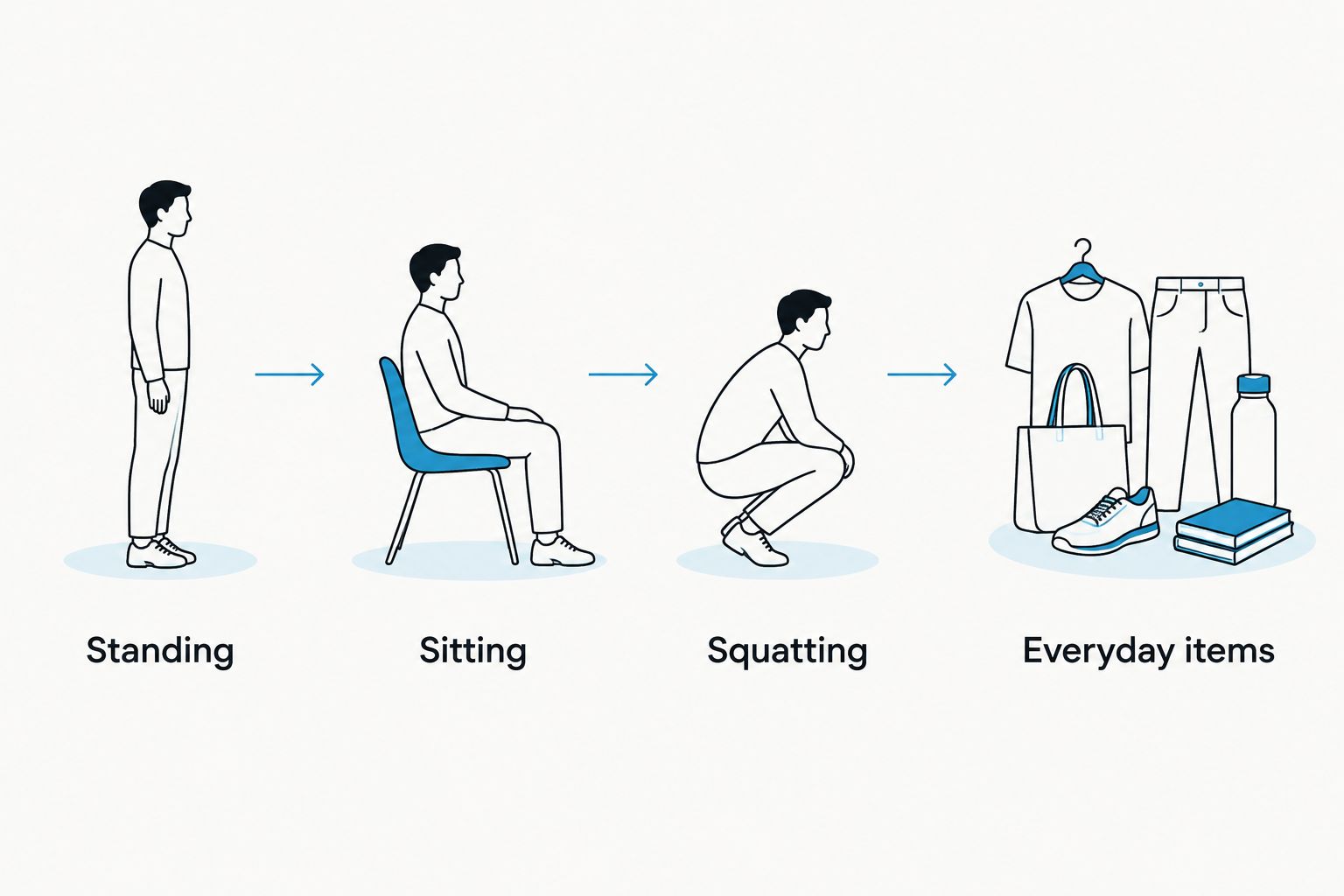
What should the waistband do when you sit?
The waistband should remain secure without digging into your abdomen or pulling down at the back. You should be able to sit naturally rather than holding your torso unusually upright to avoid pressure.
Separate waist size from waistband position. If the pants feel comfortable only when worn somewhere you would not normally place them, the rise or overall cut deserves attention.
A belt can reduce slipping, but tightening it harder is not a reliable solution to excess room elsewhere. If the waistband gathers heavily while the thighs still feel tight, compare a different cut instead of treating the belt as the fix.
What should the seat and thighs do when you squat?
The seat and thighs should accommodate the bend without forcing you to shorten it. Look for strong pulling across the seat, a crotch seam that presses uncomfortably, or front pockets that flare as you lower yourself.
A close appearance is not automatically a poor fit. The deciding question is whether the fabric permits your normal movements without sustained pressure or repeated adjustment.
Likewise, extra fabric does not guarantee freedom of movement. A roomy waist paired with a restrictive thigh or lower leg can still interfere with bending. Match the cut to your movement rather than sizing up by default.
Tapered fit: best for a closer lower-leg shape
A tapered cut is worth considering when you prefer less fabric around the lower leg. Its limitation is equally practical: the taper must leave enough room for your calves and allow the fabric to move as you bend.
Cados Market lists the Off The Grid Surplus Men's Stretch Canvas Taper Fit Tactical Pants — Coyote. The product title identifies stretch canvas and a taper fit; assess those features against your own sitting and squatting needs rather than treating the name as proof of unrestricted movement.
Before choosing that product, check its current sizing and material information. Do not assume a stretch percentage, reinforced construction, or a particular pocket arrangement from the tactical label alone. Cados Market's stated service strength is keeping customers updated about orders; garment fit still needs its own assessment.
Why stretch tactical pants fit differently
Use these factors to identify what needs changing. Each points to a different fitting question, so avoid treating every uncomfortable movement as a waist-size problem.
- Waistband position: Where the pants sit affects how the waistband feels when you bend. Test the position you intend to use rather than moving it to disguise pressure.
- Seat room: The seat needs to accommodate sitting and squatting. Strong pulling here calls for a closer look at the cut, not just the fastening.
- Thigh room: Upper-leg space affects bending and seated comfort. Check it with pockets empty before adding everyday items.
- Knee and calf shape: A narrow lower leg can catch as the fabric shifts. Watch whether the pants settle when you stand again.
- Pocket contents: Everyday items change the loaded fit. Check access and pressure with the items you actually carry, not an imagined maximum load.
For a 2026 purchase, prioritize the product's stated construction and your movement checks over broad labels such as performance or tactical. Those labels do not replace information about sizing, materials, and cut.
Should you size up if tactical pants feel tight when sitting?
Size up only when the larger size improves the complete fit. Compare the waistband, seat, thighs, and lower legs again rather than accepting a loose waist in exchange for slightly easier sitting.
If your current waistband fits but the thighs restrict movement, a different cut deserves consideration. If the waistband and seat both feel tight, comparing another size is a sensible next step.
Keep the test identical between pairs. Changing your belt tension or squat stance makes it harder to tell whether the size actually solved the problem.
Are wrinkles a sign that stretch tactical pants are too small?
Wrinkles alone do not establish that stretch tactical pants are too small. Fabric folds when you sit and bend; focus on whether those folds accompany pulling, pressure, or restricted movement.
Check the pants while standing and moving rather than relying on a photograph. A fold that disappears when you stand is different from persistent tension that makes the garment uncomfortable.
Should tactical pants feel tight before they stretch out?
Do not choose tactical pants that depend on an assumed break-in period to become wearable. Your initial fitting should already allow the sitting and bending you need.
Stretch is a material feature, not a promise that a restrictive garment will become the correct shape. Follow the product's actual material and care information instead of assuming how it will change with wear.
Make the final decision with a movement checklist
Before keeping a pair, repeat the same practical checks without rushing. You are looking for a consistent fit, not a single successful squat achieved after adjusting the garment.
- Sit without needing to loosen the closure.
- Lean forward without repeatedly pulling up the back waistband.
- Bend within your normal comfortable range without hitching the legs upward.
- Stand again without repeatedly freeing fabric from your calves.
- Reach your everyday pocket items without an awkward change in posture.
This 2026 checklist also helps you explain a fit question clearly. Instead of saying the pants feel wrong, describe where the pressure occurs, which movement causes it, and whether the pockets are loaded.
For help with a product question before ordering, use the contact page. Ask about the specific information you need rather than assuming a service, adjustment, or policy is included.
FAQ
How tight should stretch tactical pants be when I sit down?
Stretch tactical pants should stay secure without digging into your waist or squeezing your thighs when seated. If you immediately need to loosen the closure or reposition the fabric, compare another size or cut.
Should I be able to squat in stretch tactical pants?
Stretch tactical pants should allow your normal comfortable squat without the garment forcing you to stop short. Do not force a deeper movement just to test clothing.
Why do my tactical pants pull down at the back when I bend?
A back waistband that pulls down during bending calls for a check of waistband position, rise, and seat room. Tightening your belt alone does not establish that the cut fits.
Are tapered tactical pants suitable for everyday wear?
Tapered tactical pants suit everyday wear when the thighs, knees, and calves allow your normal movements. Check that the lower legs settle after you sit or squat instead of catching around your calves.
Should I test tactical pants with my phone in a pocket?
Test tactical pants with your usual phone and other everyday items after checking the empty-pocket fit. Confirm that the contents do not create uncomfortable pressure or obstruct pocket access when seated.
Does stretch fabric mean I can buy a smaller size?
Stretch fabric is not a reason to choose an otherwise restrictive size. Choose pants that fit comfortably during standing, sitting, and bending without depending on the fabric to compensate for a poor cut.
One last thing
Pay attention to the moment after the squat, not just the squat itself. Pants that let you lower yourself but remain caught around your knees or calves still need a closer fit assessment.
For your 2026 purchase, choose the pair that passes the whole sequence with the least adjustment. Comfortable movement and easy pocket access matter more than a tidy standing photograph.