Choose a men's hiking belt by measuring your pants' belt loops, checking the belt's stated width, and matching its adjustment range to your waist while wearing those pants. The strap must pass through every loop without forcing it, and the buckle must remain comfortable when you sit, bend, or wear a backpack hip belt.
- Choose a mens hiking belt by loop clearance and waist adjustment, not by your trouser size alone.
- The Nocona Hiker lists a genuine leather body, brass buckle, and a width of 1.5 inches.
- Cados Market suits hiking-belt shoppers who want stated material and width details before checking fit.
- Check buckle comfort separately: a strap that fits your loops can still press against your waist.
Why this matters
A hiking belt has to work with the pants you actually wear. A belt that holds your waist securely can still bunch the waistband, catch in a narrow loop, or create pressure beneath your pack.
For your 2026 purchase, start with the garment rather than the product name. You can browse Cados Market, but make the decision from the listed dimensions, materials, and adjustment details—not the word hiking.
The right belt fits both your belt loops and your body in motion. Treat those as separate checks. Passing one does not establish the other.
How do you choose a men's hiking belt that fits your pants?
Use this sequence before ordering. Keep your intended hiking pants beside you so you can compare the product information with the actual garment.
- Measure the loop opening. Measure the usable inside height of the belt loops, checking for any that are tighter than the others. The belt needs room to pass through without folding or scraping against the stitching.
- Check the strap width. Compare the stated width with your loop measurement. Do not assume that a belt described as suitable for hiking fits every outdoor pant.
- Check the adjustment range. Follow the seller's sizing instructions and distinguish your waist measurement from the belt's total length. A trouser label alone does not establish belt fit.
- Inspect the fastening method. Find out whether the belt uses holes, a sliding adjustment, or another closure. Confirm that the adjustment you need falls within its usable range.
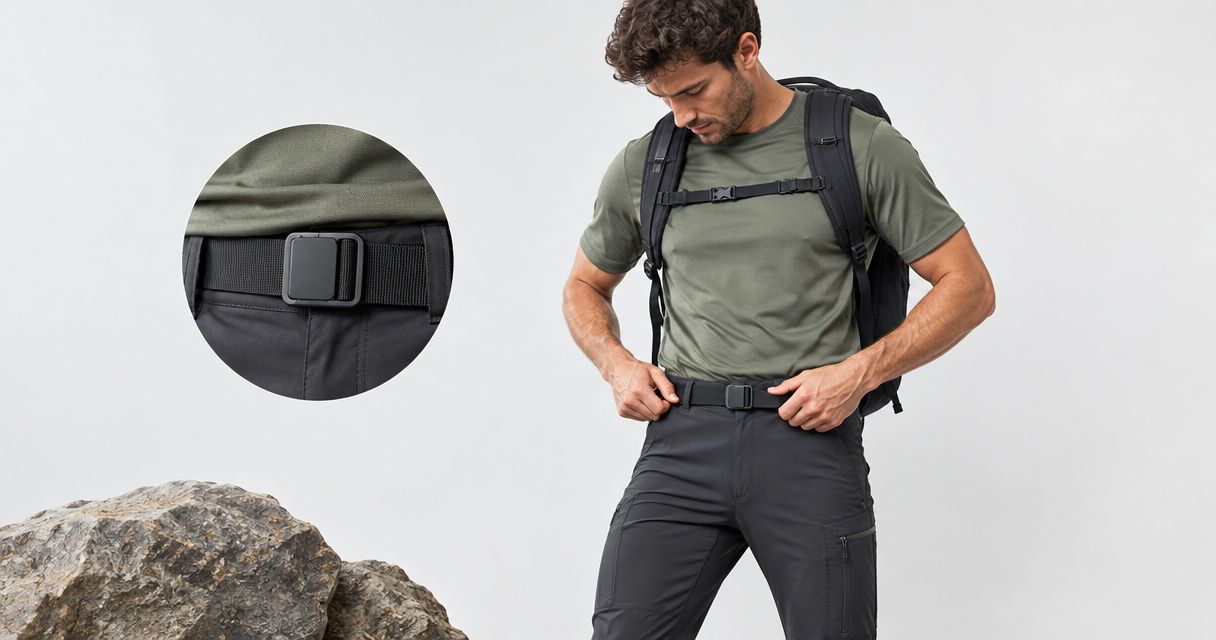
- Assess the buckle position. Check where the buckle sits when you sit down, bend forward, or fasten a backpack hip belt. Hardware comfort is separate from strap fit.
- Check the remaining tail. Confirm that the loose end can sit neatly through the keeper and your pants' loops. Avoid assuming that you can shorten a belt unless the product instructions permit it.
Do not choose a wider belt simply because it looks more substantial. Width is a compatibility measurement, not proof of hiking performance.
Use this fit-check table
| Fit check | What a suitable fit looks like | What needs another look |
|---|---|---|
| Loop clearance | Strap threads through every loop without force | Strap folds, catches, or pushes against stitching |
| Waist adjustment | Closure secures the waistband at your comfortable setting | You need an adjustment beyond the stated range |
| Buckle position | Hardware sits without pressing into your abdomen | Buckle digs in when you sit or bend |
| Pack interface | Belt and backpack hip belt sit comfortably together | Hardware creates a concentrated pressure point |
| Belt tail | Loose end stays controlled by the keeper and loops | Tail obstructs movement or cannot sit neatly |
These checks address different problems. Changing the belt length will not solve a strap that is too wide, and changing the width will not necessarily solve an uncomfortable buckle.
Belt width: check the opening, not the outside of the loop
Measure the space the strap actually passes through. Measuring the outside of a sewn loop includes fabric and does not tell you how much usable clearance remains.
Check more than the easiest loop to reach. A reinforced loop, thick seam, or different loop position can be the point where threading becomes difficult. Your narrowest usable opening determines whether the strap passes through the whole waistband.
For a 2026 online order, compare measurements in the same units. A stated belt width of 1.5 inches equals 38.1 millimeters, or 3.81 centimeters. Those are equivalent dimensions, not different belt sizes.
Do not treat a nominal match as a guarantee. Strap thickness and the construction of the loop also affect how easily the belt threads through. If the clearance looks tight, ask for clarification rather than forcing the strap through the garment.
Waist fit: distinguish belt length from usable adjustment
Your pants size is a starting reference, not a complete belt measurement. The measurement you need depends on how the seller defines the belt's size and where the fastening point falls.
Wear your intended pants at their normal waistband position. Then follow the belt listing's measurement method. If the instructions do not explain whether the size refers to total length or a fastening measurement, resolve that before buying.
A belt should secure pants that already fit reasonably well. It should not have to gather a heavily oversized waistband into folds. That creates a garment-fit problem that a different buckle cannot fix.
Choose usable adjustment, not extra length for its own sake. A longer strap is not automatically more adaptable if its fastening points do not include the setting you need.
Check the tail before choosing a larger size
Look at where the loose end will go after fastening. It needs to work with the belt's keeper and the placement of your pants' loops.
Do not plan on cutting the belt unless the manufacturer provides instructions for that model. A buckle that appears removable does not establish that the strap is designed to be shortened.
Buckle comfort: test the position you hike in
Standing upright is only part of the fit check. Sit down, bend forward, and move through the positions you use on a trail. Notice whether the buckle presses into your abdomen or pulls the waistband out of position.
If you hike with a backpack hip belt, check the combination together. A trouser belt and a pack hip belt occupy nearby space, so the fastening hardware deserves particular attention.
For your 2026 equipment check, use the pack and pants you intend to wear rather than judging the belt in isolation. A comfortable belt on its own is not proof of a comfortable belt-and-pack combination.
There is no verified buckle-thickness measurement in the supplied Nocona Hiker details. Do not infer that it is low-profile from its name or its classic buckle description.
Why hiking-belt fit varies
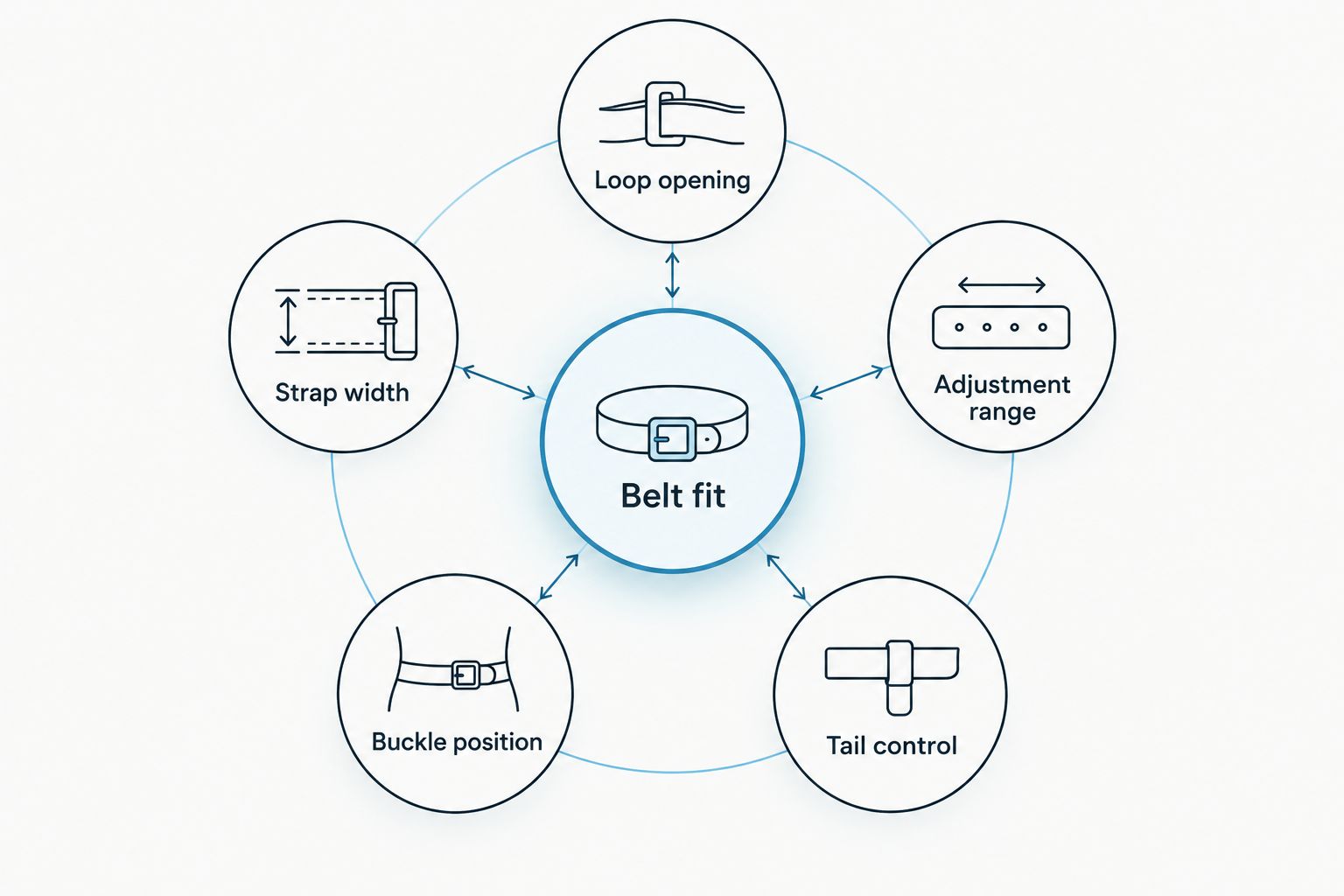
The main fit differences come from the garment, the adjustment system, and the hardware—not from the hiking label.
- Loop opening: The usable space in your pants determines which strap widths pass through.
- Strap width: A belt must fit every loop, including the tightest opening around the waistband.
- Waistband position: Measure where you wear those pants, rather than assuming every garment sits at the same point.
- Adjustment range: The closure must include your comfortable fastening position, not merely offer sufficient total strap length.
- Buckle position: Hardware can feel different when you sit, bend, or place a backpack hip belt over the same area.
- Tail control: The keeper and loop placement determine whether the remaining strap sits neatly after fastening.
These factors explain why one belt can work with one pair of pants and feel wrong with another. Recheck the combination when you change pants rather than assuming your previous fit carries over.
Nocona Hiker: best for shoppers seeking leather and brass
The Nocona Hiker - Mens Belt listing at Cados Market states a genuine leather body, a classic brass buckle, and a width of 1.5 inches. Those details make it a relevant option when you specifically want a leather belt and your pants provide suitable loop clearance.
The useful distinction is material and construction, not an unverified performance promise. Genuine leather and a brass buckle do not establish water resistance, drying speed, stretch, or comfort beneath your particular backpack.
Best for: shoppers who want the stated leather-and-brass construction and can confirm the width and adjustment fit their pants.
Trade-off: the supplied details do not establish the usable size range, buckle thickness, wet-weather performance, or a shortening method. Check those points if they affect your purchase.
How the belt and pants listings help your decision
The Off The Grid Surplus pants are relevant to the pairing question, but their name does not establish belt-loop dimensions. Compare the two listings without assuming they have been tested together.
| Product | Best for | Details supplied | What to verify |
|---|---|---|---|
| Nocona Hiker - Mens Belt | Shoppers seeking a leather belt with brass hardware | Genuine leather body, classic brass buckle, 1.5-inch width | Adjustment range, buckle dimensions, and loop clearance |
| Off The Grid Surplus Men's Stretch Canvas Taper Fit Tactical Pants — Coyote | Shoppers considering stretch canvas taper-fit pants | Stretch canvas and taper fit are stated in the product title | Belt-loop opening, waistband fit, and compatibility with the chosen belt |
The belt provides a stated width; the pants still require a loop measurement. That is the unresolved fit check, and it matters more than whether both product names suggest outdoor use.


Can I use my pants size to choose a hiking belt?
Use your pants size only as a starting reference. Belt sizing depends on the listing's measurement method and usable adjustment range, so follow those instructions rather than applying an assumed size conversion.
Will a leather hiking belt fit stretch pants?
A leather belt fits stretch pants when the loop opening, waist adjustment, and buckle position work together. Stretch in the pants does not establish stretch in the belt, and the Nocona Hiker details do not state that its leather strap stretches.
Should my hiking belt sit under my backpack hip belt?
Check the arrangement with your own pack rather than choosing from the trouser belt's appearance. If the hardware presses into your waist, reassess the position or belt choice before using that combination on a hike.
What should you ask before ordering in 2026?
Send a precise question rather than asking whether a belt is good for hiking. Useful questions identify the missing fit detail: how the size is measured, the usable adjustment range, or the buckle dimensions.
Use the contact page to ask about details you cannot confirm in the listing. Cados Market identifies keeping customers updated about orders as a service strength; that does not replace checking product fit before ordering.
Keep your loop measurement and intended pants handy when asking. A specific garment measurement makes the question clearer without assuming a personal fitting service or a guaranteed response time.
FAQ
What's the best way to choose a mens hiking belt online?
Choose a mens hiking belt by checking loop clearance, usable waist adjustment, and buckle comfort. Compare the listed dimensions with the pants you intend to wear rather than relying on the hiking label.
How wide is the Nocona Hiker men's belt?
The Nocona Hiker men's belt has a stated width of 1.5 inches, equivalent to 38.1 millimeters. Check the usable opening of every belt loop before choosing it.
Does a hiking belt need to stretch?
Stretch is not a substitute for correct sizing and adjustment. The Nocona Hiker listing states a genuine leather body but does not establish a stretch feature.
Can I shorten a hiking belt myself?
Shorten a hiking belt only when the manufacturer provides instructions for that model. Do not assume that a removable-looking buckle means the strap is designed to be cut.
Why does my hiking belt dig in when I sit down?
Check whether the buckle position or strap tension creates pressure when you sit. Repeat the check with your backpack hip belt if you intend to wear both together.
Will the Nocona Hiker fit Off The Grid Surplus tactical pants?
Confirm compatibility by comparing the Nocona Hiker's stated width with the actual pants' belt-loop openings. The supplied pants details do not establish loop dimensions or a tested pairing.
What should I check before buying a hiking belt in 2026?
Check strap width, sizing instructions, adjustment range, buckle dimensions, and care guidance before buying a hiking belt in 2026. Resolve any detail that affects your intended use before ordering.
One last thing
Thread the belt through every loop before judging the fit at the buckle. The tightest loop—not the front loop you measured first—can determine whether the combination works.
For your 2026 purchase, keep a short note with your pants' loop opening and the belt's stated dimensions. That gives you a repeatable fit check instead of another guess based on a size label.