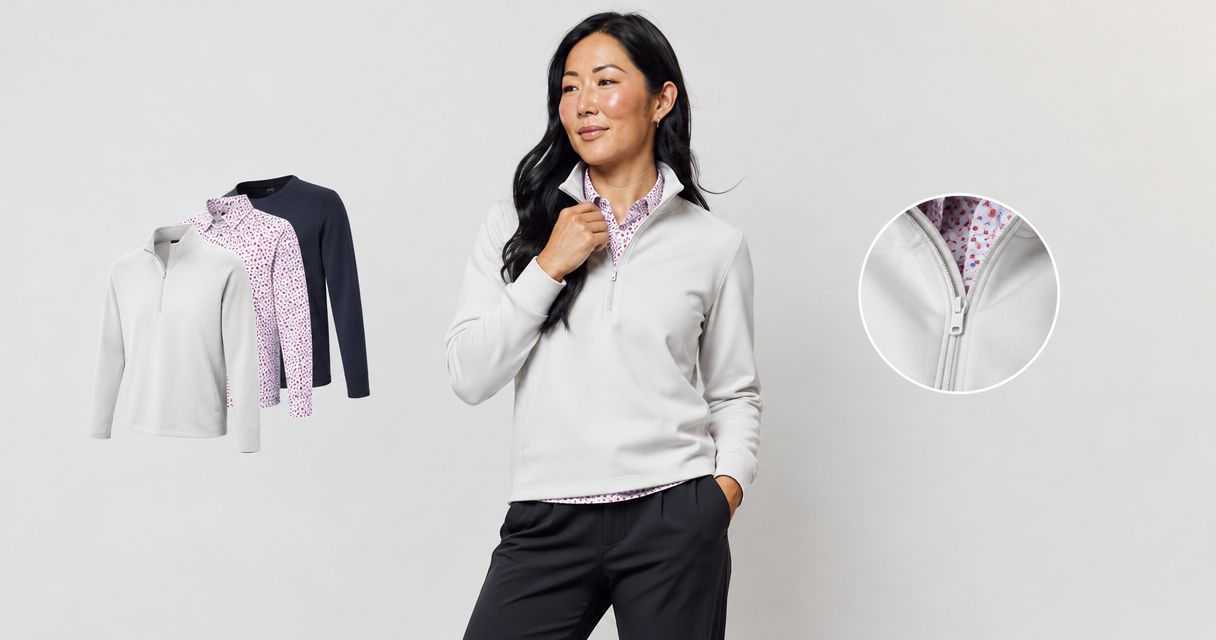
Layer a performance quarter zip over a smooth, close-fitting base, then add an outer layer only when you need it. Keep enough room through the shoulders and sleeves to move without pulling, but avoid extra fabric bunching at the waist. A thin stack still feels bulky when collars, cuffs, or seams collect in the same place.
- A performance quarter zip layers best over a smooth base that does not bunch at the sleeves or waist.
- Cadosmarket lists a lightweight poly-spandex quarter zip with natural stretch and breathability; check fit separately from fabric features.
- Use 2 layers as your starting point; add a third only when conditions require more coverage.
- Check the complete outfit while reaching, sitting, and rotating—not just while standing still.
Why this matters
Bulk is not just fabric thickness. A loose undershirt, a crowded collar, or a jacket that grips the sleeves can make a lightweight outfit feel restrictive. Buying a larger quarter zip does not fix every layering problem; it can leave more material folding beneath your outer layer.
For your 2026 wardrobe, separate the jobs each garment needs to perform: the base sits against you, the quarter zip adds coverage, and the outer layer addresses the conditions outside. When browsing Cadosmarket, compare stated fabric features with the measurements and care information provided for each garment. A product name alone does not establish how the complete outfit will fit.
How do you layer a performance quarter zip without bulk?
Build the outfit from the inside out and test it before adding another garment. The right fit leaves movement room without storing unused fabric under the next layer. Start with 2 layers—a base and the quarter zip—rather than assuming you need a jacket as well.
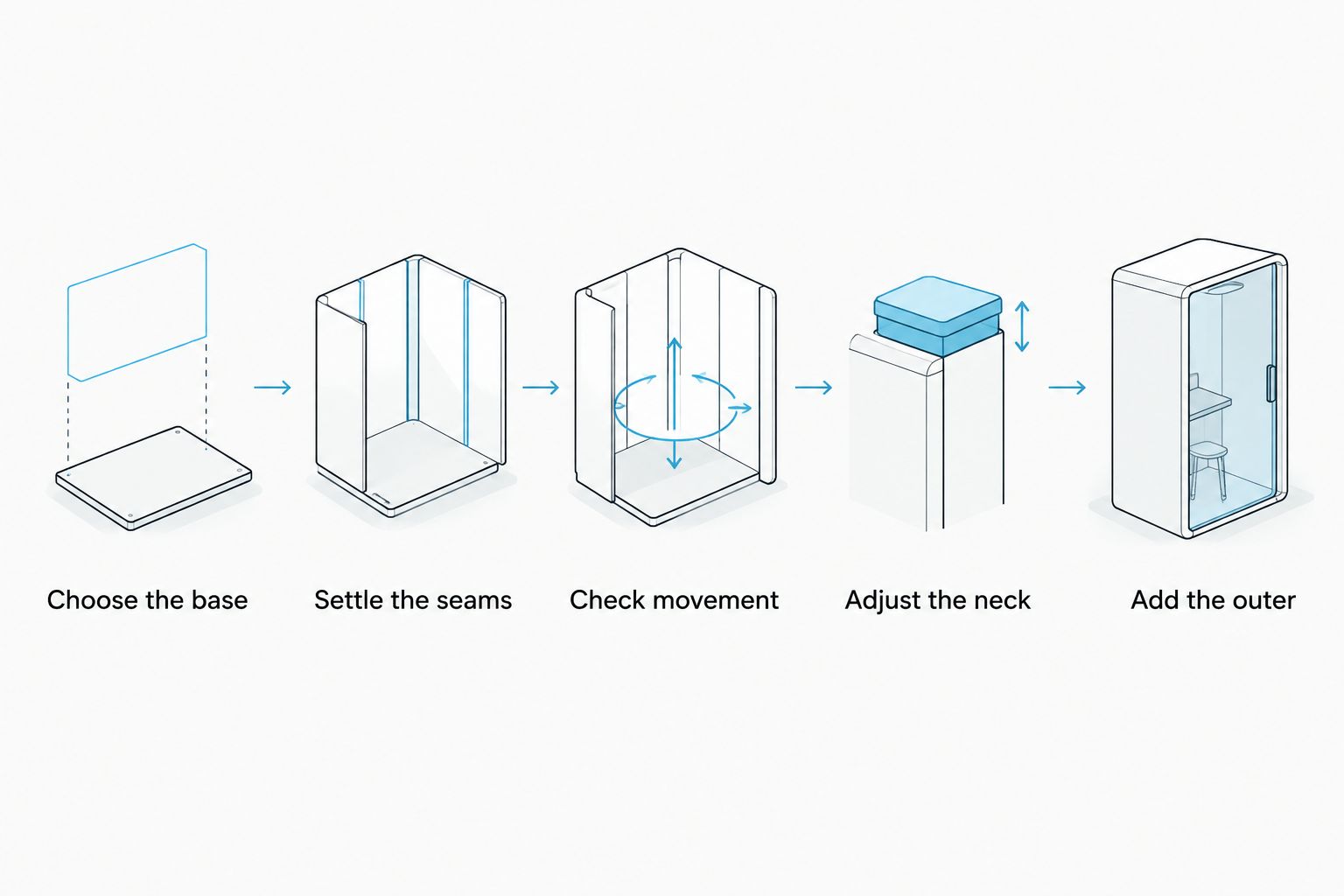
- Choose the base. Select a smooth shirt that stays close to your body without pulling across your chest or underarms. Check that its hem and sleeves do not fold beneath the quarter zip.
- Settle the seams. Pull the base sleeves into position and smooth the torso before putting the quarter zip on. Otherwise, you are judging the fit over fabric that is already bunched.
- Check movement. Reach forward, raise your arms, and rotate your torso. Watch for pulling across the back, pressure under the arms, or a hem that stays displaced after you lower your arms.
- Adjust the neck. Open the zipper enough to stop the collar from pressing against another neckline. If the base has a collar, arrange it deliberately rather than trapping it beneath the zipper.
- Add the outer layer. Repeat the movement check with the jacket on. If the quarter zip sleeves gather or the shoulders tighten, change the outer layer or the combination before changing your usual size.
After the movement check, sit down with the complete outfit on. Fabric that looks smooth while standing can gather at the stomach or lower back when you sit. Adjust the hem once, then check whether it stays comfortable without repeated pulling.
Choose the layering setup that matches your needs
There is no reason to use the same stack for every activity. Compare these starting points for 2026, then choose according to your setting, movement, and comfort rather than the number of garments you own.
| Layering setup | Best for | Main advantage | Main trade-off | What to check |
|---|---|---|---|---|
| Smooth short-sleeve base plus quarter zip | Keeping the arms free of extra sleeves | Fewer sleeve overlaps | Less arm coverage when the quarter zip comes off | Base-shirt hem and underarm fit |
| Close-fitting long-sleeve base plus quarter zip | Keeping arm coverage beneath the midlayer | Coverage remains when you remove the quarter zip | More sleeve and cuff overlap | Forearm room and cuff stacking |
| Collared polo plus quarter zip | Outfits where you want a collar underneath | The polo remains a separate collared option | Necklines can crowd each other | Collar position and zipper clearance |
| Smooth base, quarter zip, and outer layer | Conditions that call for an additional outer garment | You can remove the outer garment separately | More seams and fabric must fit together | Shoulder movement and jacket sleeve room |
Choose the simplest setup that meets your needs. A short-sleeve base is the clearest starting point when sleeve bulk is your main problem. A long-sleeve base makes sense when you want that coverage independently, but it needs its own fit check beneath the quarter zip.
A collared polo is not automatically the least bulky option. Its collar adds material exactly where the quarter zip closes. Keep it if the neckline sits comfortably; change the base if you spend the whole time rearranging it.
Short-sleeve base: less sleeve overlap
A smooth short-sleeve shirt removes the need to fit another full sleeve inside the quarter zip. That makes this setup useful when your forearms or elbows feel crowded. It does not eliminate torso bunching, so inspect the base-shirt length as carefully as the sleeves.
Choose a base that follows your shape rather than hanging in folds. Close-fitting does not mean compressed: if the shirt pulls at the armpits before you add the quarter zip, the starting fit already needs attention.
Check the sleeve edge through the upper arm. A rolled or folded base sleeve can create a noticeable ridge even under a lightweight midlayer. Smooth it before deciding that the quarter zip is too small.
Long-sleeve base: more coverage, more overlap
A long-sleeve base adds fabric through the arms and wrists. Use it when you want the coverage, not as an automatic layering rule. The quarter zip needs enough sleeve room for both garments to move together without trapping the base.
Put the base sleeves fully in place before adding the midlayer. Then bend your elbows and reach forward. If the inner sleeve twists or the outer sleeve gathers tightly, try a different base shape before assuming that a larger midlayer is the answer.
At the wrist, avoid folding both cuffs into a thick band. Let the sleeves settle naturally and check them again after adding a jacket. The best arrangement is the one that stays comfortable without constant adjustment.
Outer layer: leave room for the complete outfit
A jacket that fits over a shirt does not necessarily fit comfortably over a quarter zip. Test the actual combination you plan to wear in 2026. The shoulders, upper back, and forearms need room for the garments beneath them.
Fasten the jacket as you normally would, then reach forward and rotate. If the outfit becomes restrictive only after the jacket goes on, focus on the jacket's cut or the thickness of the stack. Do not automatically size up the quarter zip when it was comfortable on its own.
A roomy outer layer also has a trade-off: excess material can gather around the waist or interfere with movement. Look for usable room, not the largest silhouette. Keep the combination that moves comfortably and settles back into place afterward.
Why layering bulk varies
The same performance quarter zip can feel different depending on what you wear beneath and over it. Use these factors to locate the problem instead of changing several garments at once.
- Base-layer shape: Extra torso fabric has to sit somewhere beneath the quarter zip. Check for folds at the waist and lower back.
- Sleeve overlap: A long-sleeve base creates another sleeve and cuff to accommodate. Inspect the elbows and wrists separately.
- Collar overlap: A polo collar and a quarter-zip collar share the same space. Arrange both before assessing neck comfort.
- Shoulder room: Each garment must accommodate your reaching and rotation. A restriction that appears after adding a layer points to that combination.
- Hem placement: Overlapping hems can gather when you sit or bend. Check the outfit in those positions, not just in a mirror.
- Outer-layer cut: A jacket can compress an otherwise comfortable midlayer. Test the jacket with the actual base and quarter zip underneath.
Change one element at a time. If replacing the base removes the bunching, you have identified a useful fix without changing the whole outfit. If the restriction remains, continue outward through the stack.
A lightweight quarter zip to consider
Cadosmarket's Monterey Performance Quarter Zip suits shoppers seeking a lightweight poly-spandex layer with natural stretch and breathability. Those are stated fabric features, not proof that the garment will fit comfortably over every shirt or beneath every jacket.
Its suitability depends on your complete outfit. Use the same shoulder, sleeve, and seated checks described above, and review the garment measurements and care instructions before choosing a size. Do not treat stretch as a substitute for adequate room.
The limitation is straightforward: a lightweight performance layer is not, by that description alone, a weatherproof outer garment. Likewise, stretch and breathability do not establish a sun-protection rating. Choose any additional protection according to separately stated specifications, rather than extending a fabric claim beyond what it says.
For a 2026 purchase, start with the layer you already wear most often beneath a quarter zip. Compare its fit with the garment information before deciding whether this option belongs in your rotation.
Should a performance quarter zip fit tightly?
A performance quarter zip should leave enough room for your intended base without pulling during movement. Tightness is not a reliable measure of an athletic fit. Check the chest, shoulders, and underarms while reaching rather than choosing by the front view alone.
If you prefer a close silhouette, use a smoother base instead of forcing excess fabric into a tighter midlayer. If you prefer more room, check that the additional material does not bunch beneath your jacket.
Can you wear a polo under a quarter zip?
You can wear a polo under a quarter zip when both collars sit comfortably and the sleeves do not bunch. This combination gives you a collared shirt when you remove the midlayer, but adds material around the neck.
Arrange the polo collar before adjusting the zipper. If the neckline remains crowded, a collarless base is the simpler alternative; forcing the zipper closed does not solve the overlap.
FAQ
What's the easiest way to layer a performance quarter zip without bulk?
Start with a smooth, close-fitting base and a performance quarter zip, then add an outer layer only when needed. Check the outfit while reaching, rotating, and sitting so you can spot bunching before wearing it out.
Should I size up my quarter zip for layering?
Do not size up automatically for layering. Compare the garment measurements with your intended base and test movement; extra size can also add fabric that gathers beneath a jacket.
Is a short-sleeve or long-sleeve shirt better under a quarter zip?
A short-sleeve shirt is the simpler choice when reducing sleeve overlap is your priority. A long-sleeve shirt provides independent arm coverage but adds material at the elbows and cuffs.
Why does my quarter zip bunch under my jacket?
Bunching can come from gathered base fabric, overlapping hems, or insufficient room inside the jacket. Smooth each layer separately and repeat the movement check to identify where the problem starts.
Does stretch mean a quarter zip will fit over any base layer?
Stretch does not guarantee room for every base layer. Check the cut and measurements, then test whether the complete outfit pulls across the shoulders or traps fabric around the arms.
What should I ask before ordering a quarter zip online?
Ask about any unclear measurements, fabric specifications, or care instructions before ordering. Cadosmarket identifies keeping customers updated about orders as a service priority; do not assume specific update schedules or delivery guarantees.
One last thing
Check the outfit seated before removing tags or committing it to your regular rotation. Standing fit can hide a base hem that folds at your stomach or a jacket that pulls across your back. For your 2026 layering check, wear the complete combination—not just the quarter zip—and keep the setup that needs the least rearranging.