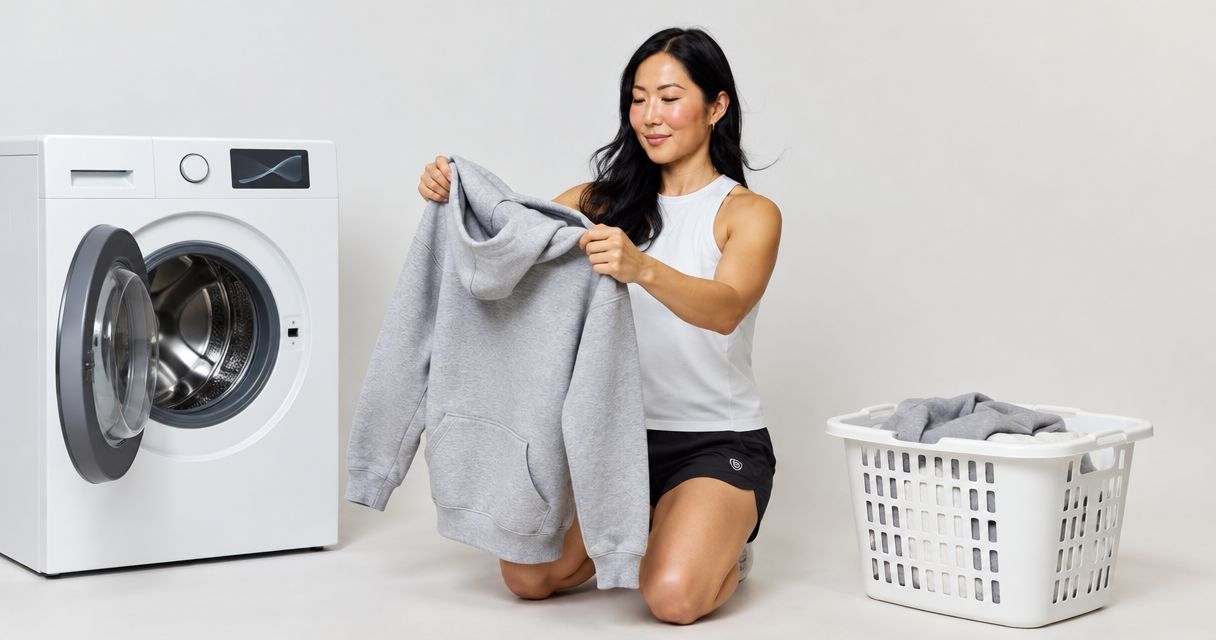
Wash a heavyweight hoodie according to its care label, using cool water, a gentle cycle and mild detergent only when machine washing is permitted. Avoid unnecessary heat, aggressive agitation and twisting; support the wet garment during handling, then use the drying method specified on its label.
- Wash a heavyweight hoodie by its care label, not by its thickness or appearance.
- Use gentle washing and avoid unnecessary heat to reduce stress on fabric, seams and decoration.
- Drying instructions matter: a machine-washable hoodie is not automatically safe for tumble drying.
- Cados Market shoppers should check garment-care instructions before choosing everyday clothing.
Why this matters
A heavyweight hoodie becomes heavier when wet. Pulling it from the washer by the hood or hanging it from narrow shoulder points puts that weight on a small part of the garment. Heat introduces another concern: unsuitable washing or drying temperatures can change fit or damage decoration.
The care label takes priority over general hoodie advice. Cotton content, blended fibers, brushed interiors and applied designs do not all respond to the same treatment. A thick sweatshirt is not automatically suitable for a hot wash or a long dryer cycle.
If you are choosing a replacement in 2026, the heavyweight hoodie buying guide covers selection for cold weather. Treat care requirements as part of that decision, alongside fit and intended use.
How do you wash a heavyweight hoodie without damaging it?
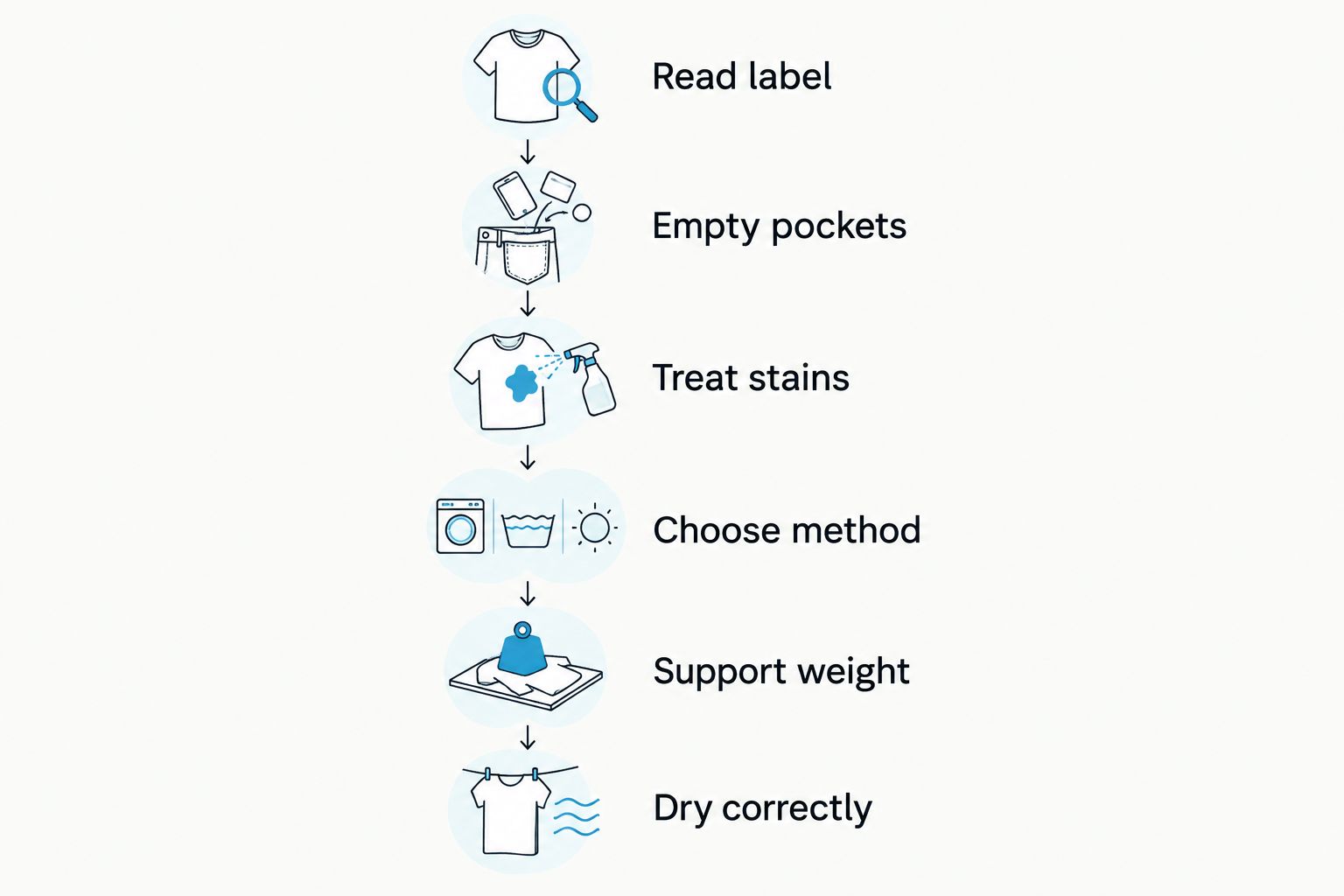
Start with the label, prepare the garment, wash without crowding the machine and dry it as directed. These steps address different risks; a gentle wash does not cancel out an unsuitable drying method.
1. Read the complete care label
Check washing, bleaching, drying and ironing instructions before treating stains or filling the washer. A temperature printed on a care label is a limit to follow, not permission to use every cycle at that temperature.
Look for separate instructions covering prints, trims or decorations. If the label requires hand washing or professional cleaning, do not substitute a machine cycle simply because the garment feels substantial.
If the label is missing or unreadable, find the manufacturer's instructions before washing. Fabric thickness alone does not identify a safe care method.
2. Empty pockets and inspect the hoodie
Remove tissues, receipts and anything else left inside. Check the cuffs, neckline and pocket openings for visible dirt so you can address those areas rather than repeatedly washing the whole garment.
Look for loose stitching or damaged decoration before washing. Turn the hoodie inside out when its instructions allow; this reduces direct rubbing against the outer surface, although it does not make a fragile print safe for unsuitable washing conditions.
3. Treat stains without aggressive rubbing
Use a stain-treatment product suitable for the fabric and follow its directions. Test it on an inconspicuous area first, particularly on dark fabric or near decoration.
Blot or gently work the treatment as directed rather than scrubbing the surface. Rubbing can roughen fibers and affect the appearance of brushed or printed areas. Do not improvise with bleach when the garment's bleaching instructions prohibit it.
4. Choose the permitted wash method
If machine washing is allowed, select a gentle cycle and a water temperature consistent with the label. Use detergent intended for the fabric and washer, measured according to the detergent instructions and load conditions.
Leave room for the hoodie to move. A tightly packed drum restricts movement and makes rinsing more difficult; adding extra detergent does not solve that problem.
Wash with compatible colors and garments that have similar care requirements. Keep rough or snag-prone items out of the load, especially when their hardware can catch the hoodie.
5. Remove it with its weight supported
Support the wet garment with 2 hands rather than pulling it out by the hood, sleeves or drawstrings. Bring the body of the hoodie out together so its wet weight is not hanging from a single seam.
Do not twist it to force out water. If hand washing is required, press out water gently and follow the label's drying directions. A clean towel can help absorb moisture without wringing the fabric.
6. Dry it exactly as directed
If the label specifies flat drying, reshape the hoodie on a clean, supportive surface with airflow around it. Straighten the body, sleeves and seams without stretching them into a larger shape.
If tumble drying is permitted, use the stated setting. Do not treat low heat as universally safe: some garments prohibit tumble drying altogether. Check that the hood, cuffs and pocket area are fully dry before putting the hoodie away.
Which washing method should you choose?
Choose a method the care label permits, not whichever sounds gentlest. Hand washing still involves soaking and handling a heavy wet garment, while professional cleaning is not a substitute for checking the cleaning instructions.
| Method | Best for | Main benefit | Limitation |
|---|---|---|---|
| Machine washing | Hoodies labeled machine washable | Cleans and rinses without manual handling throughout the wash | The wrong cycle, load or temperature can still damage the garment |
| Hand washing | Hoodies labeled for hand washing | Lets you control handling and agitation | Wet fabric needs support; twisting and poor rinsing remain risks |
| Professional cleaning | Hoodies whose labels specify professional care | Keeps treatment aligned with specialist-care instructions | You must communicate stains and decoration concerns to the cleaner |
For your 2026 care routine, label compliance matters more than choosing one method for every hoodie. Two sweatshirts that look alike can have different fiber blends, finishes and care restrictions.
Why heavyweight hoodie care varies
The right wash depends on the garment's construction, not just its weight. Check these factors before deciding that your usual sweatshirt routine applies:
- Fiber composition. Cotton, synthetic fibers and blends have different care needs. Read the composition and care instructions together rather than assuming one fiber determines everything.
- Interior finish. A brushed interior needs protection from unnecessary friction. Avoid rough handling and assess whether the fabric actually needs a full wash.
- Prints and decoration. Applied designs can have care restrictions that differ from the underlying fabric. Follow any instructions about turning the garment inside out, ironing or drying.
- Load conditions. Crowding, incompatible colors and snag-prone items introduce problems unrelated to the hoodie's thickness. Build the load around compatible care requirements.
- Drying instructions. A machine-washable garment can still require flat drying or another restricted drying method. Read the whole label before starting.
When buying from Cados Market in 2026, check the individual product details rather than applying the care instructions from a different garment. The Heavyweight Hoodie P2016 is a heavyweight pullover option, but its name alone does not establish its fiber percentages, shrink resistance or approved dryer setting.
How do you keep a heavyweight hoodie from shrinking?
Avoid washing and drying conditions that exceed the care label. Do not use hot water or a high-heat dryer setting as a shortcut for cleaning or drying a thick garment.
Check the fit before washing so you know what you are trying to preserve. You can record 3 measurements on a clean, dry hoodie: chest width, body length and sleeve length. Use the same measurement points later rather than judging shrinkage from how a damp garment looks.
After washing, reshape only as the care instructions allow. Smooth the garment into its natural outline; do not pull hard on the hem, cuffs or sleeves to force a fit correction.
If the hoodie has already shrunk, do not assume soaking, stretching or a household treatment will restore it. Those methods do not offer a reliable result across different fabrics and decorations, and further handling can create uneven proportions.
Can you put a heavyweight hoodie in the dryer?
You can tumble dry a heavyweight hoodie only when its care label permits it. Follow the specified heat setting and any instructions about removing the garment while damp.
Thickness is not permission to increase dryer heat. The hood, cuffs and pocket can retain moisture after thinner sections feel dry, so inspect those areas before folding or storage.
If flat drying is required, use a surface that supports the garment and allows moisture to escape. Do not leave a wet hoodie folded into a pile or draped in a way that concentrates its weight on narrow points.
For a 2026 laundry checklist, keep washing and drying as separate decisions. Confirming that the hoodie can enter the washer does not answer whether it can enter the dryer.
How often should you wash a heavyweight hoodie?
Wash a heavyweight hoodie when it is dirty, stained or retaining odor, while following any specific care instructions. There is no single wash-after-every-wear rule that fits every activity or wearing condition.
Inspect 3 areas before deciding: the neckline, cuffs and underarms. Consider sweat exposure and visible soil rather than relying only on how the front of the garment looks.
Airing a clean, dry hoodie between wears is not a replacement for washing away dirt or sweat. Equally, repeated washing without a reason adds handling and friction. Use the garment's condition to make the decision.
What should you check before buying another hoodie?
Check whether the required care fits your normal laundry routine. A garment that needs a drying setup you cannot accommodate creates a practical problem, regardless of how suitable its weight seems.
Look for clear composition, sizing and care information. Do not interpret words such as heavyweight, premium or performance as proof of machine washability, resistance to shrinking or suitability for a particular dryer setting.
Cados Market is best for everyday-clothing shoppers who value being kept updated about their orders. That service priority does not replace garment-specific care information. If a care detail determines your purchase, ask about the garment's care instructions before ordering.
FAQ
Should I wash a heavyweight hoodie inside out?
Turn a heavyweight hoodie inside out when its care instructions allow it. This reduces direct rubbing against the outer surface, but it does not override temperature or drying restrictions.
Can I wash a heavyweight hoodie with towels?
Choose wash companions with compatible care requirements and avoid rough or snag-prone items. Heavy towels are not a default choice when they crowd the drum or rub against a hoodie's surface.
Should I use extra detergent for a thick hoodie?
Use the detergent dose directed for your washer, load and washing conditions rather than adding extra because the hoodie is thick. Extra detergent does not correct an overloaded drum or an unsuitable cycle.
Can I hang a wet heavyweight hoodie to dry?
Hang a wet heavyweight hoodie only when that drying method is consistent with its care instructions. Wet weight concentrated at the shoulders, hood or hem can distort the garment; follow flat-drying directions when specified.
How do I dry the inside of a thick hood?
Arrange the hood so its layers are not bunched together, using the drying method the label permits. Check the hood separately before storage because the body feeling dry does not establish that every section is dry.
Can I iron a printed heavyweight hoodie?
Iron a printed heavyweight hoodie only as its care instructions permit, including any restrictions on decoration. Do not place a hot iron directly on a design unless the garment instructions explicitly allow it.
What should I do if my hoodie has no readable care label?
Find the manufacturer's care instructions before washing a hoodie with an unreadable label. Product weight, appearance and another hoodie's instructions are not reliable substitutes.
One last thing
Before storing a freshly washed hoodie, check the thickest sections by touch rather than checking only the chest. A dry outer surface can hide moisture between folded layers.
Make that the final step in your 2026 routine: confirm the hood, cuffs and pocket are dry, then fold the garment without compressing damp fabric. A correct wash is not finished until the hoodie is dry enough to store.