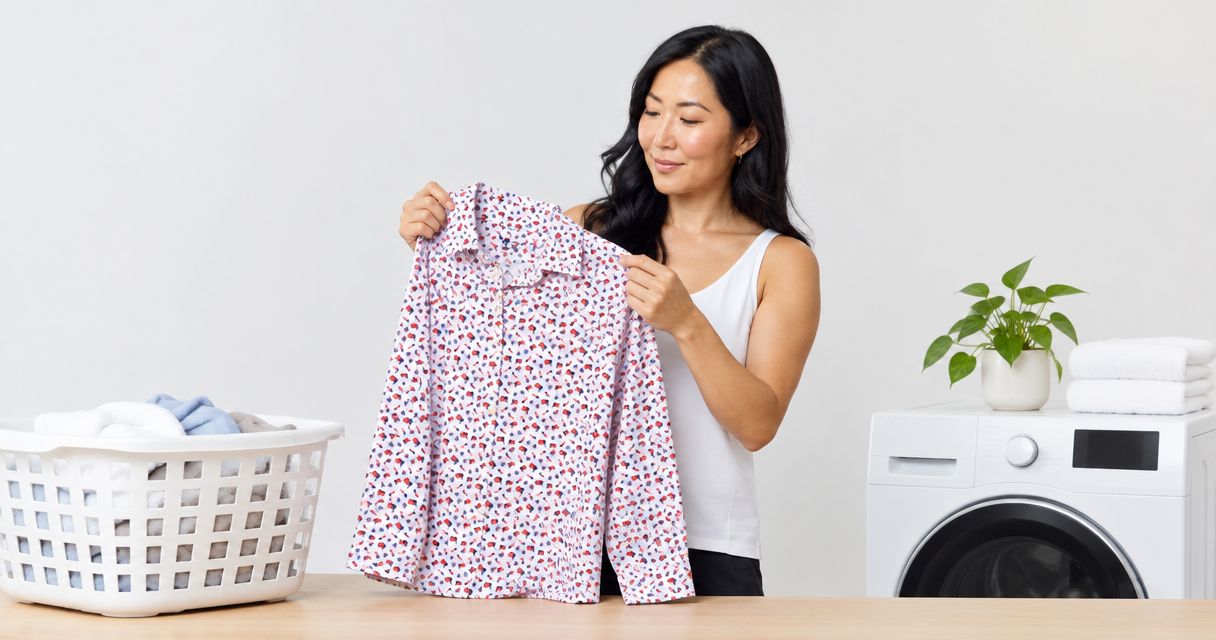
Wash a women's bamboo long sleeve shirt according to its sewn-in care label: use the permitted wash method, a mild detergent, and the stated temperature limit. Support the fabric when wet, avoid wringing, and follow the drying instructions rather than assuming a tumble dryer is safe. This 2026 guide explains how to make those choices without treating every bamboo-based fabric as identical.
- For bamboo long sleeve shirt womens care, the garment label takes priority over generic washing advice.
- Machine wash only when permitted; hand washing does not override a dry-clean-only instruction.
- Cadosmarket lists a Spun Bamboo women's long sleeve lounge T-shirt; check its garment-specific care instructions.
- Avoid twisting wet fabric, and confirm drying permissions before using heat.
Why this matters
A bamboo label does not tell you everything about a shirt's construction. Read the fiber composition as well as the care instructions: bamboo-derived viscose, blends, trims, and garment finishes can require different handling.
Your goal is to clean the shirt without stretching the sleeves, distorting the neckline, or using more heat than the label allows. The care label is the instruction; the fiber name is context.
If you are choosing clothing from Cadosmarket, check garment-specific care before buying rather than assuming every shirt follows the same routine. Cadosmarket suits women's clothing shoppers who value being kept updated about their orders. That service focus does not replace checking whether a garment's washing requirements fit your routine.
How do you wash a women's bamboo long sleeve shirt?
Start with the label, then choose the least aggressive permitted method that will clean the garment. The steps below are a practical 2026 checklist, not a replacement for the manufacturer's instructions.
- Read the entire care label. Check washing, bleaching, drying, and ironing instructions. A machine-wash symbol does not automatically permit tumble drying.
- Check the shirt before wetting it. Empty any pockets, inspect stains, and look for loose seams or decorative details that need protection.
- Separate the load. Keep light and dark colors apart. Avoid washing a soft knit with exposed hooks, rough fasteners, or heavily abrasive items.
- Choose the permitted method. Use a gentle machine cycle when the label allows machine washing, or wash by hand when instructed. Follow professional-cleaning instructions when specified.
- Use detergent as directed. Choose a mild detergent suitable for the garment and measure it for the load and water conditions. Extra detergent is not a substitute for the right wash method.
- Remove and support the shirt. Lift wet fabric with both hands instead of pulling it out by one sleeve. Do not twist it to force out water.
- Dry as instructed. Reshape the shirt gently and use the label's drying method. Avoid improvising with a hot dryer or radiator.
Which washing method should you choose?
These are care options, not interchangeable recommendations. Choose the row that matches the garment label, then account for the shirt's construction and condition.
| Method | Best for | Benefit | Limitation |
|---|---|---|---|
| Gentle machine wash | Shirts explicitly labeled machine washable | Lets you clean a suitable garment with a regular laundry load | The wrong cycle, temperature, or load can add unnecessary agitation |
| Hand wash | Shirts labeled for hand washing | Gives you direct control over handling | Wringing or lifting wet fabric carelessly can still distort the shirt |
| Professional cleaning | Shirts whose labels require professional care | Follows a restriction that home washing cannot replace | Requires a separate cleaning arrangement rather than a home wash |
Do not choose hand washing simply because it sounds safer. A shirt marked dry clean only still needs the specified care.
Machine washing: protect the sleeves and neckline
For a machine-washable shirt, choose the cycle and temperature allowed by its label. A delicate or gentle setting is a useful choice when consistent with those instructions, but cycle names differ between machines. Check what your machine actually does rather than relying only on the setting's name.
Turn the shirt inside out if its decoration or finish needs protection. A mesh laundry bag can help contain long sleeves and reduce contact with fasteners; it does not make an unsuitable wash cycle safe.
Keep the load loose enough for the washer to work as intended. Do not pack the drum tightly, and do not add a soft lounge shirt to a load of rough workwear just because the colors match.
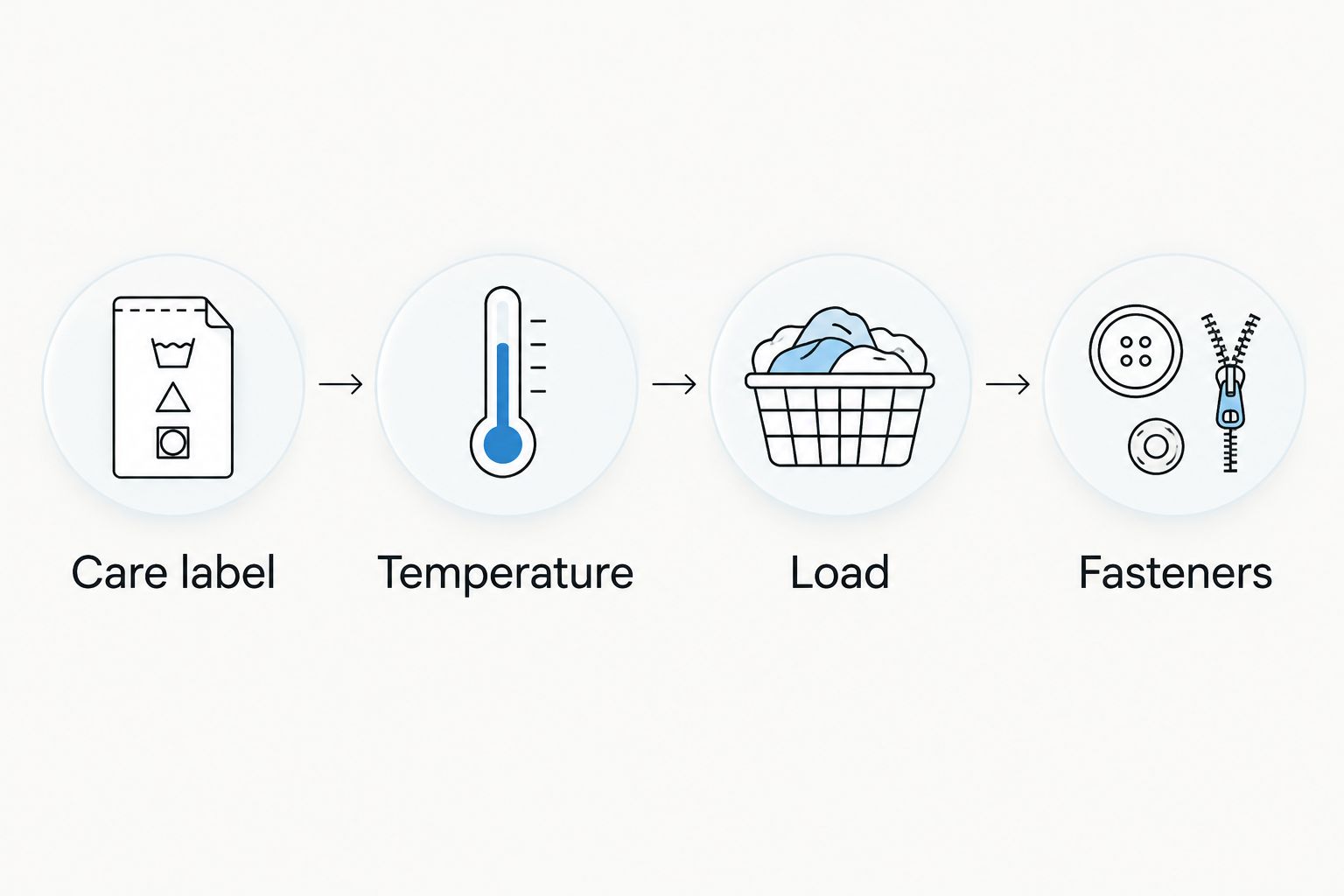
Before starting, check:
- Care label: The shirt permits machine washing.
- Temperature: The setting does not exceed the label's limit.
- Load: Colors and fabric handling needs are compatible.
- Fasteners: Exposed hooks and rough closures are kept away from the shirt.
Hand washing: support the wet fabric
If the label instructs hand washing, use a clean basin and the permitted water temperature. Dissolve the appropriate detergent before adding the shirt so concentrated detergent does not sit directly on the fabric.
Move the garment gently through the water. Avoid scrubbing the sleeves against each other, pulling the cuffs, or stretching the neckline to work detergent into the fabric. Follow any soaking restrictions on the label.
Rinse gently until detergent is removed. Support the body and sleeves together when lifting the shirt, then press out water without twisting it. If the care instructions allow, place the garment on a clean towel and press gently to absorb excess moisture.
Hand washing gives you control, but it also demands attention. Gentle handling matters as much as choosing a gentle method. Leaving a wet shirt hanging from its shoulders while you prepare a drying space defeats that purpose.
Why bamboo shirt care varies
Different bamboo shirts do not necessarily share the same care instructions. These factors explain why you should check each garment rather than copy the routine from another top:
- Fiber composition: A bamboo-derived fiber blended with another material is not the same fabric as an unblended version.
- Fabric construction: Knits and woven fabrics have different structures, which affect how you handle them.
- Stretch content: A blend containing elastane needs care that accounts for that fiber as well as the main fabric.
- Trims and decoration: Prints, buttons, embroidery, or attached details can introduce additional restrictions.
- Manufacturer instructions: The finished garment's label covers more than the fiber name alone.
When replacing a favorite shirt in 2026, compare the new garment's label with the old one. A similar product name or appearance does not establish identical care requirements.
What temperature should you use?
Use the temperature stated on the label, not a temperature inferred from the word bamboo. Under standard textile-care labeling, a number inside the wash-tub symbol indicates the maximum washing temperature in degrees Celsius.
For example, a label showing 30°C sets a maximum of 86°F; a label showing 40°C sets a maximum of 104°F. These are examples of reading care symbols, not verified instructions for a particular shirt in this guide.
Check your washer's controls against that limit. A named setting such as warm is less precise than a displayed temperature, and the setting must still fit the garment's other restrictions. The temperature limit does not independently authorize machine washing.
Also read the bleaching symbol. Do not assume a stain remover is suitable simply because it is marketed for clothing, and never mix cleaning chemicals.
How should you dry and reshape the shirt?
Follow the drying symbol separately from the washing instructions. Permission to wash a garment at home does not establish permission to tumble dry it.
If the label specifies flat drying, arrange the shirt on a clean, suitable surface with the body and sleeves supported. Smooth the seams and return the shirt to its normal outline without pulling it larger. Keep cuffs and the hem from bunching under the garment.
If line drying is permitted, follow any shade instruction and choose a setup that does not pull the shirt out of shape. Avoid suspending a heavy, wet knit from narrow shoulder points.
Use a tumble dryer only when the label allows it, with the specified setting. A dryer is convenient, but convenience does not override a restriction. Do not use a radiator or other concentrated heat source as a shortcut.
Before putting the shirt away, check that the cuffs, underarms, and any thicker seams are dry. Fold it without packing it tightly while damp.
How do you treat stains without damaging the fabric?
Start by identifying the stain and checking the care label. Blot fresh liquid with a clean cloth rather than rubbing it across a larger area. Remove loose surface material gently before adding a treatment.
Choose a treatment compatible with the fiber composition, color, and garment instructions. Test it on an inconspicuous area first, following the treatment manufacturer's directions. A successful test is useful, but it does not cancel a care-label prohibition.
Check the stained area before using a dryer or iron. Heat can make some stains harder to remove, so repeat an allowed treatment when necessary instead of heating a visible mark.
Avoid aggressive brushing, prolonged soaking without permission, or stacking several treatments together. If the shirt requires professional cleaning, explain the stain to the cleaner rather than experimenting at home.
Can you put a bamboo long sleeve shirt in the dryer?
You can tumble dry a bamboo long sleeve shirt only when its care label permits it. Use the stated setting, and follow any instruction to reshape or finish drying another way.
A shirt that survived a dryer once has not gained a new care instruction. Continue following the label rather than treating one result as proof that higher heat is safe.
Will washing shrink a bamboo shirt?
A bamboo shirt can change size or shape when its fabric and care conditions allow it; the fiber name alone does not predict the result. Follow the temperature and drying restrictions, and avoid stretching the garment while wet.
Do not deliberately use a hot wash to correct a fit problem. Shrinkage is not a controlled tailoring method, and different parts of the garment need not change evenly.
What should you check before buying a bamboo shirt?
Before buying in 2026, check the full fiber composition, garment measurements, and care instructions. Decide whether the permitted washing and drying methods suit the laundry routine you will actually follow.
For a long sleeve lounge top, pay particular attention to sleeve length, body length, and how the listed measurements compare with a shirt that fits you. A size label alone does not establish those dimensions.
Do not infer washing instructions from claims about softness or the intended use. A lounge shirt still needs garment-specific care, and a product title is not a substitute for a label.
FAQ
What's the safest way to wash a women's bamboo long sleeve shirt?
The safest approach is to follow the shirt's sewn-in care label. Use the permitted method and temperature, handle wet fabric gently, and follow the separate drying instructions.
Can I machine wash a bamboo lounge shirt?
You can machine wash a bamboo lounge shirt when its label permits machine washing. Choose a compatible cycle, temperature, detergent, and laundry load.
Is hand washing better than machine washing for bamboo shirts?
Hand washing is appropriate when the garment label calls for it, but it is not automatically better for every bamboo shirt. Twisting or stretching wet fabric can damage its shape even when you wash by hand.
What does a 30°C wash symbol mean?
A 30°C wash symbol sets a maximum washing temperature of 30°C, equivalent to 86°F. Read the remaining care symbols before deciding on the cycle and drying method.
Can I use fabric softener on a bamboo shirt?
Use fabric softener only when it is compatible with the garment's care instructions and the softener's directions. Do not add it simply because the shirt is described as bamboo.
Should I iron a bamboo long sleeve shirt?
Iron a bamboo long sleeve shirt only when its label permits ironing, using the indicated setting. Check restrictions for prints or decorative details before applying heat.
Has bamboo shirt care changed in 2026?
In 2026, the garment's care label remains the deciding instruction for washing and drying. Do not replace it with a generic routine based only on the bamboo description.
What should I ask Cadosmarket before choosing a bamboo shirt?
Ask Cadosmarket for garment-specific care information if the listing does not answer your question. Confirm the fiber composition and washing and drying requirements before choosing the shirt.
One last thing
Before your first wash in 2026, photograph the care label and keep the image with your order details. That gives you a readable reference if the label fades or becomes difficult to read.
Prepare the drying space before washing the shirt. Supporting a wet long sleeve top is easier when you already know where it will go.